
Engaging with Local Politics: Student Leaders Take Center Stage
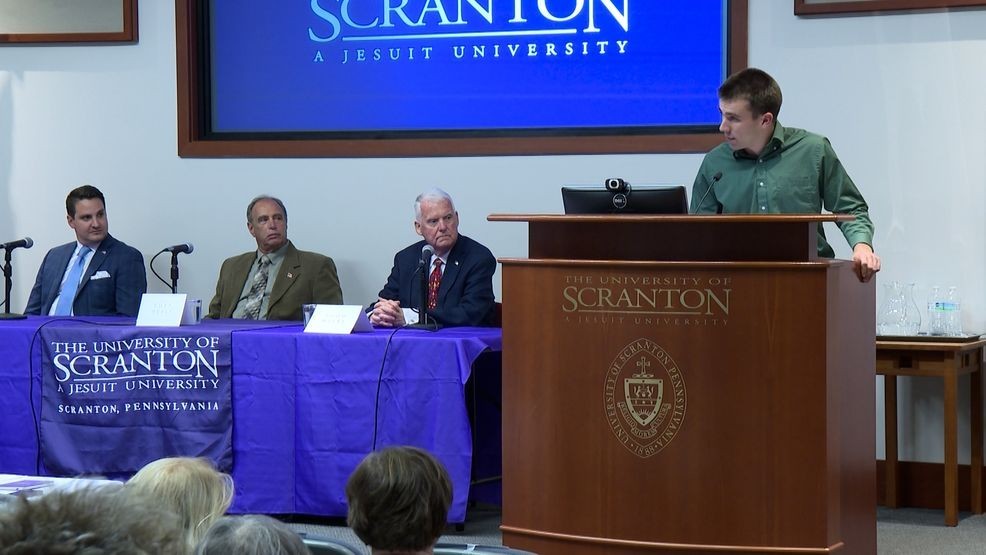
On Thursday night, the University of Scranton played host to a Lackawanna County commissioner debate, marking the second in a series of local political debates for candidates. This event followed last week's mayoral debate, where all four candidates for Scranton mayor participated on campus.
These debates provided a unique opportunity for students at the University of Scranton and nearby colleges to engage with local politics and get involved in the democratic process. Among those who actively participated were Grace Lennox and Philip Huffman, leaders within their respective student organizations.
Lennox serves as the president of the College Democrats, while Huffman is the president of the College Republicans. Both students found the events to be valuable experiences that allowed them to connect with their peers and gain a deeper understanding of the political landscape.
For both the commissioner and mayoral debates, Lennox and Huffman took on the responsibility of introducing the candidates and outlining the rules. Their involvement extended beyond the podium, as they were also part of the behind-the-scenes preparations that helped make the events possible.
“We’ve had several meetings talking about how you can get involved, explaining what races are going on, what’s going to be on your ballot, what judicial retention means,” said Lennox. Her efforts highlight the importance of education and awareness when it comes to political engagement.
The clubs that Lennox and Huffman lead serve as platforms for students to become informed and actively involved in their local politics. Through these organizations, students have the chance to spread information about upcoming political events and participate in various campaign activities.
“We spread information about political events that are happening on campus, for example, this debate. We also have people that work with the local GOP office, such as door knocking or working with Trish Beynon’s campaign,” said Huffman. His comments illustrate the diverse ways in which students can contribute to the political process.
For students living on the University of Scranton campus, the decision of where to vote is entirely up to them. This autonomy allows them to make informed choices based on their personal values and beliefs.
“I think it’s exciting for students who aren’t from the area to get an idea of what’s going on more locally in the community they’re spending at least four years in. I also think it’s an important reminder to elected officials that our generation has their eyes on them and we are paying attention to what’s going on,” said Lennox. Her words reflect the growing interest among students in shaping the future of their communities through active participation in the political process.
Key Takeaways from the Debates
- The debates offered students a platform to engage with local politics and understand the issues at stake.
- Student leaders like Lennox and Huffman played a crucial role in organizing and facilitating the events.
- These events highlighted the importance of political education and awareness among young voters.
- Students have the opportunity to influence local elections and hold elected officials accountable.
- The involvement of student organizations demonstrates the power of grassroots political engagement.
Post a Comment