
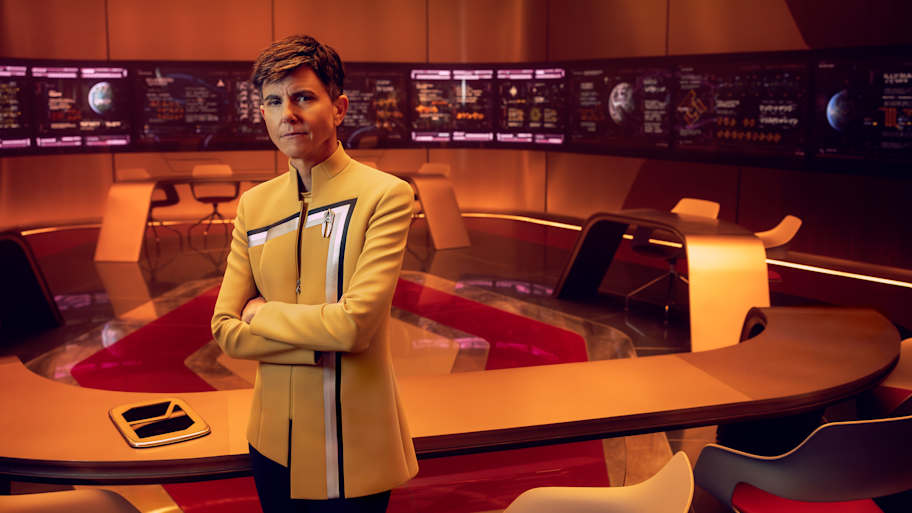
The Future of Star Trek: A New Era at Starfleet Academy
Starfleet Academy is set to be the most futuristic project in the Star Trek universe, assuming the flash-forward from Discovery's final episode is overlooked. While it's exciting to explore the 32nd century, there are concerns about the potential drawbacks of this far future setting. With Strange New Worlds nearing its end, Starfleet Academy could soon become the franchise's flagship show. Although other movies and TV series are rumored to be in development, none have been officially confirmed yet. As iconic eras like the 23rd and 24th centuries fade into the background, Starfleet Academy will need to work harder to capture the hearts of fans.
The 32nd century first appeared on screen when the USS Discovery jumped from the 23rd century to the distant future at the end of Discovery season 2. This 900-year leap allowed the space opera to reinvent itself, offering a glimpse into an unexplored part of the Star Trek timeline. However, the 32nd-century setting isn't entirely new, and it may pose challenges for the franchise moving forward.

Technological Advancements in the 32nd Century
Star Trek's technology can't possibly advance more than in the 32nd century. When Michael Burnham (Sonequa Martin-Green) and the USS Discovery crew arrived in the 32nd century, there was an adjustment period to the various technological advancements that had occurred over the past 900 years. From personal transporters to detached starship nacelles, everything seemed to have been upgraded to its maximum potential.
This made sense for the Discovery writers, as 900 years is a long time, and technology would naturally progress. However, the problem arises when it becomes difficult to make future settings seem more advanced than the 32nd century. Part of Star Trek's appeal has always been its futuristic technology, and the franchise has historically shown subtle upgrades as the timeline progresses. For example, transporters in The Original Series weren't as advanced or trusted as they were in Star Trek: Enterprise, which was set before TOS.
Similarly, Strange New Worlds season 3 recently revealed that 23rd-century starships couldn't safely sustain holodeck tech, which was standard by the time of Star Trek: The Next Generation in the 24th century. These incremental jumps help showcase in-universe advancements, but Discovery's large leap from the 24th century to the 32nd forced the writers to abandon subtlety in this regard.

The 32nd Century: A New Chapter for Star Trek
The 32nd-century plateau isn't necessarily a bad thing. Discovery was created as a jumping-on point for new Trekkies, just as TNG was made to welcome fresh fans after TOS. It would have made sense if Starfleet Academy, Discovery's successor, had also jumped forward by a century or two. However, it chose to focus on the 32nd century, showing a willingness to expand and enrich the era.
The 24th century is likely still Star Trek's most beloved era, largely due to the numerous shows set within that period. The Next Generation, Deep Space Nine, Voyager, and even Lower Decks all contributed to the worldbuilding of the 24th century. It seems Starfleet Academy is trying to do something similar for the 32nd century, potentially making it a worthwhile endeavor.
Moreover, there are still centuries of untapped storytelling potential between the 24th and 32nd centuries. Just because Starfleet Academy is focusing on the era introduced by Discovery doesn't mean the franchise won't eventually move on to projects set within that vast gap. If that happens, we might still see those subtle signs of progress that led to Star Trek's 32nd-century hyper-futuristic advancements.
Post a Comment