
Trump's White House Ballroom Project Sparks Controversy
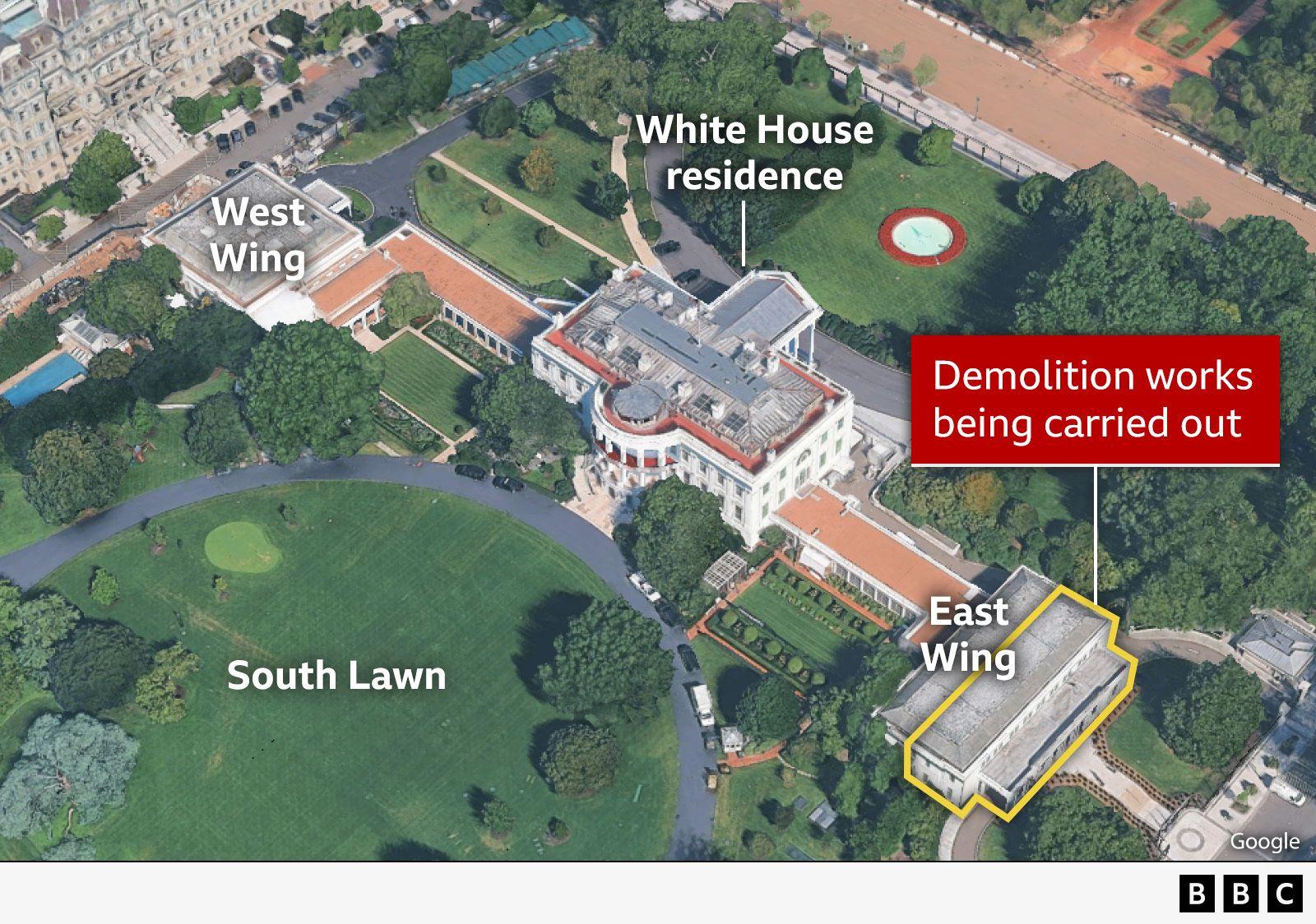
US President Donald Trump has defended his decision to demolish part of the White House East Wing to build a ballroom, calling the construction "music to my ears," despite growing criticism of the project. Speaking to senators from his Republican Party at the White House on Tuesday, Trump remarked, "You probably hear the beautiful sound of construction in the back... When I hear that sound, it reminds me of money."
Trump, a former property developer, is investing $250 million (£186 million) in a new, 90,000 sq ft (8,360 sq m) ballroom designed to host parties, state visits, and other events. However, since work began on Monday, several critics have voiced their concerns.
Among them is Hillary Clinton, who ran against Trump for the presidency in 2016. She has criticized the project, stating that the White House is not just Trump’s home but belongs to the American people. Addressing her followers on X, she wrote, "It's your house. And he's destroying it."
The National Trust for Historic Preservation, a Washington-based non-profit organization that protects historic US sites, has also expressed deep concern. The trust’s leader wrote a letter to White House officials, warning that the size of the new construction could "overwhelm the White House itself" and "permanently disrupt the carefully balanced classical design of the White House with its two smaller, and lower, East and West Wings." The letter urged the administration to pause demolition work and conduct a public review process, as the White House is a national historic landmark.
Another group, the Society of Architectural Historians, has also raised concerns about the project, calling for a review process due to the scale of the planned construction.
The White House has responded to these criticisms by dismissing them as the work of "unhinged leftists" who are "clutching their pearls over President Donald J Trump's visionary addition of a grand, privately funded ballroom to the White House - a bold, necessary addition." Officials have also emphasized that the renovation will not cost US taxpayers any money, and that private donations are appropriate, as Trump has been doing.
Who Is Paying for the New White House Ballroom?
The source of funding for the ballroom remains a point of contention. Many Democrats have criticized the renovation, with Clinton being one of the most vocal opponents. She has accused Trump of misusing the White House as his personal property, highlighting that the building belongs to the public.
Since its construction in the late 1700s, the White House has seen numerous renovations and restorations. In 1948, then-President Harry Truman oversaw a major overhaul of the interior after it was at risk of collapsing, adding a balcony to the exterior. Over the years, presidents have added various amenities, such as swimming pools and bowling alleys. However, critics argue that Trump’s additions represent the most significant alterations to the White House exterior in decades.
White House officials claim the project does not require approval from the National Capital Planning Commission, an agency that oversees construction and renovations of government buildings in Washington. The commission is chaired by a Trump ally. However, a former chair of the commission, L Preston Bryant Jr, told the Associated Press that previous administrations have worked closely with the agency on major projects, often starting with early consultations before any renovation begins.
From Bowling Alley to Ballroom – Trump Isn’t the First to Remodel the White House
While Trump’s project has drawn intense scrutiny, he is not the first president to make significant changes to the White House. Throughout history, various leaders have modified the presidential residence to suit their needs and preferences. These changes have ranged from functional updates to more extravagant additions, reflecting the evolving role of the presidency and the changing tastes of each administration.
Despite this historical context, Trump’s ballroom project has sparked a unique level of debate, particularly around the balance between preserving historic architecture and accommodating modern demands. As the construction continues, the controversy surrounding the project is likely to persist, with both supporters and critics watching closely.
Post a Comment