
What is Spotify Lossless?
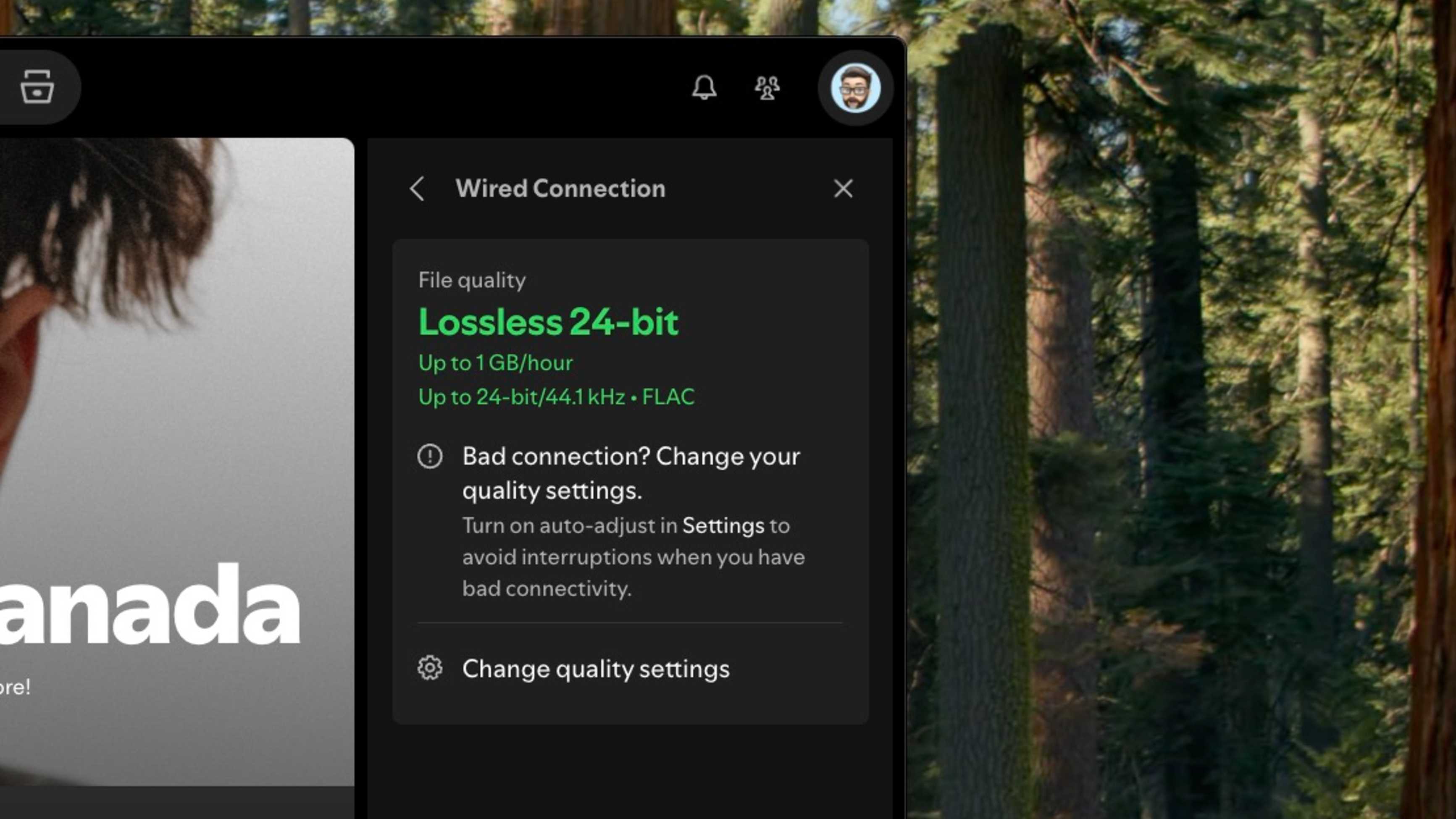
If you’re a Spotify user, you’re likely aware of its audio settings that offer Low, Normal, High, and Very High options. The former highest level streamed a 320 kbps Ogg Vorbis format, a “lossy” codec similar to MP3 and Apple's AAC. Lossy formats are compressed to offer smaller file sizes for faster streaming, quicker downloads, and less storage use. To do this, however, audio frequencies and information that the human ear is least likely to hear are removed, delivering sound that is just “good enough” and most people won’t notice.
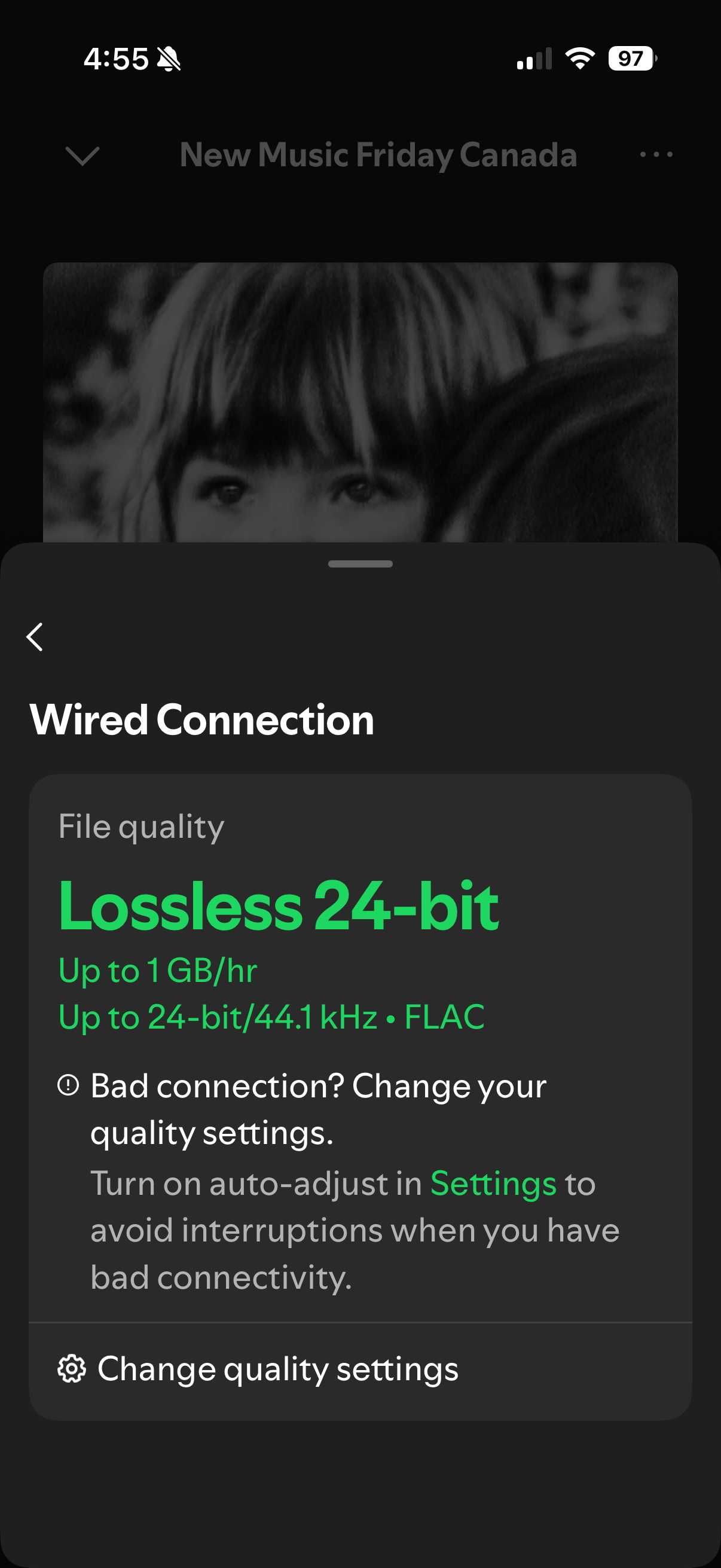
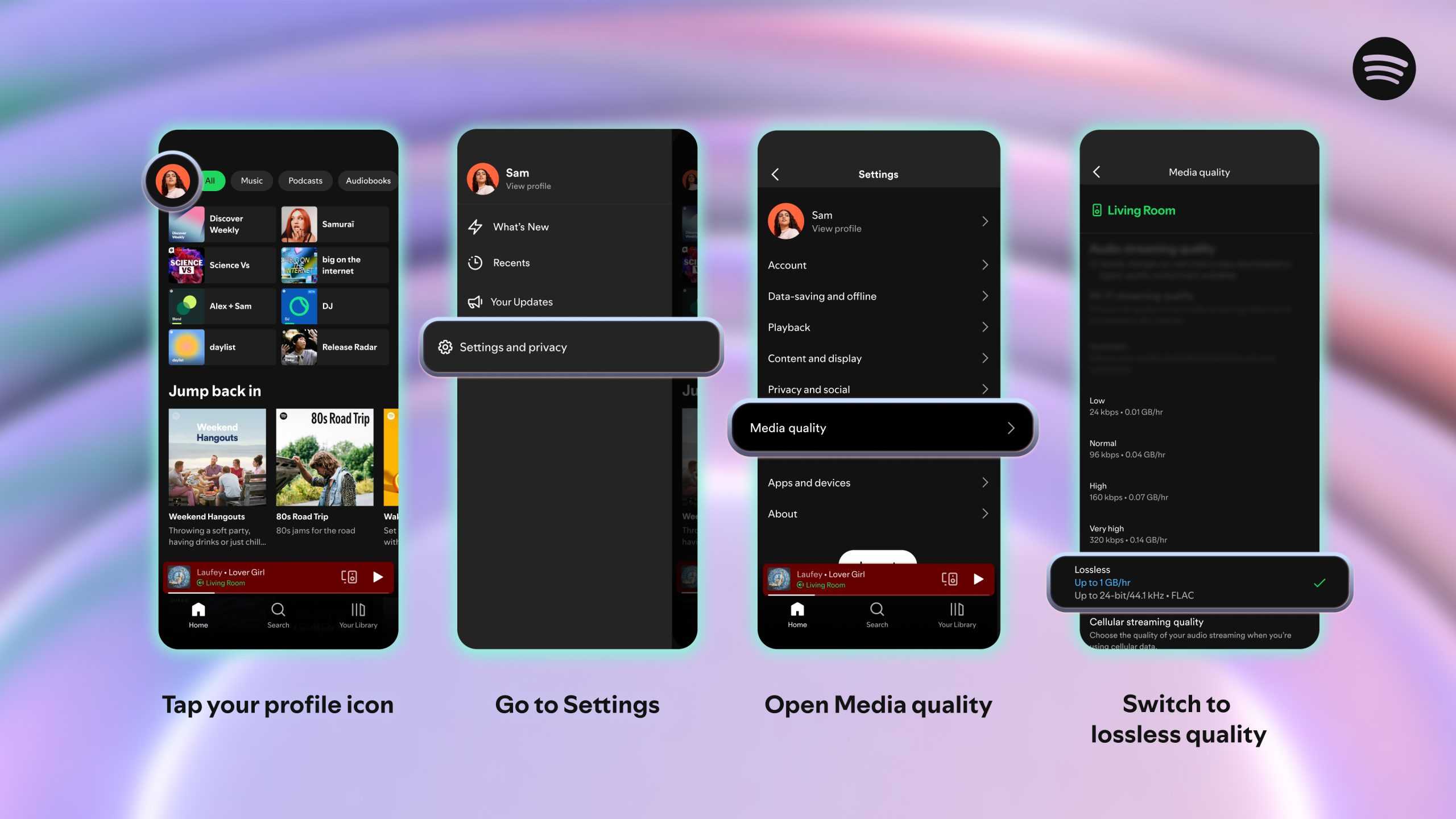
Spotify Lossless now offers higher quality audio to most songs in its catalog, using the FLAC format, streaming at up to 24-bit/44.1 kHz. So yes, this is lossless audio, which preserves the recording, allowing all that detail lost to compression to remain. Technically, anything at or above 16-bit/44.1 kHz qualifies as "CD-quality" lossless audio. It's worth noting that not all lossless tracks in the Spotify library will be at the slightly better 24-bit quality—you may see some in the 16-bit quality, too. You probably won't notice the difference, though.
How It Compares
Sure, the step-up from Ogg Vorbis to lossless FLAC is a welcome move in the right direction. But as mentioned above, it still leaves Spotify behind every one of its competitors, except YouTube Music. The good news is that Spotify’s advantage lies more in its massive 100 million-plus library, broad hardware and software support via Spotify Connect, and its biggest assets—its UI and the best music discovery and special features in the business.
What You Need to Hear It
Subscribers to Apple Music, Tidal, and some of the other lossless and hi-res streaming services will know this already—just because lossless is available, it doesn't mean you’re hearing it. Even if you enable Spotify Lossless on your devices, which include mobile, desktop, tablet, and Spotify Connect devices, your hardware and connection ultimately determine what you actually hear.
First, let's talk Bluetooth. While wireless headphones and earbuds are undeniably the most popular way to listen to music, Bluetooth just doesn't play well with lossless audio. Before your music can be sent to your headphones, Bluetooth uses its own compression to save bandwidth. So, even though your Spotify Lossless app says it's supplying sweet-sounding, lossless tunes, the minute it hits your Bluetooth headphones (or Bluetooth speaker, for that matter), it's not lossless anymore—lossless needs to be supported on both ends of the pipeline.
While some newer Bluetooth devices are starting to support better quality codecs, such as aptX HD, aptX Adaptive, and even aptX Lossless, which supports up to 16-bit/44.1 kHz CD-quality lossless audio, they're still not in widespread use.
Spotify recommends that for the best lossless listening experience, you use wired headphones or speakers over a Wi-Fi-based connection like Spotify Connect, which lets you use your phone, tablet, or computer to control playback over Wi-Fi on another supported device.
To Hear Spotify Lossless, You’ll Need:
- A Spotify Premium account with Lossless access.
- Make sure you update to the latest version of the app and activate Lossless quality in the settings on each device.
- A strong Wi-Fi or 5G connection, as lossless FLAC files can use between 1 and 5 Mbps of bandwidth.
- Wired headphones, wired speakers, or a digital-to-analog converter (DAC) that supports up to 24-bit playback.
- A Wi-Fi-based system that supports Spotify Connect.
The Bottom Line
The bottom line is, if you mostly listen to Bluetooth speakers or headphones, or in your car over a Bluetooth-connected device, then you won't actually be hearing Spotify Lossless.
But suppose you’re a user of wired headphones or usually stream Spotify over Wi-Fi via Spotify Connect, using a DAC, or a network music streamer that supports FLAC or hi-res playback. In that case, you are going to hear slightly better clarity (cymbals, guitars, and vocals will be crisper and clearer), better dynamic range (the differences between lower and higher volumes in the music), and improved soundstage (broader width, depth, and height). Will it be as good as hi-res streams available on services like Qobuz or Apple Music? Not by a long shot, but it'll still sound good.
If you’re already savvy to the hardware and connectivity required to experience the higher sound resolution, Spotify Lossless is an improvement. Besides, it’s not costing you anything more, so if you can, you might as well utilize it.
Post a Comment