
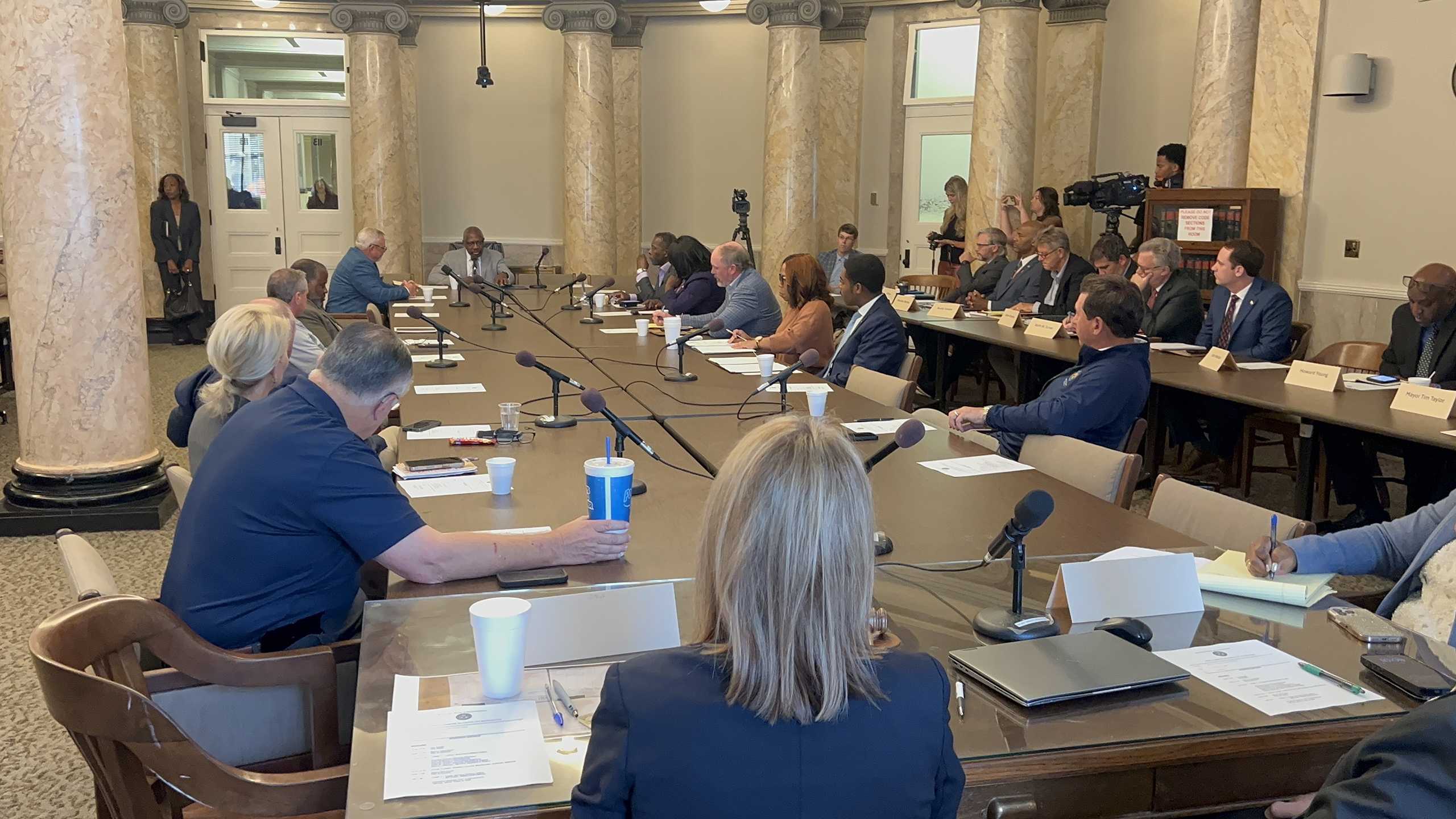
Jackson Mayor Participates in Legislative Meeting on Water System
Jackson Mayor John Horhn recently attended a Mississippi legislative committee meeting focused on the city’s water system. Despite being invited, there were no representatives from JXN Water present at the event. This absence has sparked discussions about the ongoing challenges facing Jackson's water infrastructure.
In 2022, a major failure of the city’s main water treatment plant led to a severe water crisis and necessitated federal intervention. As part of the response, Ted Henifin was appointed as a third-party manager, and JXN Water was established to oversee the management of the city’s water and billing systems. Additionally, JXN Water is responsible for handling Jackson’s sewer system.
Jackson City Councilman Ashby Foote expressed concern over Henifin’s lack of representation at the meeting, calling it a poor reflection on the city. However, Mayor Horhn suggested that Henifin may have had a scheduling conflict preventing his attendance.
Proposed Advisory Committee for Water Oversight
Mayor Horhn supports the creation of an advisory committee to monitor the city’s water system. State Rep. Shanda Yates, chair of the Capital City Revitalization Committee, inquired about legislative bills proposing this initiative. Horhn explained that the current proposal faced opposition because the majority of board members would be selected by the state, which he said the city was not in favor of.
Instead, Horhn proposed forming an advisory board whose members would be approved by the Jackson City Council. He argued that having controlling interest in the board would benefit the city.
"We're not averse to having input from some of the other jurisdictions that have a stake in this," Horhn told the committee. "The city of Jackson provides water to Nissan. The city of Jackson provides wastewater services to Ridgeland. The city of Jackson provides water to an unincorporated area between Jackson and Byram, and for services in Byram."
Financial Strategies for Water System Stability
Horhn also discussed expanding the One Percent Sales Tax that is currently in place. He noted that the tax generates between $14 million and $15 million annually.
“You’re talking about doubling that amount if we were to impose it, and the citizens of Jackson would vote for it,” Horhn said.
He believes that increasing the sales tax could provide much-needed funding for the city’s water system, which he described as financially unstable. Horhn is optimistic that with the right strategies in place, the system could be stabilized within 10 years.
Ongoing Challenges and Future Plans
The situation highlights the complex relationship between local governance, state oversight, and the management of essential public services. As the city continues to navigate these challenges, the need for collaboration and transparency remains critical.
With the involvement of various stakeholders, including neighboring cities and businesses, the path forward for Jackson’s water system will require careful planning and community support. The mayor’s proposals for an advisory board and increased funding through the sales tax represent potential steps toward long-term stability and improved service for residents.
As the discussion continues, the focus remains on ensuring that Jackson’s water system meets the needs of its citizens while maintaining accountability and efficiency. The future of the city’s water infrastructure will likely depend on the ability of local leaders to work together and implement effective solutions.
Post a Comment