
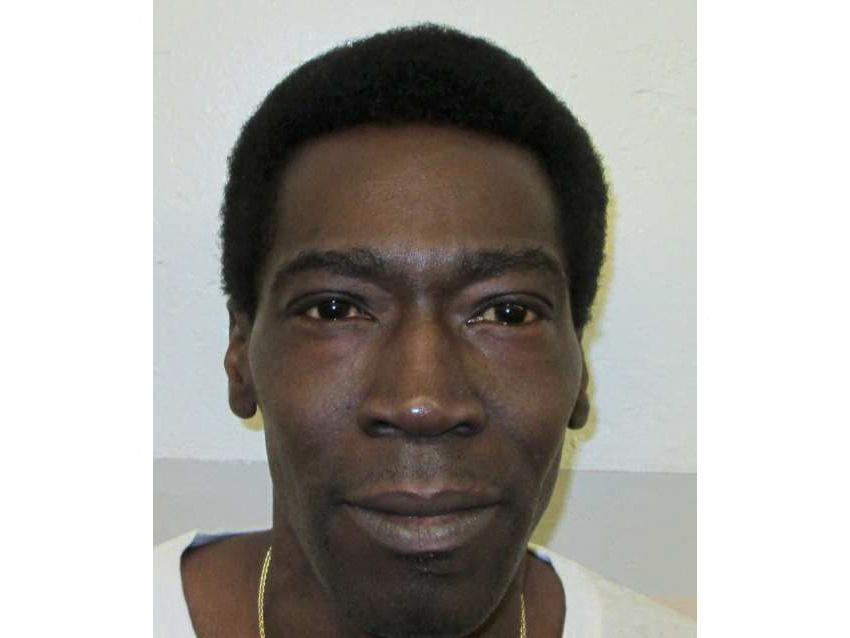
The Execution of Anthony Boyd
Anthony Boyd, a 54-year-old man from Alabama, was executed on Thursday using nitrogen gas, a method that has been criticized by defense lawyers as cruel and unusual punishment. His execution took place shortly after the U.S. Supreme Court approved the seventh use of this controversial method.
Boyd was taken to the death chamber at the William C Holman Correctional Facility in the evening. In his final words, he stated, “I didn’t kill anybody. I didn’t participate in killing anybody.” He added, “There can be no justice until we change this system … Let’s get it.”
He was strapped to a gurney and forced to breathe nitrogen through an industrial mask, which caused his body to be deprived of oxygen. He was pronounced dead at 6:33 pm.
The six conservative justices on the Supreme Court denied Boyd’s petition for a stay of execution, despite strong opposition from their three liberal peers. Justice Sonia Sotomayor, joined by Elena Kagan and Ketanji Brown Jackson, wrote a scathing dissenting opinion. She invited readers to time four minutes, saying, “Now imagine for that entire time, you are suffocating … That is what awaits Anthony Boyd tonight.”
Boyd’s execution marked the eighth time nitrogen gas has been used in the United States. It was first experimented with in Alabama in January 2024 when Kenny Smith was executed. Louisiana followed in March with the execution of Jessie Hoffman Jr.
Supporters of the death penalty have embraced nitrogen gas as an alternative to lethal injection. The availability of medical drugs for corrections departments has become increasingly difficult due to a boycott, leading states to explore other methods, including nitrogen.
Controversial Track Record
Despite its adoption, the track record of nitrogen gas as a method of execution has raised serious concerns. The first prisoner to die by nitrogen, Kenny Smith, was seen writhing and convulsing on the gurney during his execution. Deanna Smith, his widow, described the experience as “watching somebody drown without water” during a recent hearing.
Alan Miller, the second person executed by Alabama using nitrogen, also exhibited visible signs of distress, shaking and trembling for about two minutes in September last year. In the Louisiana execution of Jessie Hoffman Jr., witnesses reported that he was still breathing 16 minutes into the procedure.
Boyd’s legal team argued that the use of nitrogen gas violated the Eighth Amendment of the U.S. Constitution, which prohibits cruel and unusual punishment. They claimed that previous executions using nitrogen caused extreme pain and terror, inflicting suffering beyond what is constitutionally acceptable.
Earlier this month, a federal judge, Emily Marks, declined to halt Boyd’s execution. She acknowledged that deprivation of oxygen causes discomfort, panic, and emotional distress but ruled that the Constitution does not guarantee a painless death.
Background on the Case
Boyd was sentenced to death for the murder of Gregory Huguley in 1995. Prosecutors alleged that he was one of four men who kidnapped Huguley after he failed to pay $200 for cocaine, then doused him in petrol and set him on fire. Boyd has consistently maintained his innocence, stating, “I didn’t kill anybody. I didn’t participate in any killing,” during a recent press conference.
The prosecution's case relied heavily on the testimony of an eyewitness, with no forensic evidence linking Boyd to the crime. His death sentence was handed down by a jury vote of 10 to two. Alabama and Florida are the only states that allow people to be sent to death row based on a non-unanimous jury verdict.
Post a Comment