
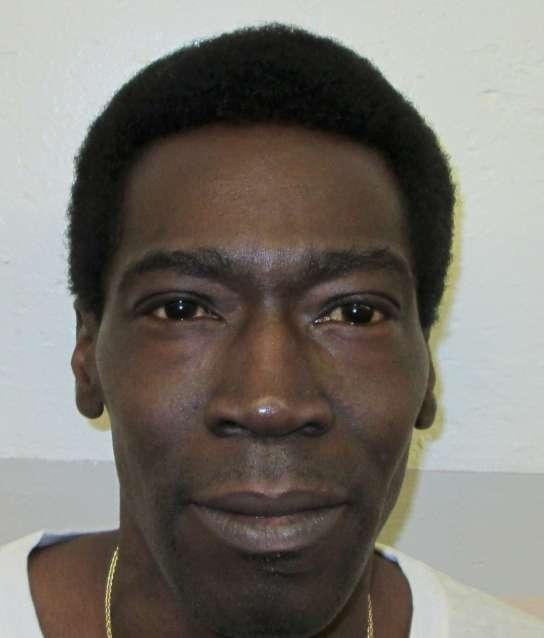
The Execution of Anthony Boyd
On October 23, Alabama carried out the execution of Anthony Boyd, a death row inmate who was put to death using nitrogen hypoxia. This method, which has been criticized as "torturous suffocation," was described by Supreme Court Justice Sonia Sotomayor as an agonizing process that involves depriving the brain of oxygen.
Boyd, 53, was executed at the William C. Holman Correction Facility in Atmore, Alabama. According to the state's department of corrections, he was pronounced dead at 6:33 p.m. on Thursday. The execution took place within a 30-hour time frame set by Governor Kay Ivey, starting at 12 a.m. CDT on Thursday.
Boyd was sentenced to death for the 1993 murder of Gregory Huguley in Talladega County. He was convicted of killing Huguley over a $200 cocaine debt. According to court documents, Boyd and others duct-taped Huguley to a bench in a baseball field, doused him with gasoline, and set him on fire. The group watched Huguley burn for up to 15 minutes before the flames went out.
A History of Legal Challenges
Boyd maintained his innocence throughout the legal process and had repeatedly sought clemency from Governor Ivey. During a press conference held by the Execution Intervention Project, a recording of a call Boyd made to Ivey was played. In the call, Boyd pleaded for a meeting with the governor, asking her to sit down and have a conversation before he was executed.
"I ask you, before an innocent man is executed, come sit down with me and have a conversation with the guy that you deemed one of the worst of the worst," he said. "Please, come talk to me, learn about me, get an understanding of me. Know the guy that's innocent on Alabama's death row."
Despite these requests, Ivey did not grant a stay of execution. The Alabama Attorney General, Steven Marshall, stated that Boyd had spent over 30 years delaying justice through endless litigation without presenting any evidence that the jury was wrong.
Details of the Crime
According to court documents, Boyd was sentenced to death for the murder of Huguley on July 31, 1993. He and his co-defendants—Shawn Ingram, Marcel Ackles, and Quintay Cox—searched Anniston, Alabama, for Huguley, who had failed to pay a cocaine debt. The group spotted Huguley and forced him into a van. They then drove to a gas station where Ackles purchased gasoline, and later to a baseball field in Munford.
Ingram made Huguley lie on a bench while Ackles taped his hands and mouth, and Boyd taped his feet. Ingram then doused their captive with gasoline and lit the trail on fire. The group watched Huguley burn for up to 15 minutes before the flames went out.
Criticisms of the Trial
Boyd and his supporters argue that he was sentenced based solely on eyewitness testimony without any physical evidence linking him to the crime. The Death Penalty Information Center noted that his original court-appointed attorney was paid a statutorily capped fee of $1,000, which critics say led to ineffective representation.
Boyd claimed he had an alibi proving he was at a birthday party and had spent the night at a motel with his then-girlfriend on the night of the murder. The prosecution's case relied heavily on one eyewitness whose testimony contained inconsistencies about Boyd's involvement.
Legal Appeals and the Use of Nitrogen Hypoxia
Boyd fought against the state's use of nitrogen hypoxia, a method that was first used in the United States in January 2024. On Thursday afternoon, the U.S. Supreme Court rejected his request for a review of his case and for a stay of execution.
In dissent, Justice Sotomayor criticized the decision, arguing that the method of execution would cause unnecessary suffering. She wrote that Boyd would remain conscious for two to four minutes while the gas flowed, causing convulsions, gasping for air, and violent thrashing against restraints.
"Boyd asks for the barest form of mercy: to die by firing squad, which would kill him in seconds, rather than by torturous suffocation lasting up to four minutes," she wrote. "The Constitution would grant him that grace. My colleagues do not."
Nitrogen hypoxia, which has been used in eight executions so far, has been called "experimental" by Sotomayor. Including Boyd, it was the 40th execution in the United States this year.
Post a Comment