
A Federal Judge Dismisses Ronny Jackson's Lawsuit Against California’s Redistricting Efforts
A federal judge has dismissed a lawsuit filed by Republican Congressman Ronny Jackson against California Governor Gavin Newsom, which aimed to block the state’s redistricting efforts. This decision marks a significant setback for Jackson and aligns with Newsom’s broader strategy to counter what he sees as unfair advantages given to Republican candidates in other states.
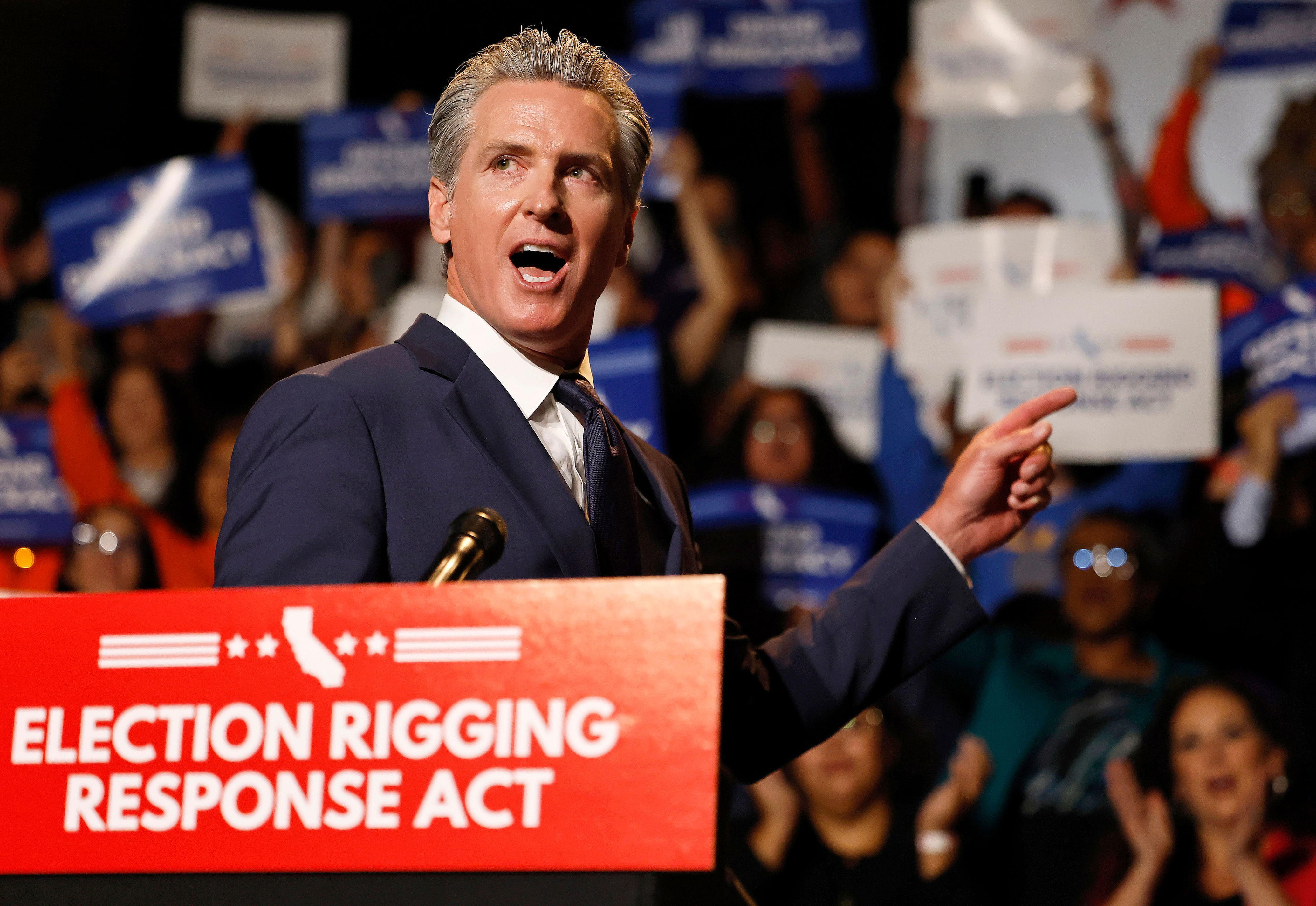
Jackson, who represents Texas in Congress, filed the lawsuit in August, seeking to prevent the passage of a ballot measure known as the Election Rigging Response Act. This initiative, introduced by Newsom, is designed to temporarily adjust California’s district lines to neutralize any potential advantage that could be gained by other states, such as Texas, which recently redrew its maps to potentially add five new Republican House seats.
The move by Newsom was seen as a direct response to Texas’ redistricting plan, which many analysts believe would benefit the GOP in the 2026 midterms. By introducing this measure, Newsom aims to ensure that California remains competitive and that no single state can disproportionately influence the outcome of future elections.

Jackson’s Claims and the Court’s Rejection
Jackson argued that if the ballot measure passes and Democrats win statewide elections, he would face a loss of influence, staff, and media visibility. He claimed this would put him at a disadvantage when it comes to his roles on two key House subcommittees.
In a video posted on social media, Jackson announced his legal action, stating, “We are going to sue you, and we are going to win this.” However, his claims were met with skepticism by the court.
Judge Matthew Kacsmaryk, a Trump appointee, dismissed the lawsuit, citing that Jackson failed to demonstrate a clear legal injury caused by California’s redistricting plan. The judge described Jackson’s concerns as too speculative, noting that the potential loss of influence, staff, and media attention did not meet the threshold for a legally recognized harm.
Kacsmaryk also questioned Jackson’s argument that his strong support for Donald Trump made him uniquely vulnerable to retribution from Democrats. The judge pointed out that many Republican congressmen share similar sentiments and that Jackson’s claim lacked sufficient evidence to support his position.
Political Implications and Background on Jackson
The dismissal of the lawsuit is seen as a victory for Newsom and his administration, reinforcing California’s commitment to maintaining fair representation and countering what they view as an imbalance in the political landscape. If California’s Proposition 50 passes in the November 4 special election, it is expected to provide Democrats with five additional seats, further solidifying their influence in the House.
Jackson, a former White House physician for both Donald Trump and Barack Obama, has had a complex career. He let his medical license expire in Virginia in 2020 and was demoted from his rank in the Navy in 2022 due to allegations of inappropriate behavior. However, he was recently reinstated.
The White House has previously used statements from Jackson praising Trump’s health and mental sharpness to address questions about the president’s well-being. Despite these statements, Jackson’s current legal challenges have drawn attention to his political strategies and the broader implications of redistricting in national elections.
Ongoing Legal and Political Developments
The Daily Beast has reached out to the offices of both Jackson and Newsom for further comment. As the political landscape continues to evolve, the outcome of California’s redistricting efforts will likely play a significant role in shaping the future of the U.S. House of Representatives.
With the upcoming special election, all eyes are on California as voters decide whether to support Proposition 50 and reshape the state’s congressional map. The results of this vote could have lasting effects on the balance of power in Washington, D.C., and the broader political dynamics across the country.
Post a Comment