
The Crisis in Local News
A recent report from the Medill School of Journalism at Northwestern University highlights the ongoing decline of the local news market. This finding aligns with previous reports that have shown a consistent trend of shrinking local news coverage.
Key Issues in Local News
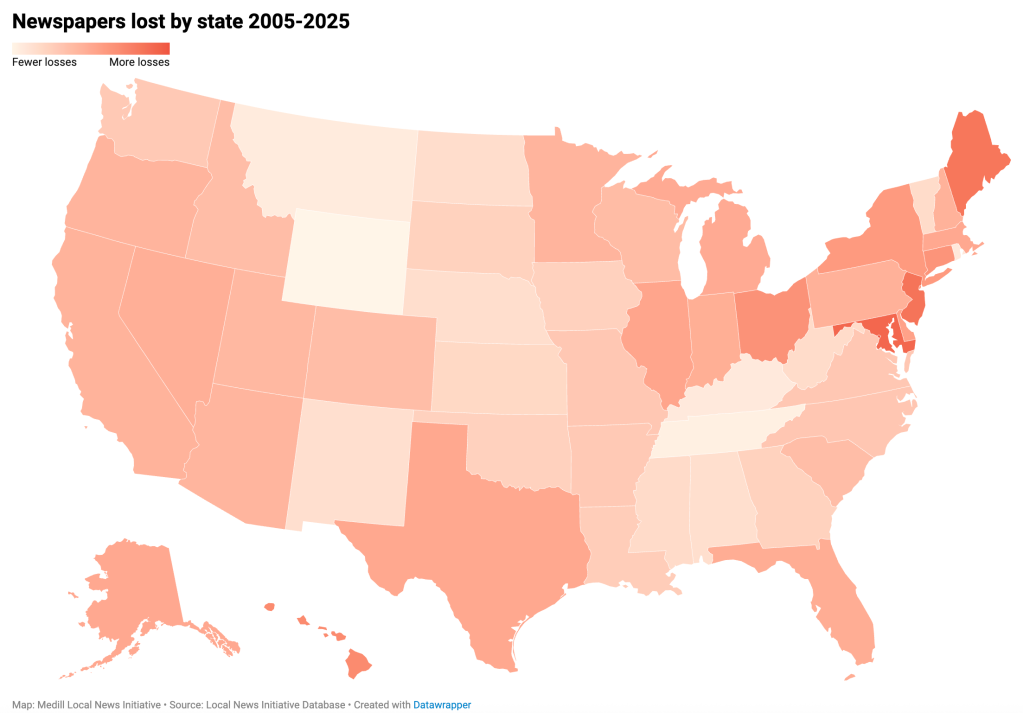
The report identified several critical issues affecting local news. One of the most pressing is the rapid closure of local newspapers. Over 130 papers have shut down in just the past year alone. Since 2005, nearly 40% of all local newspapers have disappeared.
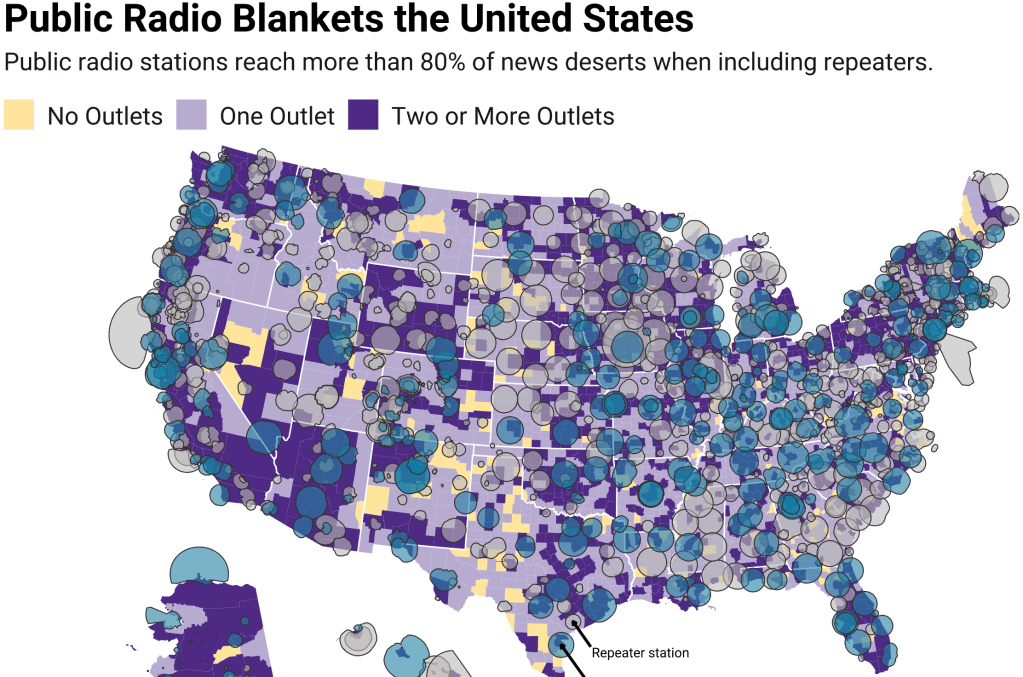
This decline has led to the creation of more "news deserts," where residents have no access to any form of local news. According to the report, 213 counties have no local news sources, and another 1,500 counties have only one. That means approximately 50 million Americans are either without or have very limited access to local news.
Tim Franklin, one of the report's authors and a professor at the Medill School of Journalism, emphasized the significance of this issue. "I think the implications of that, for communities and for the country, are profound."
While print newspaper readership has been declining for years, the report also found that digital readership for local newspapers is shrinking as well. Researchers analyzed web traffic for the 100 largest newspapers in the country and discovered that monthly page views have dropped by over 45% in the last four years.
Franklin pointed out that part of this decline can be attributed to changes on social media platforms. "Meta or Facebook de-emphasized news in its feeds, which resulted in a drop in traffic from social," he said. "And especially over the last year, we're seeing people go directly to AI platforms like ChatGPT or Claude or Perplexity, or pick your platform… News organizations are not getting the same search traffic that they used to get from Google."
This lower readership translates into reduced ad revenue, which has historically been the primary source of income for local news agencies. Over the past 20 years, ad revenue has dropped by 75%, a significant loss that poses a major challenge for the industry.
Another concern raised in the report is the potential impact of defunding public broadcasting. President Donald Trump issued an executive order earlier this year that aimed to cut funding for public radio. Franklin noted that nine counties rely solely on public radio for their news. "If those stations go away, and they're now under considerable financial pressure, this news desert problem is going to get worse."
Why It Matters
The report outlines various ways in which a shrinking local news market affects communities. "Turnout in local elections goes down, the number of candidates seeking local office goes down," Franklin explained. "In some cases, it also leads to higher government spending and higher government borrowing costs because there's no journalist minding the store or monitoring what's happening in those communities. It also leads to more corruption."
Franklin added that the loss of local news has a deep impact on community identity. "It's a place where a community can see itself and get to know itself," he said. "And so, when local news goes away, I think that sense of connectedness really evaporates in many cases."
Despite the decline, many people are turning to AI assistants for their news. However, a recent report showed that these tools are not reliable sources of information.
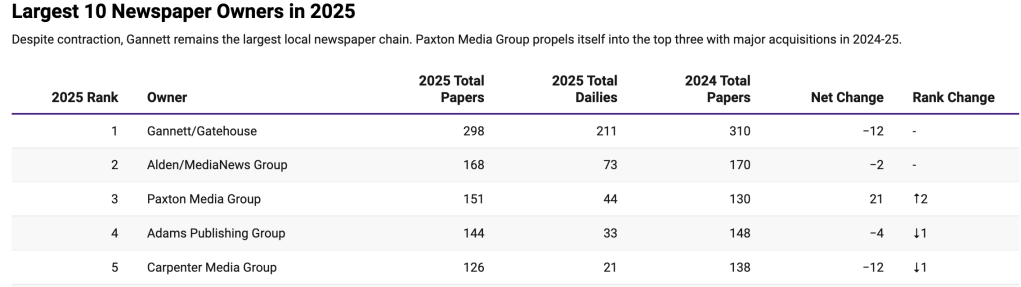
Another growing concern is the consolidation of ownership of local news outlets. More than half of America's major daily newspapers are owned by a few large companies.
The Role of Startups and Funding
While the number of local newspapers is decreasing rapidly, new news startups are emerging across the country. "We've seen about 300 startups in local news over the past five years, so it's an average of about 60 a year," Franklin said. "I think that's good, but the problem is that the creation of the new local news organizations is not coming close to keeping pace with what's being lost."
However, these startups tend to be concentrated in major cities. The report found that of the $1.1 billion in journalism grants, 98% went to organizations in urban areas. This is problematic because news deserts are more common in poorer counties with smaller economies and less educated populations. Nearly 80% of news deserts are located in rural areas, according to the USDA.
Franklin suggested that maintaining funding for public broadcasting could help address the crisis. "I also think that public radio had the potential to be a solution, or a partial solution, to the local news crisis, because these are well-known brands in their communities."
Post a Comment