
A Long Journey Home
DETROIT, MI — The wheels of Delta Airlines flight 733 touched the tarmac of Detroit Metro Airport Saturday, Oct. 11, at 12:51 p.m., the moment Capt. Charles Graham Gibson Jr. came home, more than 75 years after his death in battle.
It’s unclear when he previously departed Michigan, where — while he was alive — he lived with his wife and child. He last left them behind sometime before Dec. 11, 1950, the day the U.S. Army declared its captain missing in action along Korea’s Chosin Reservoir.
When his remains arrived in a metal casket Saturday, his spouse and son weren’t waiting for him. They died decades earlier, uncertain exactly what happened to the 28-year-old soldier last seen alive fighting in one of the 20th century’s most brutal and historically-referenced military battles.
But Capt. Gibson wasn’t alone during his final flight home last week. A military escort, Army Capt. Jacob Manweiler, ensured the old soldier’s body made safe passage from Hawaii to Detroit. Manweiler represented one of more than 100 U.S. military-affiliated officials estimated to be involved in solving the generations-spanning mystery of Capt. Gibson’s death as well as the mission to bury him in the state he called home.
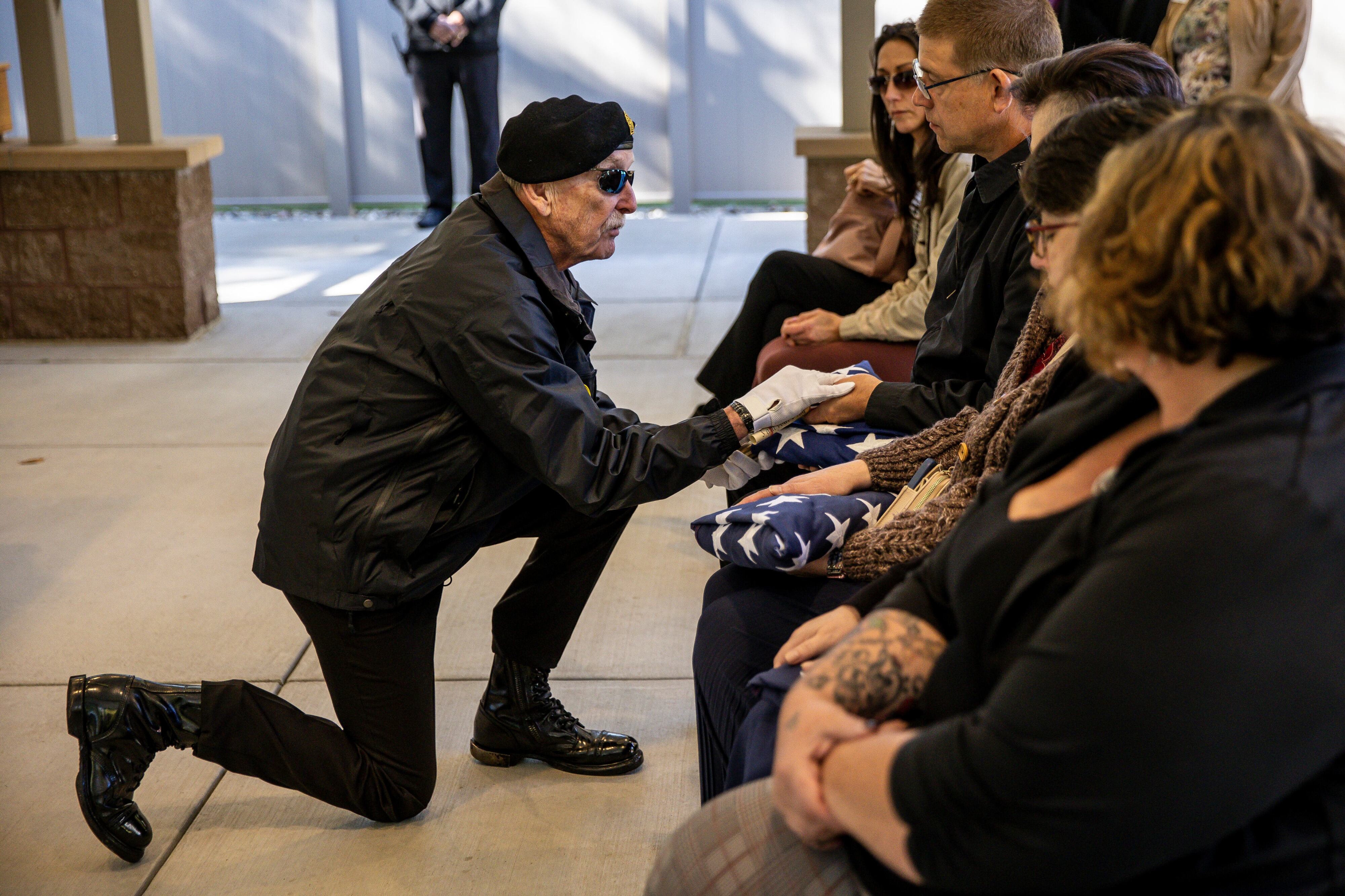
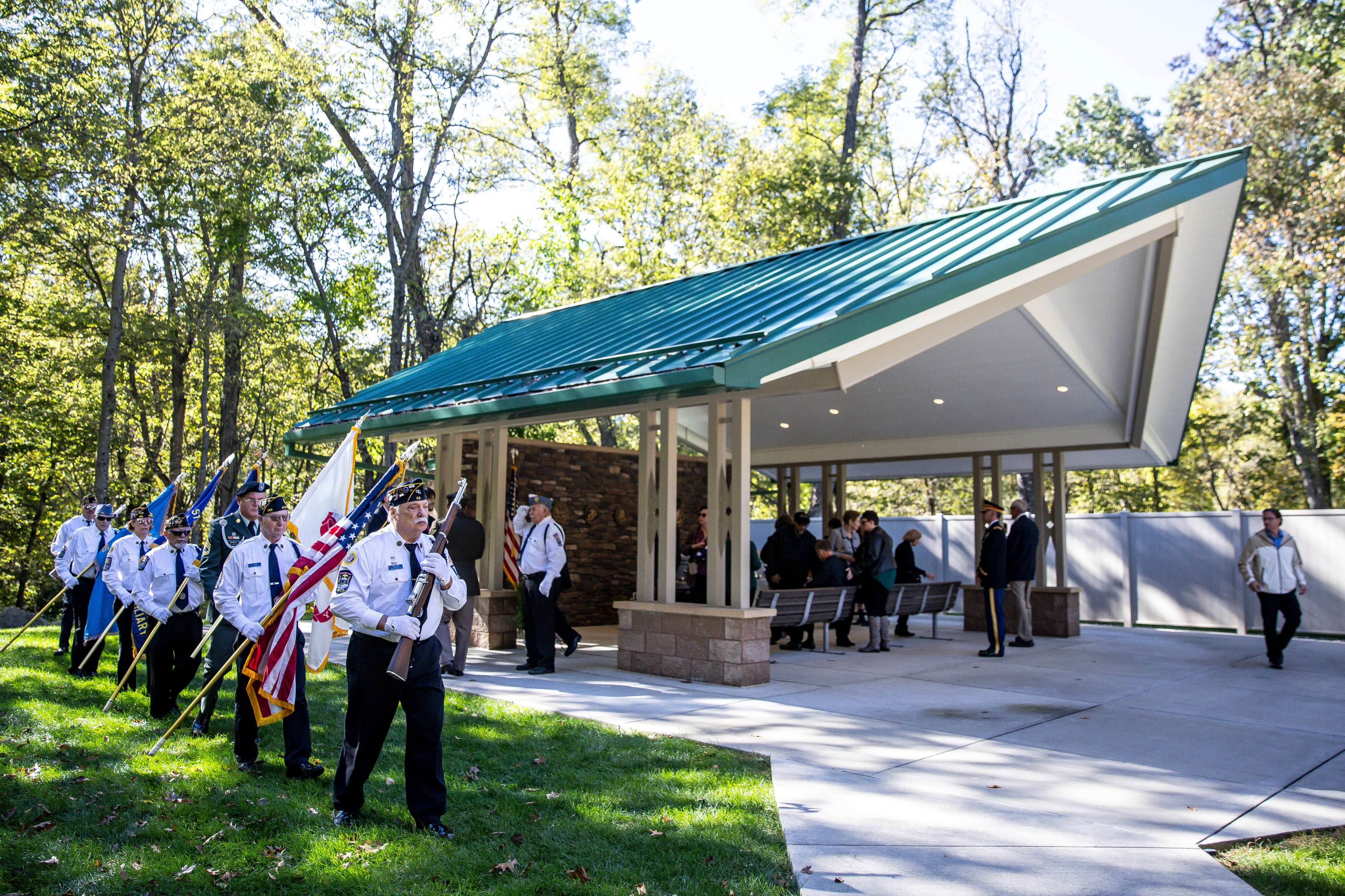
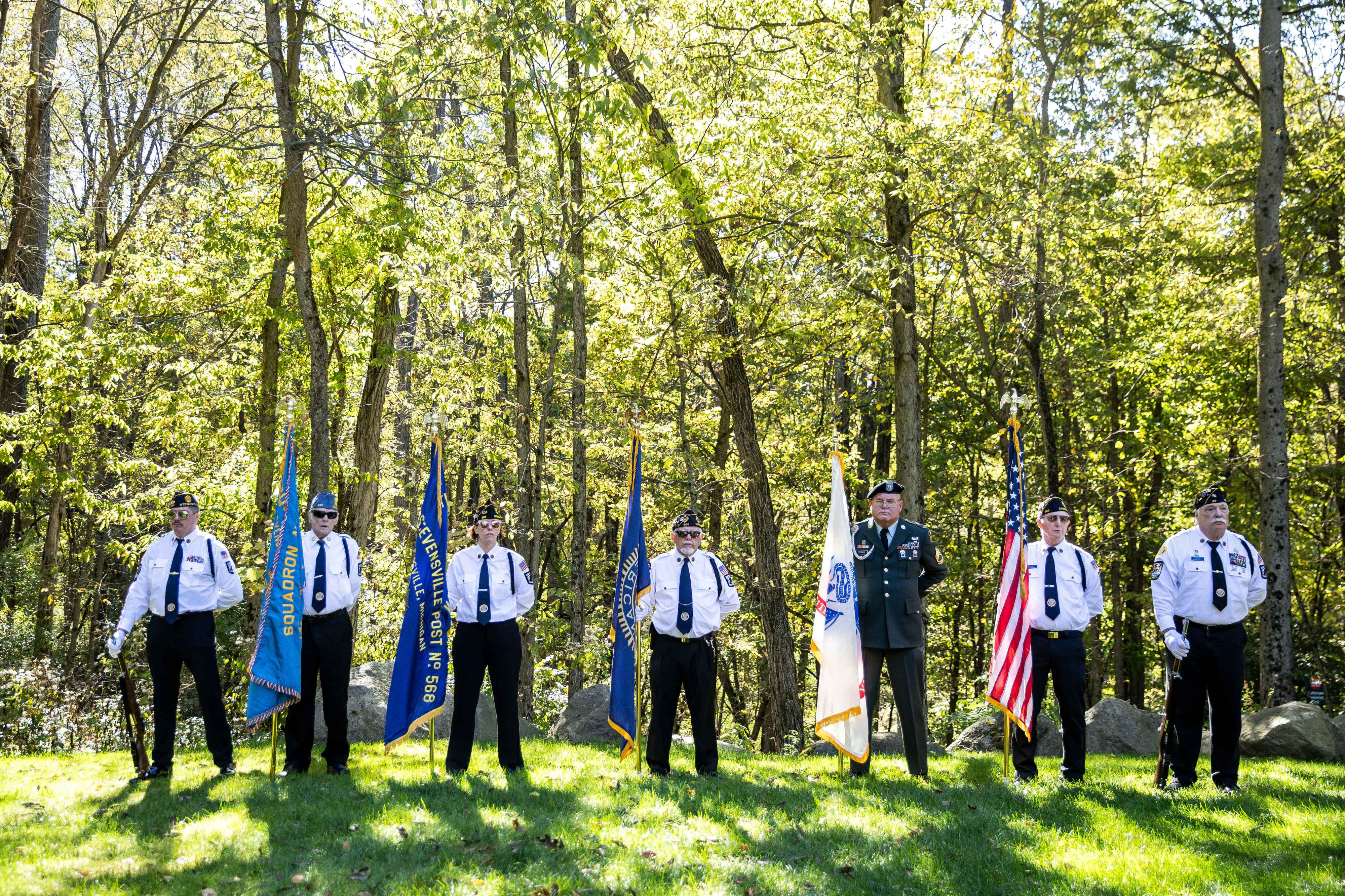
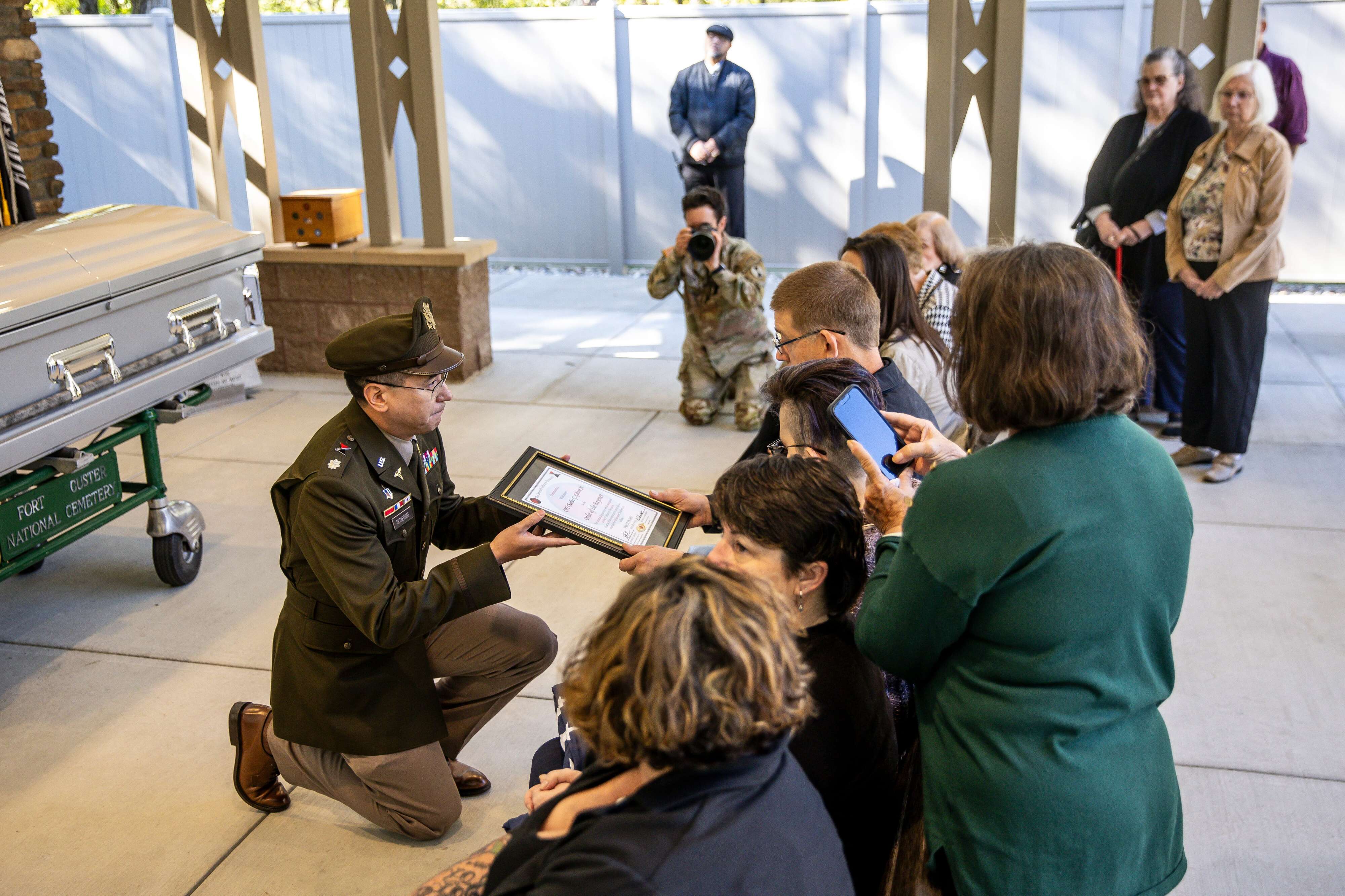
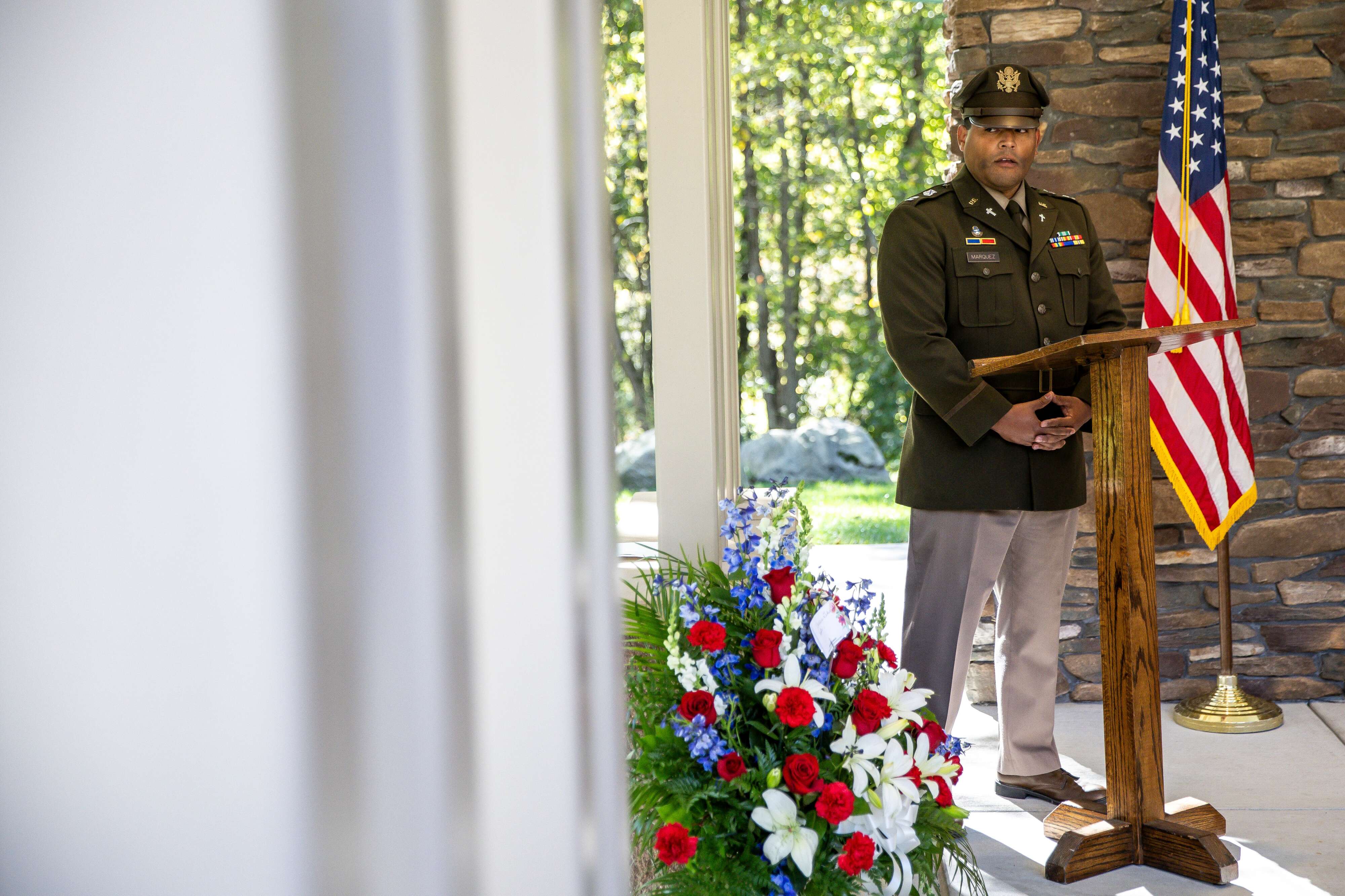
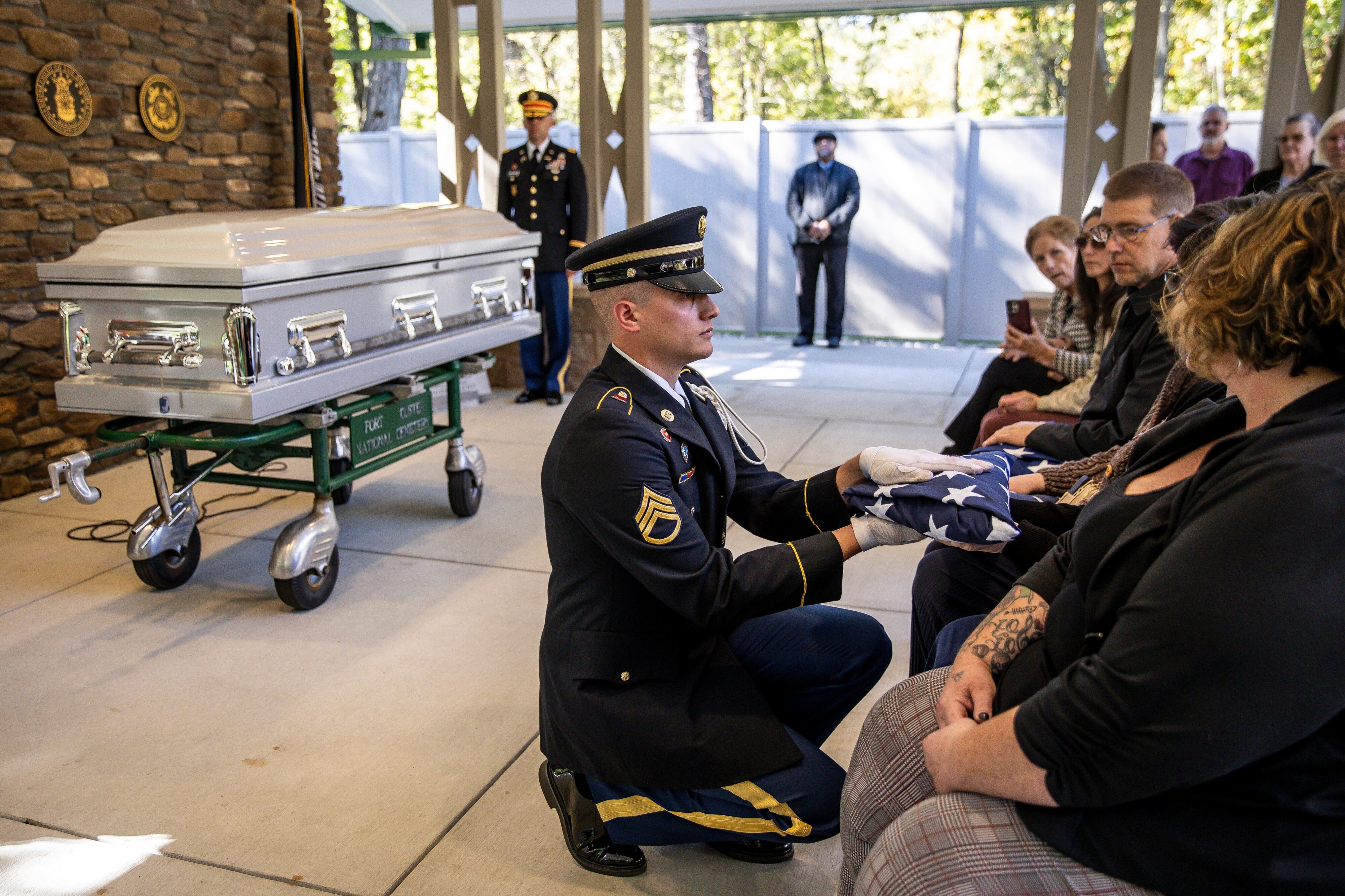
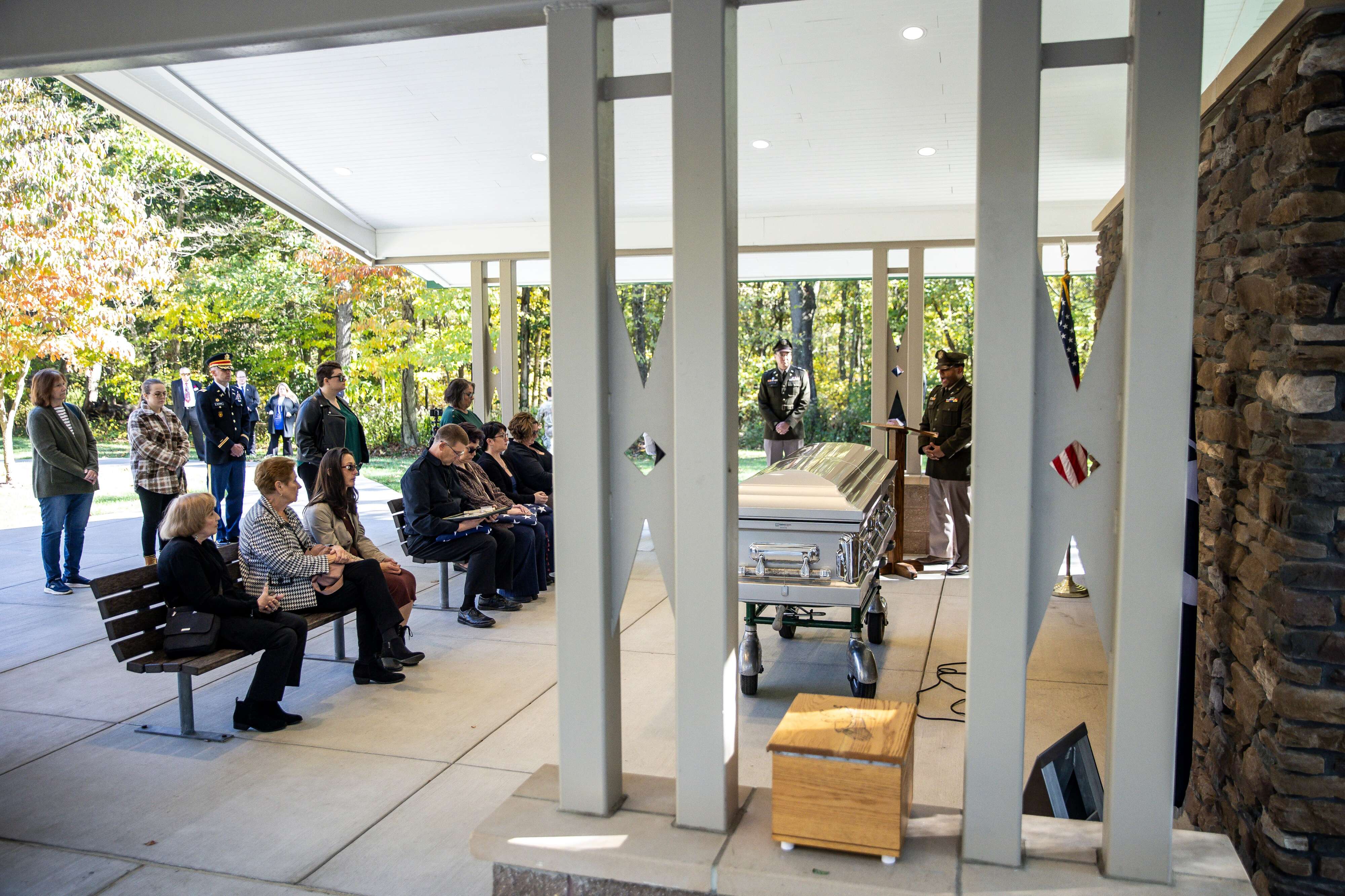
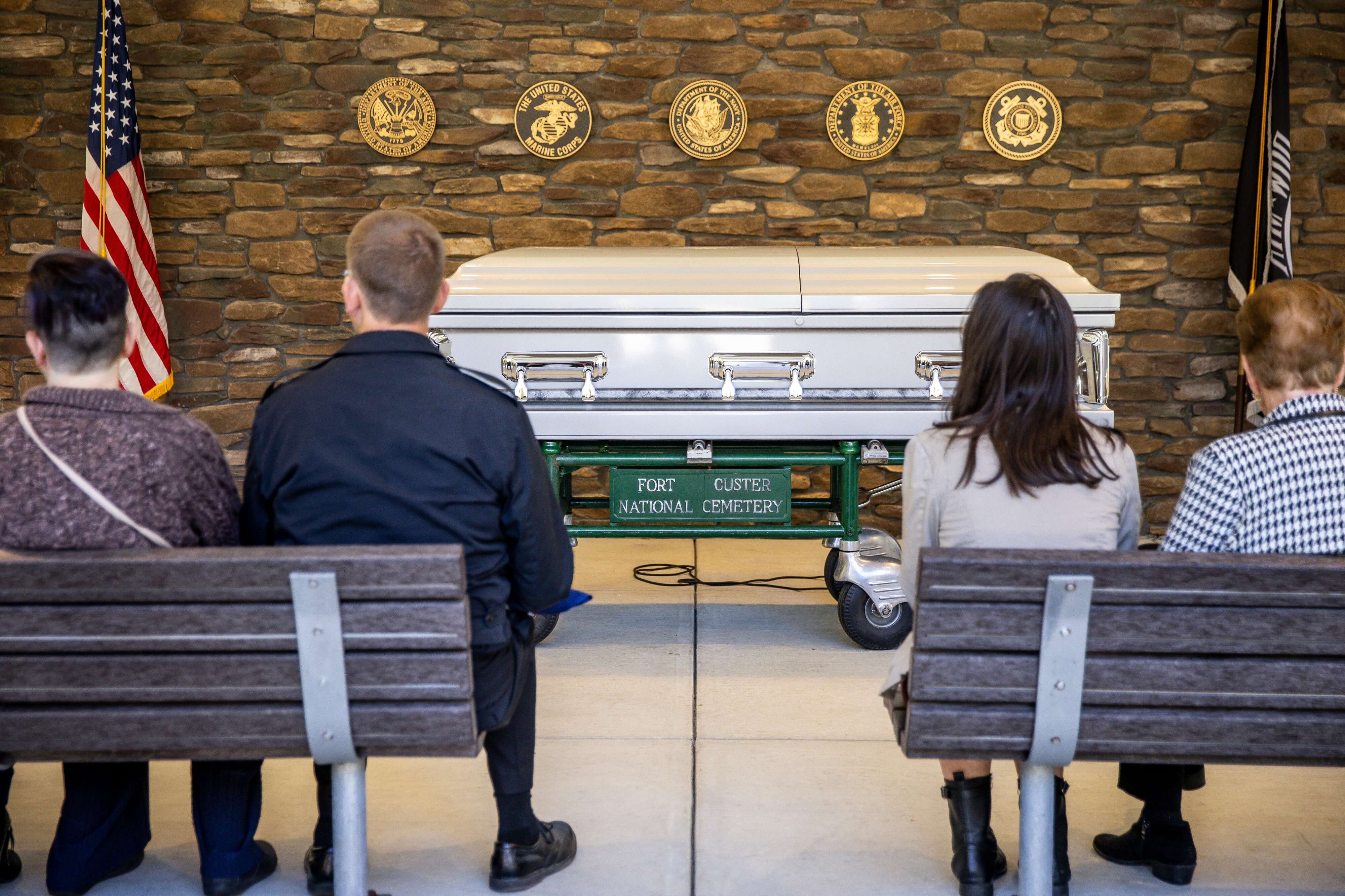
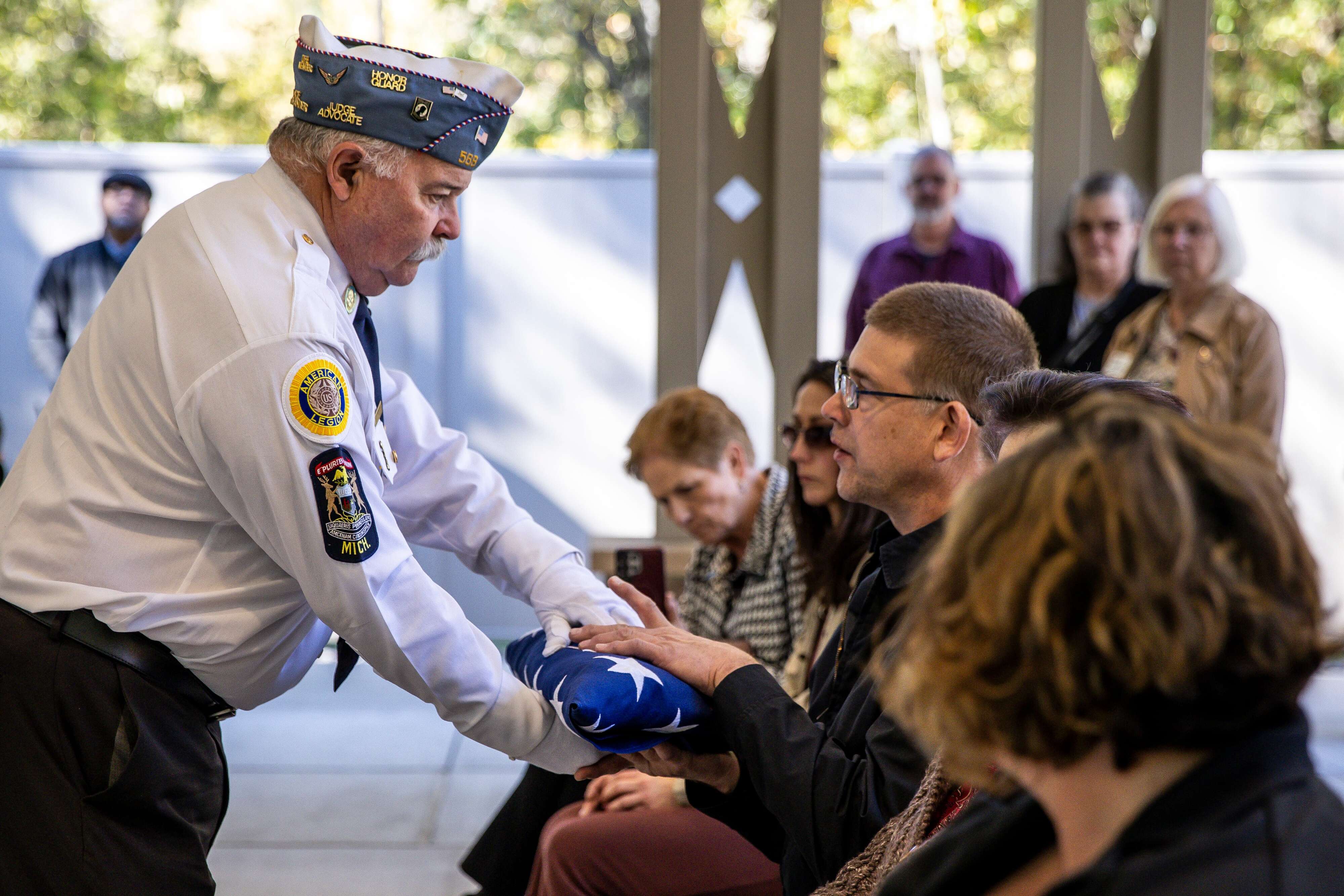
And Capt. Gibson wasn’t without family when that mission was accomplished Thursday, Oct. 16, at Fort Custer National Cemetery in Kalamazoo County. There, his descendants gathered for the military funeral honors ceremony that preceded his casket’s interment in the hallowed space, where thousands of other Michigan soldiers rest in valor.
Inside the casket was a portion of a left ulna bone, recovered from North Korean authorities seven years ago and identified by American scientists as Capt. Gibson’s remains six months ago.
Some hope telling the story of the captain’s long journey back from a Korean battlefield to Michigan soil renews a dialogue for families of U.S. military veterans still missing in action. It’s a dialogue that underlines a message:
No matter how long it takes, the search doesn’t end until the soldier returns.
It’s a mantra followed by officials such as Tamela Faulkner, an identification case manager with the Army’s Past Conflict Repatriations Branch that helped Capt. Gibson’s return.
“This means a great deal to the family,” Faulkner said, “and those of us who have worked to bring him home.”
Their Fathers’ Keepers
Melissa Wallace never met Capt. Gibson, her grandfather. And her father, Charles Michael Gibson, who died in 2006, was two months shy of turning 2 years old when Capt. Gibson was declared missing in the Korean War in 1950.
“My dad never knew his dad, but finding out what happened was important to him his entire life,” said Wallace, the first-born of Capt. Gibson’s five grandchildren. “My dad didn’t live to see that closure. It was like his own private obsession.”
Her father during his adult life wrote letters to every U.S. president. Those letters urged intensifying the search for the body of Capt. Gibson, declared dead absent evidence suggesting otherwise by the U.S. Department of War on Dec. 31, 1953, three years after the soldier went missing in battle.
While Wallace and her family didn’t realize it at the time, a significant milestone in that search was reached Aug. 1, 2018. That’s when President Donald Trump’s administration negotiated with North Korean officials for the release of 55 boxes of human remains recovered decades earlier from Sinhung-ri, a village east of the Chosin Reservoir — a man-made lake in northeast Korea — where Capt. Gibson was last reported alive.
In part using biological data collected from two of his relatives, scientists at the U.S. Department of War’s Defense POW/MIA Accounting Agency lab in Hawaii on March 17, 2025, identified a portion of an arm bone in one of those boxes as a match for the DNA signature of Capt. Gibson’s family.
Military officials notified Wallace and other members of that family, eventually providing them an in-person briefing as well as a booklet describing the events leading both to his death and the discovery of his remains.
“I learned more about him from my meeting with the Army than I ever heard from my family, because, you know, it was too painful for my grandmother to talk about,” Wallace said.
The Midland resident was among the family members present Thursday for the burial of Capt. Gibson, who served for nine years in the Army and survived tours in World War II’s Pacific and European campaigns. Many of the captain’s other modern descendants traveled to this week’s memorial service from where they live on the southeastern corner of the state, near the Grand Rapids region.

The ceremony they witnessed at Fort Custer National Cemetery, in fact, was the captain’s first and only funeral service, Wallace said. Her grandmother, Dorothy Jean Gibson, never remarried and was so devastated by the loss of her husband that she never organized a memorial for him.
“I wish she could have been here for this,” Wallace said of her grandmother, who lived in the Saginaw home she and Capt. Gibson purchased until the day she died in 1998.
Wallace said she wants the story of Capt. Gibson’s 75-year journey home to offer optimism for other families of military members who never returned from battle.
“I want this to reenergize people to keep looking, to keep asking questions,” Wallace said, “to offer some hope that other families may still be reunited with their lost loved ones.”
The Chosin
Some of what Wallace and her family learned this year about Capt. Gibson’s life in part was captured in the Army’s report via clippings of 1950s-era Saginaw News articles reporting about his status as missing and, later, his declared death.
“Saginaw Native’s Husband Missing,” read the earliest of the clippings about the Houston-born soldier, a member of the 48th Field Artillery Battalion at the time.
A later article detailed how the soldier met and married his wife in Germany while she was stationed there as a member of the Women’s Army Corps, an American non-combat military unit established during World War II. The family later moved to a home in the Cathedral District of his wife’s hometown of Saginaw, where they lived when Capt. Gibson was deployed to the conflict in Korea.
Another news clipping detailed how Wallace’s grandmother in 1951, between the time of Capt. Gibson’s missing-in-action status and his declared death, accepted her husband’s Bronze Star Medal “for meritorious achievement against the enemy.”
The Army files included an official military portrait of Capt. Gibson from his time serving in World War II, when he was a sergeant. It’s the only image Wallace has ever seen of her grandfather.
“Other than the ears, I look exactly like him,” Wallace said of the grainy, black-and-white photo from the 1940s. “I tweeze my eyebrows and look feminine, but yeah, he looks like me.”
The Army report provided to Wallace and her family also included a detailed timeline of the conflict and specific military maneuvers that preceded the death of Capt. Gibson, beginning with June 30, 1950, the day President Harry Truman authorized sending ground troops to Korea. A United Nations-gathered military coalition joined American soldiers, with Capt. Gibson’s infantry division entering Korea by fall.
It was late November 1950 when the file’s entries grew more specific in detail, describing the frenzied 17-day battle for positioning alongside the frozen Chosin Reservoir.
On Nov. 28, 1950, Capt. Gibson and his 48th Field Artillery Battalion joined the Army’s effort to create a north-facing perimeter after the Chinese military — which entered the conflict in alliance with Korean forces — launched an attack at 1 a.m., the report read.
“Increasingly precarious with limited artillery support and no reinforcements,” the file stated. “CPVF (Chinese People’s Volunteer Forces) would attack in the darkness and retreat during daylight hours. Platoon leaders told to hold the position ‘at all costs.’"
The report described how, during the first week of the battle, enemy roadblocks separated Capt. Gibson’s battalion from other military units. The chaos of gunfire and mortar bombardments at times kept soldiers fighting up to 80 consecutive hours.
By Dec. 1, 1950, American troops withdrew from an area of intensifying warfare and “all KIA were left behind to allow living to make it out,” the report read. “Numbers were so low (commanding officers) consolidate all remaining into one unit.”
By the next day, “from the 3,000 soldiers assigned” when the battle began, “only 385 were fit for duty,” the report stated.
It’s unclear if Capt. Gibson was among the 385 “fit” soldiers counted that day. After the reference to his mission’s launch on Nov. 28, his name did not appear again in the timeline until Dec. 11, 1950.
“Army reports Capt. Gibson as MIA,” that entry read.
“The Army really pieced together what happened in the final months of my grandfather’s life, and the conflict,” Wallace said of the file provided to her family. “And that was unexpected closure, because all I knew before that was, he went to Korea and he was killed.”
As she eventually discovered, the final battle of Capt. Gibson’s life did not happen during some obscure stretch of combat in the three-year-long military conflict against Korea. Historians often reference that deadly 17-day clash in the winter of 1950 as “The Battle of Chosin Reservoir” and its combatants as “The Chosin Few.” The battle’s brutality became the subject of dozens of books, documentaries and dramatized films.
“Over a thousand U.S. marines and soldiers were killed during the Chosin Reservoir Campaign and thousands more were wounded in battle or incapacitated by cold weather,” read a report on the Defense POW/MIA Accounting Agency website. “Many men were buried where they fell, and due to the cold weather and the retreat of UN Forces from the area, hundreds of fallen marines and soldiers were unable to be immediately recovered.”
Capt. Gibson has left that battlefield behind him now. And the arrival to his new destination was timed this week with purpose by the family awaiting him there.
The date Capt. Gibson was buried — Oct. 16 — also was the date of his birth. If he had survived the years, the captain would have turned 103 the day his remains came to rest in the state he once called home.
Post a Comment