
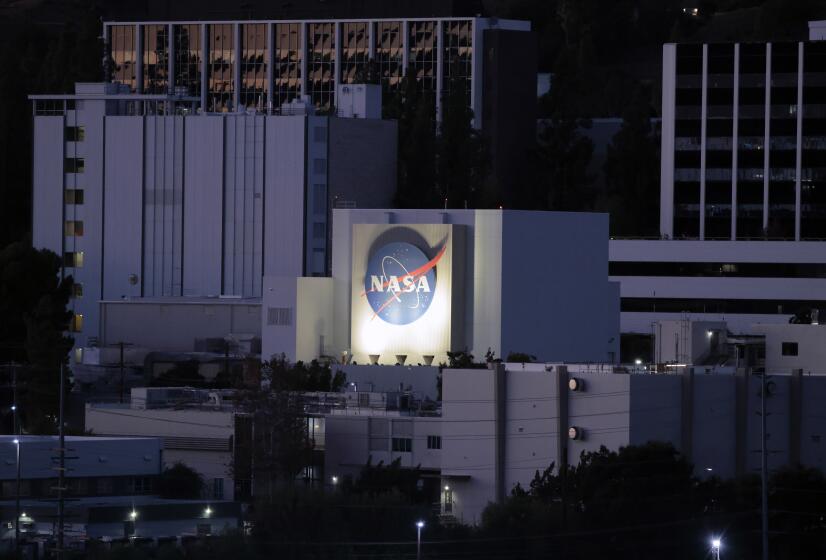
A Legacy in Peril: The Struggles of NASA’s Jet Propulsion Laboratory
Designing a system that could bring a piece of Mars back to Earth was the dream job for many at NASA's Jet Propulsion Laboratory (JPL). Located in Southern California, JPL has long been the hub of American rocketry and space exploration. For one mechanical engineer, it was more than just a career — it was a lifelong aspiration. As she pursued her degrees in mechanical engineering, she followed JPL launches and became captivated by the images captured on Mars. Attending an open house at JPL felt like "Disneyland" to her, and she applied for a position more than 60 times before finally landing a role on the Mars Sample Return Mission. She hoped to spend the rest of her career there.
But on Tuesday, she was among the 550 employees laid off — over 10% of the workforce. This marked the fourth round of layoffs in two years, a result of funding cuts from Congress due to the ballooning budget and timeline of the Mars Sample Return mission. Morale has plummeted, with staff reporting management issues and feeling left in the dark about the lab's future. “There's been this creeping dread in anticipation,” said the engineer, who spoke anonymously. “The boot was once again raised to stomp on us, but we didn't know when it was going to drop.”
A Historical Institution Facing Modern Challenges
JPL, operated by Caltech and funded by NASA, was founded in the 1940s after experiments by Caltech scientists caught the attention of the U.S. military. Its early days were marked by both innovation and mishaps, such as a 1936 test that ended up creating a “flailing flame thrower.” Despite these challenges, JPL has become a cornerstone of scientific and technological advancement, according to Fraser MacDonald, a senior lecturer at the University of Edinburgh. To him, JPL is “a major scientific and technological anchor in Southern California.”
After World War II, JPL played a crucial role in the development of the first successful U.S. satellite, Explorer 1, which studied cosmic rays. In 1958, NASA was created, and JPL found a new home within the agency. Over the decades, JPL has been instrumental in some of NASA’s most ambitious missions, including the Mars rovers and the Europa Clipper, which will explore Jupiter’s moon.
Funding Cuts and Management Issues
However, recent years have brought significant challenges. The White House and Congress have increasingly focused on human spaceflight to the moon and Mars, shifting attention away from robotic missions. At the same time, rising costs — from supply chain issues to employee living expenses — have put pressure on NASA’s budgets. Casey Dreier, chief of space policy at the Planetary Society, notes that these factors have contributed to a decline in high-profile missions.
JPL has also faced internal management problems. After the Psyche mission to a metal-rich asteroid missed its 2022 launch date, an independent review found that internal reorganizations and personnel changes had led to distracted managers and burned-out staff. Another review in 2023 revealed that the Mars Sample Return mission had almost no chance of meeting its 2028 deadline and lacked a credible plan within its budget.
NASA cut its spending on the Mars Sample Return mission, which in turn led to funding cuts for JPL. The agency then sought alternate plans from other NASA centers and the private sector, forcing JPL to compete for its own project.
Layoffs and Uncertainty
JPL had expanded its workforce from around 5,000 people in the early 2010s to roughly 6,500 to support its flagship missions. But with projects like Europa Clipper and Psyche now in space, and Mars Sample Return shelved, the lab couldn’t find roles for all its staff. “I struggled with balancing the passion I had for the work with the knowledge that I could be moved off projects anytime,” said the mechanical engineer. “Why should I pour my heart and soul into it? ... A lot of the stuff we're doing might never go anywhere.”
Layoffs have continued, with 100 on-site contractors let go in January 2024, followed by 530 employees and 40 contractors a month later. An additional 325 employees were laid off when it became clear that NASA’s funding for JPL wouldn’t change in 2025. The 2026 budget remains uncertain, with the government in the third week of a shutdown. While JPL claims the latest layoffs are not due to the shutdown itself, the timing raises questions.
A Lab in Transition
Throughout the two years of steady layoffs, employees repeatedly asked lab leaders about the timeline and who would be affected, but received few answers. The JPL Reddit forum, once a place for aspiring engineers and scientists to ask about jobs and life at the lab, turned sour as employees vented their frustrations and shared layoff information that leaders wouldn’t disclose.
Despite the current turmoil, the mechanical engineer still believes in JPL’s potential. “I do genuinely believe that JPL can weather the storm,” she said. This isn’t the first time JPL has faced a funding crisis. In 1981, President Reagan proposed slashing NASA’s planetary science funding, and JPL nearly pivoted to Department of Defense work. However, Caltech leaders managed to secure funding for the Galileo mission, which explored Jupiter’s atmosphere.
Today, the path forward is less clear. Casey Dreier suggests that JPL may need to rely more on defense and national security projects, using its robotics and Mars expertise to support NASA’s goals of landing humans on the moon and Mars. “Who else has landed on Mars as many times as JPL has?” he asked. “No one. JPL has done it successfully nine times since 1976.”
While saving JPL’s signature planetary science missions remains challenging, the lab’s legacy and expertise continue to make it a vital player in space exploration.
Post a Comment