
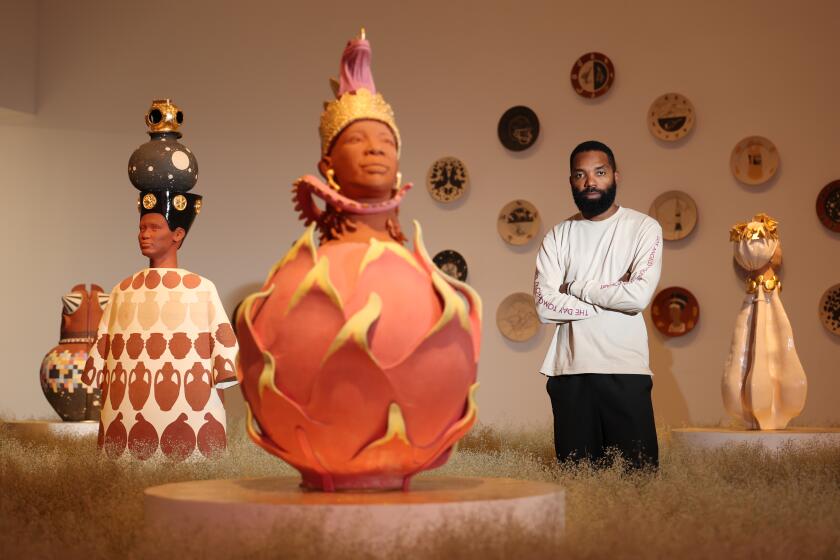
Tavares Strachan has always been fascinated by the intersections of art, science, and history. His work challenges the boundaries between past, present, and future, often using bold, unconventional methods to spark reflection and dialogue. Born in Nassau, Bahamas, Strachan has spent his career exploring themes of displacement, identity, and the overlooked contributions of Black individuals throughout history.
One of his most striking projects involved carving a 4.5-ton block of ice in the Alaskan Arctic and shipping it back to the Bahamas via FedEx. The ice was displayed in a solar-powered freezer, serving as a powerful commentary on climate change, migration, and the interconnectedness of global issues. This piece not only highlighted environmental concerns but also underscored the impact of human activity on vulnerable regions.
Strachan’s journey to the North Pole was inspired by Matthew Henson, the Black explorer who accompanied Robert Peary on polar expeditions in 1909. Henson is believed to have been the first person to reach the North Pole, yet his achievements were largely ignored due to racial biases of the time. Strachan’s visit to the Arctic was both a tribute and a reclamation of Henson’s legacy, emphasizing the importance of recognizing historical figures whose contributions have been erased or minimized.
Another significant project by Strachan honors Robert Henry Lawrence Jr., America’s first Black astronaut. Tragically, Lawrence died in a plane crash while training for a space mission in 1968, never getting the chance to go into orbit. In response, Strachan created an artwork inspired by Lawrence and sent a replica into space aboard a SpaceX rocket. This act symbolized a form of poetic justice, ensuring that Lawrence’s spirit and accomplishments were recognized beyond Earth.
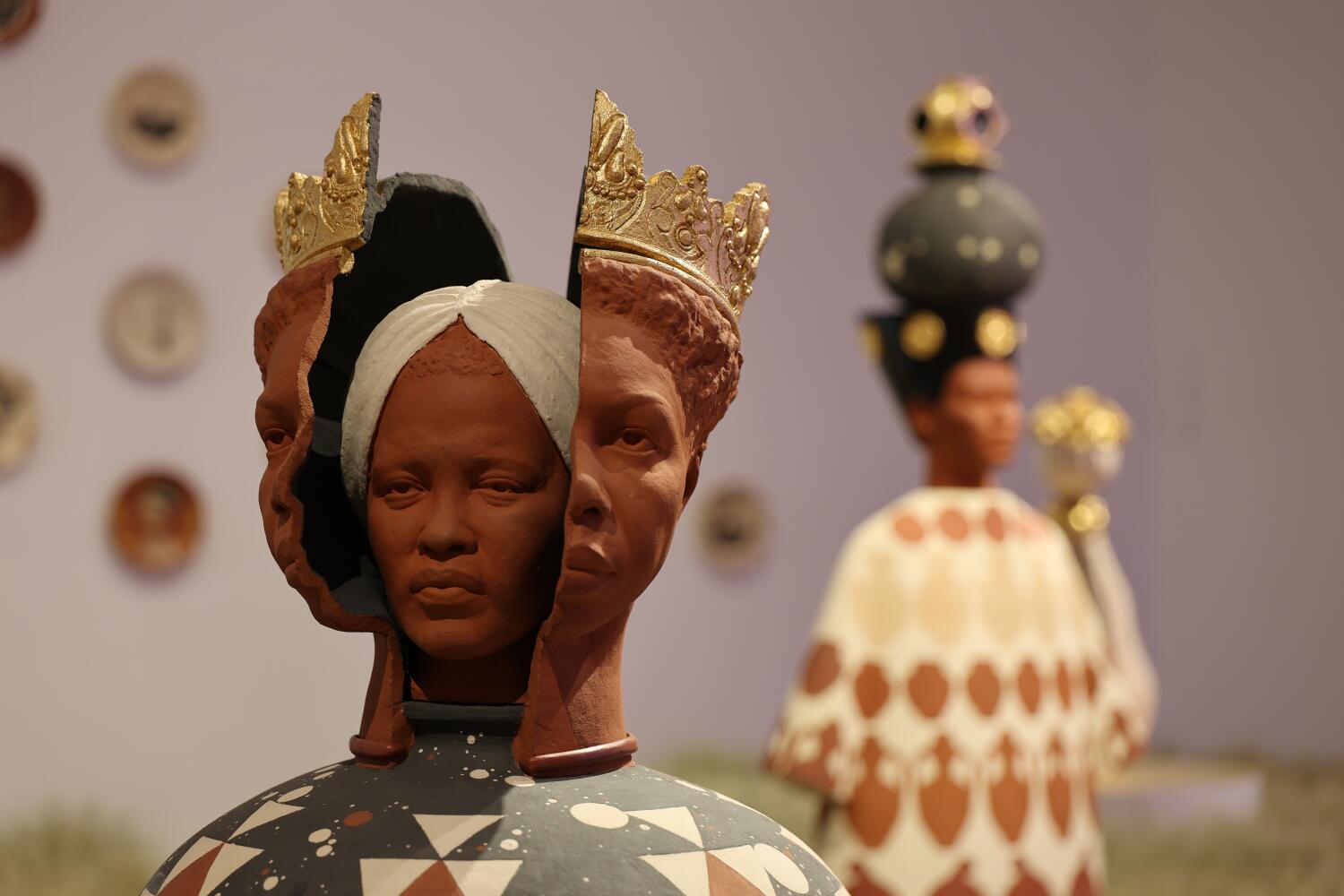
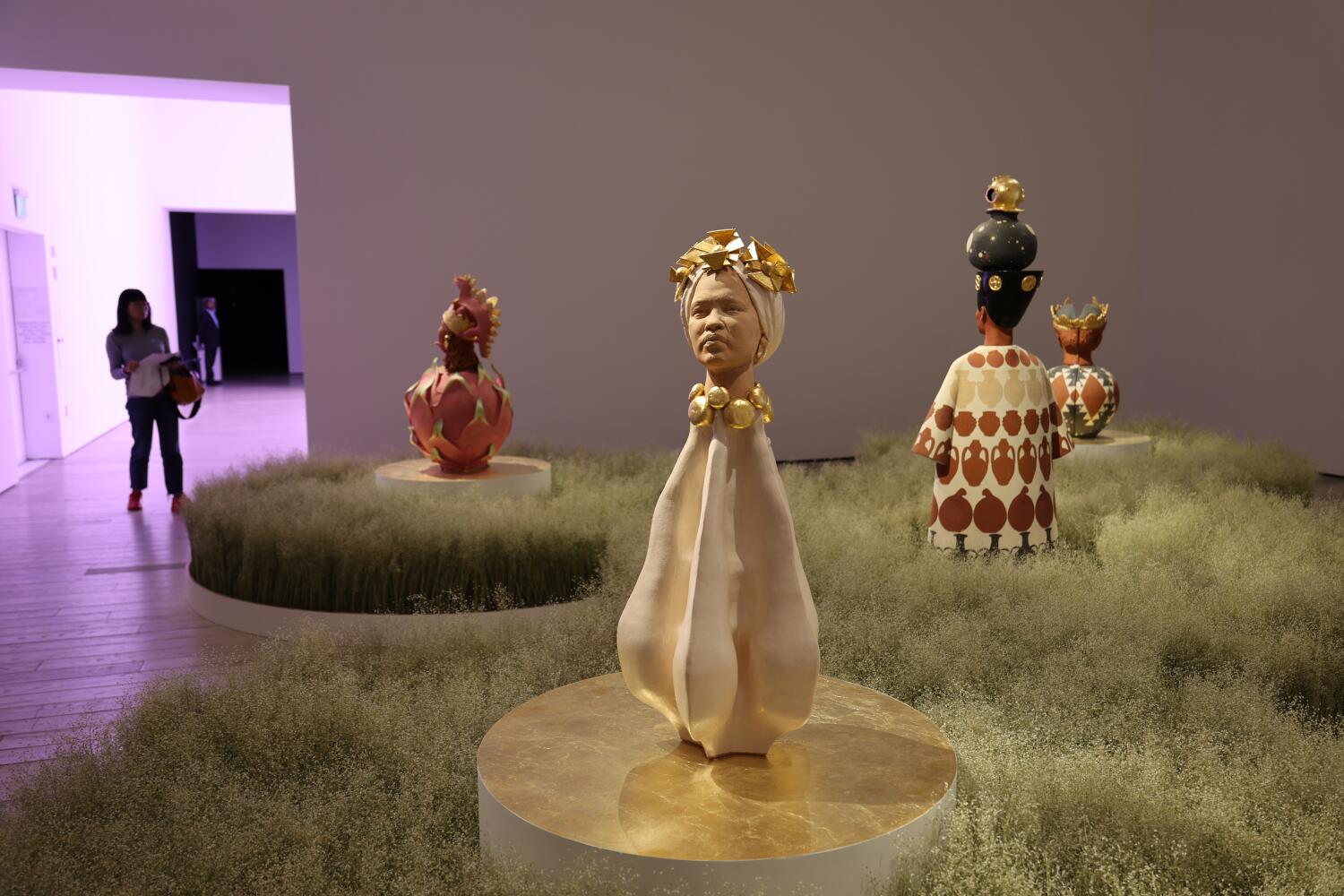
Currently on display at the Los Angeles County Museum of Art, Strachan’s exhibition titled “The Day Tomorrow Began” marks his first museum show in the city. The exhibit is a multisensory experience that explores themes of scientific inquiry, cultural heritage, and the erasure of Black achievements from historical narratives.
The exhibition includes a wide range of works, from illustrations and diagrams to traditional African hairstyles, mohair collages, and commemorative ceramics. One particularly striking element is a field of rice grass designed to evoke olfactory memories. A wall of neon signs features quotes from James Baldwin and Mark Twain, with the latter’s words appearing upside down—a nod to the power of language and the complexities of identity.
In another room, dramatic bronze sculptures challenge the dominant narratives of Western civilization by highlighting the stories of the oppressed. One sculpture depicts the moon, with a bust of Henson resting on its north pole and an upside-down bust of Peary on the south pole. This juxtaposition serves as a visual metaphor for the shifting perspectives of history and the need to reexamine established narratives.
Strachan’s fascination with science and hidden histories began during his childhood in Nassau. As a curious and determined young boy, he became aware of the lack of representation of Black figures in educational materials. This realization sparked a lifelong interest in understanding the forces that shape knowledge and perception.
His early experiences, such as working on a fishing boat and observing the stars at night, deepened his connection to the natural world and the ancient knowledge passed down through generations. These experiences fueled his curiosity about the universe and the gaps in historical accounts of exploration and discovery.
Strachan’s work also draws attention to the contributions of lesser-known figures, such as John Edmonstone, who taught Charles Darwin taxidermy. By highlighting these overlooked individuals, Strachan challenges the notion of singular, dominant narratives and encourages a more inclusive understanding of history.
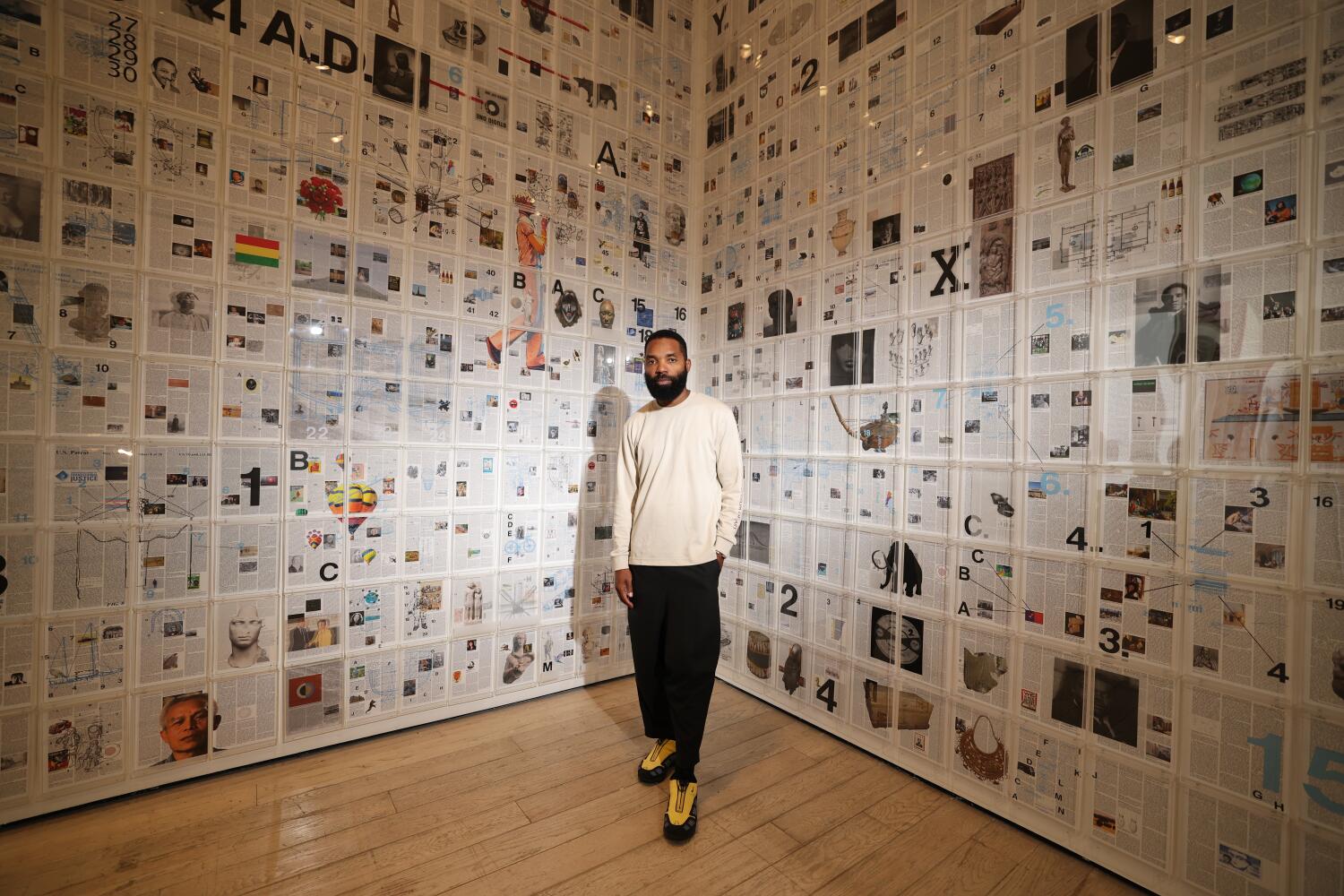
Curator Diana Nawi describes Strachan’s projects as a resistance against the “calcification of history,” where dominant groups reinforce their own narratives while ignoring or erasing others. She emphasizes the power of history as a tool of influence and the importance of reexamining these narratives to create a more equitable future.
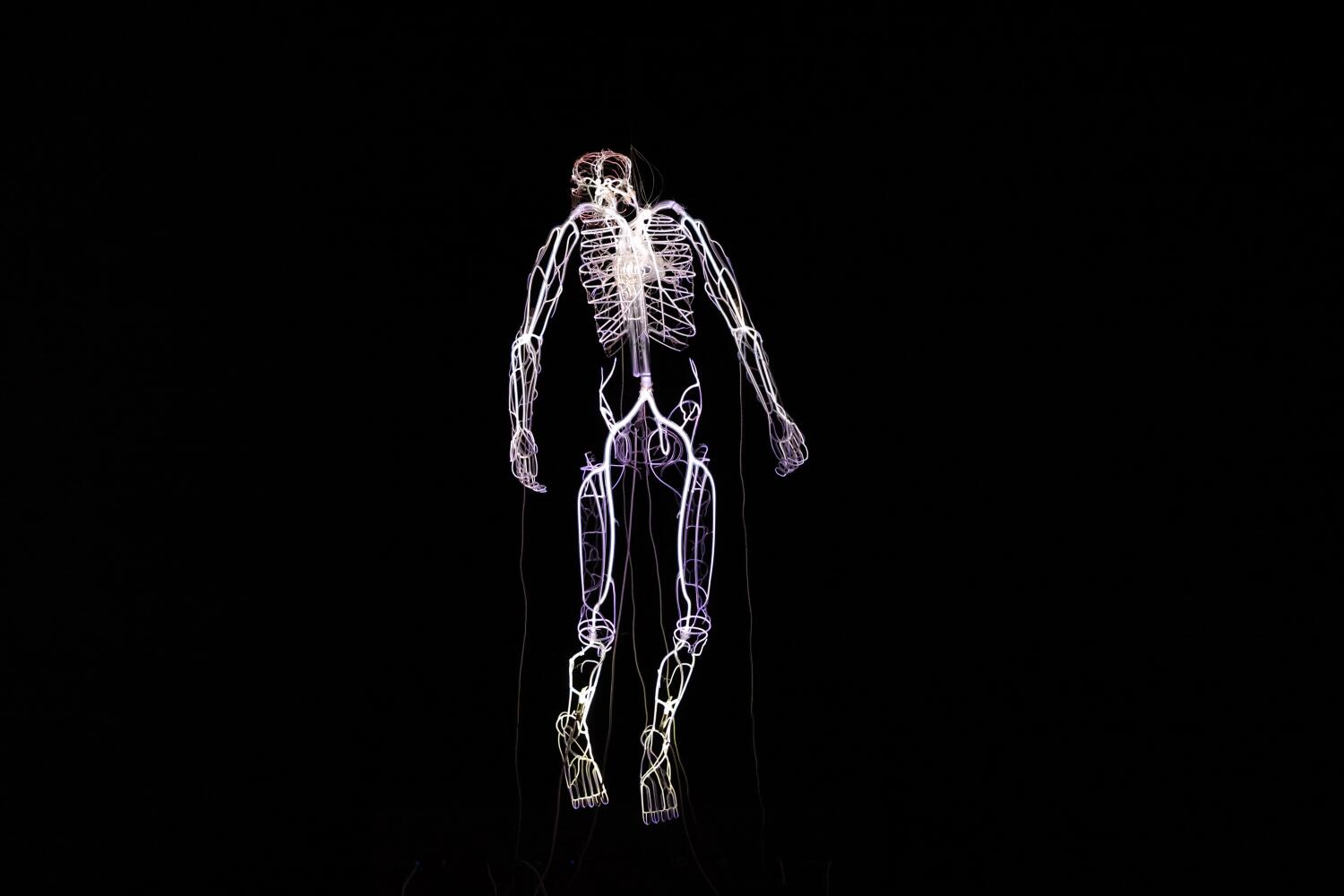
In one of the exhibition’s most poignant pieces, a life-size glass portrait of Robert Henry Lawrence appears to float in mid-air, illuminated by argon gas within electrified tubes that mimic the human circulatory system. This artwork captures Lawrence’s spirit and symbolizes the desire to transcend earthly limitations.
Strachan’s work continues to inspire and provoke thought, reminding viewers of the importance of storytelling and the need to recognize the full spectrum of human achievement.
Post a Comment