
A Unique Experiment: Running Doom in Space
In a remarkable feat of engineering and creativity, a hacker, with the help of the European Space Agency (ESA), managed to run the classic video game Doom on a satellite. This achievement highlights the incredible adaptability of open-source software and its potential to thrive in even the most unconventional environments.
Doom, released in 1993, is one of the most iconic video games in history. It not only helped establish the first-person shooter genre but also became known for its ability to run on nearly every computing platform imaginable—from lawnmowers to supercomputers. The game's versatility has led to ongoing efforts to port it to even more advanced systems, including quantum computers.
Recently, Doom took its most unusual leap yet: into space. This experiment showcased how open-source software can be adapted to work in extreme conditions, proving that even something as seemingly simple as a video game can have significant implications for space exploration and technology.
The Developer Behind the Mission
Ólafur Waage, a senior software developer from Iceland now based in Norway, presented his work at the Ubuntu Summit 25.10. Known for his humorous videos and coding expertise, Waage took on the challenge of running Doom on a real satellite. He described himself as a "professional keyboard typist" and a maker of funny content, but this project was anything but trivial.
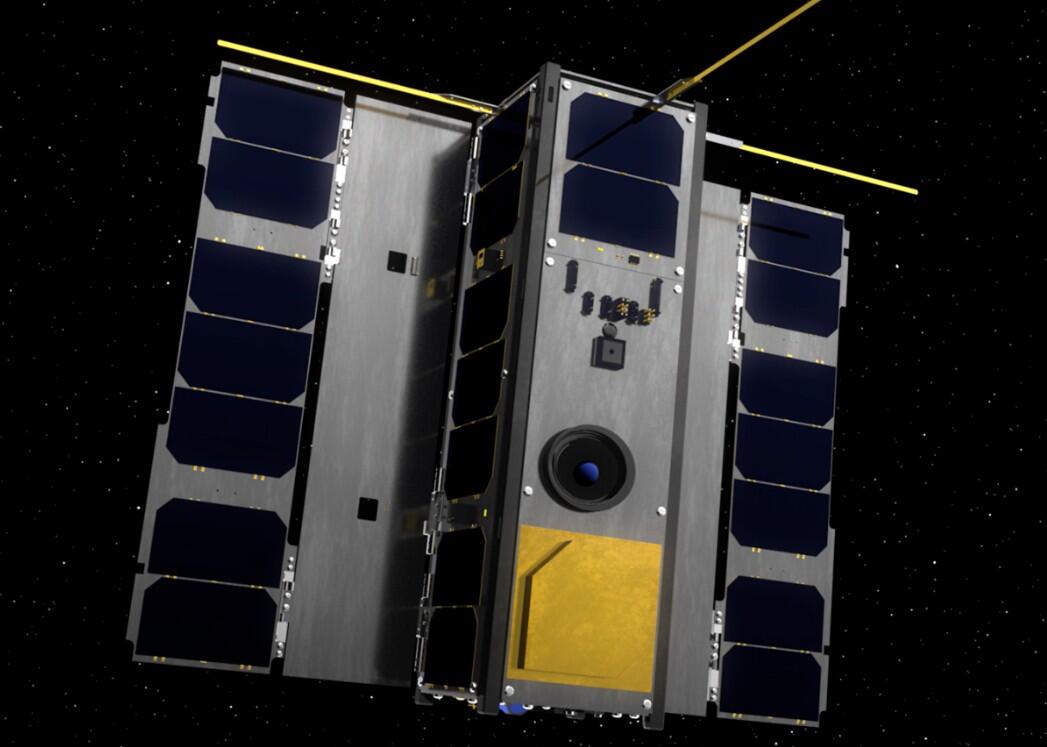
The satellite in question was the ESA’s OPS-SAT, a "flying laboratory" designed to test new onboard computing techniques. Equipped with an experimental computer that was about ten times more powerful than typical spacecraft hardware, OPS-SAT aimed to demonstrate improved mission control capabilities by breaking away from traditional risk-averse approaches to space missions.
Why Doom?
Waage chose Chocolate Doom 2.3, an open-source version of the game, because of its compatibility with the Ubuntu 18.04 Long Term Support (LTS) distro, which was already running on OPS-SAT. He noted that this was the last version that could actually build on the system, making it a practical choice for the project.
Porting Doom to a satellite involved overcoming several challenges. The onboard ARM dual-core Cortex-A9 processor, while advanced for space computing, was still slow compared to Earth-based standards. Additionally, running the game in orbit required careful consideration of hardware limitations and mission control constraints.
Challenges and Innovations
One of the biggest hurdles was the lack of graphics on the satellite. Unlike a gaming console, the satellite couldn't display visuals directly. Instead, all graphics had to be rendered in software, which significantly impacted performance. Despite this, the game ran successfully, albeit with a low frame rate.
To ensure reliability, the experiment relied on pre-recorded demo files, allowing the game to play back levels using deterministic input sequences. This approach helped detect any deviations caused by stray radiation, ensuring that the game's output matched expected results. It also allowed for some scientific experimentation, as the team compared outputs from space and Earth.
Waage also experimented with using real-time images from the satellite's camera to replace the game's Mars skybox. By rendering actual satellite photos in software, they created a unique visual experience, showcasing the power of open-source code and creative problem-solving.
The Outcome
Despite the technical challenges, Doom ran flawlessly on the satellite. As Waage put it, "It ran beautifully. It's on Ubuntu." This success demonstrated the adaptability of open-source software and the potential for future experiments in space.
Beyond the fun of playing Doom in orbit, the project served a larger purpose. It highlighted the importance of open-source development, space hardware, and international collaboration in advancing modern research. By lowering the barriers for experimenting in orbit, projects like OPS-SAT pave the way for innovative crossovers between software engineering and space science.
Future Possibilities
Since this groundbreaking experiment, other companies have followed suit. For example, the Polish company KP Labs successfully ran Doom on its Intuition-1 satellite, using the Leopard Data Processing Unit to capture hyperspectral images of Earth while running the game.
Looking ahead, there are plans for another satellite called OPS-SAT VOLT, scheduled for launch next year. This satellite will focus on quantum communications, and Waage hopes to port Doom to it, pushing the boundaries of what's possible in space.
Conclusion
Running Doom in space may seem like a trivial endeavor, but it represents a significant milestone in the intersection of technology, creativity, and space exploration. It proves that open-source software can thrive in even the most challenging environments and inspires both engineers and gamers alike.
As the orbital journey of Doom continues, it remains a testament to human ingenuity and the endless possibilities of innovation. Whether for fun or for science, the game has once again proven that it can go where no game has gone before.
Post a Comment