
Understanding Foam Stability in Microgravity
Foams are a common part of daily life, found in everything from cappuccinos and shaving creams to fire extinguishers. Despite their widespread use, foams are inherently unstable due to their composition of liquid and gas. On Earth, this instability is exacerbated by gravity, which causes the liquid to drain from the foam structure over time. This drainage leads to rapid changes in the foam’s structure, making it difficult to predict how long a given foam will remain stable.

The process of foam evolution involves several stages. Initially, the liquid drains out, leaving behind a network of bubbles. Even after most of the drainage has occurred, the bubbles continue to change. They may merge with each other or undergo a process called coarsening, where smaller bubbles shrink and disappear while larger ones grow. This happens because gas diffuses from one bubble to another through the liquid phase.
These later stages of evolution depend on subtle physicochemical characteristics of the foam’s liquid mixture. As a result, predicting the stability of a foam based on its composition remains a challenge. However, understanding and controlling these processes is crucial for improving the performance of industrial foams.
The Role of Gravity in Foam Studies
One major obstacle to studying foam stability on Earth is the effect of gravity. It disrupts measurements by creating an uneven distribution of liquid within the foam. To overcome this challenge, a group of researchers conducted a study aboard the International Space Station (ISS), where microgravity allows for a more accurate observation of foam behavior.
In this experiment, scientists observed the evolution of foams generated in zero gravity. They tested nine different stabilizing agents, including conventional surfactants, a polymer, and a food protein. By measuring the rate at which bubbles grew, they discovered that the growth rate varied significantly depending on the chemical nature of the stabilizer used.
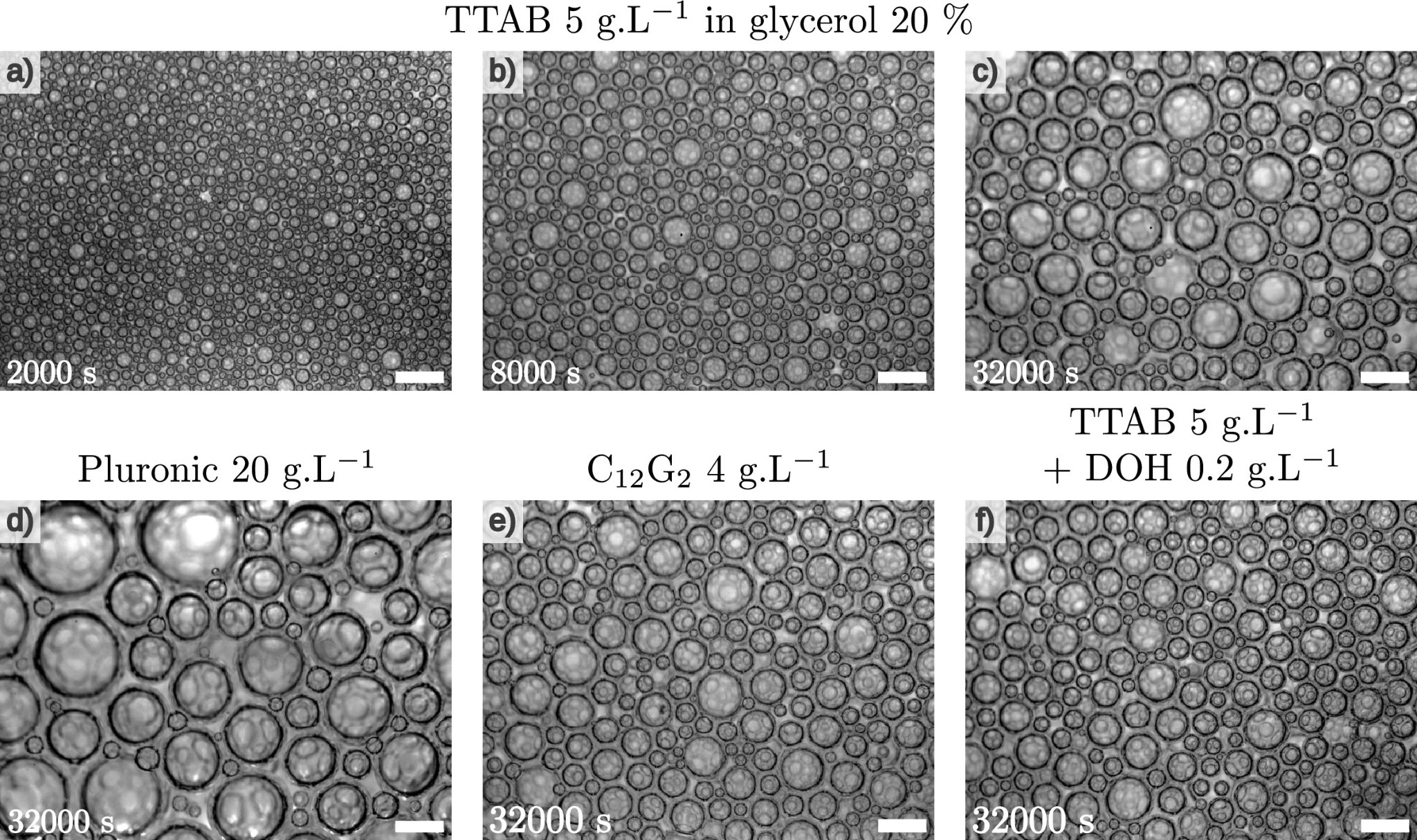
Previously, experts believed that the speed of coarsening was primarily influenced by the permeability of the interstitial liquid. However, the study revealed that two additional factors play a critical role. First, the adhesion between bubbles affects their local structure, especially when the liquid fraction is not too high. Second, gas diffusion through capillary bridges or Plateau borders—where three liquid films meet—becomes significant when the permeability of thin interfaces is low.
These findings highlight the complexity of foam coarsening and provide new insights into how different factors interact. The results show that both interfacial properties and structural characteristics must be considered to fully understand and control foam stability.
Implications for Industrial Applications
This research has important implications for various industries. A better understanding of foam stability can lead to the development of more effective foams in fields such as cosmetics, pollution control, and material science. For example, in the cosmetic industry, stable foams can enhance product performance and user experience. In environmental applications, foams can be used to remove pollutants more efficiently.
The study also opens new possibilities for designing foams with specific properties tailored to different applications. By taking into account the complex interactions between surfactant chemistry, interfacial properties, and structural characteristics, researchers can create foams that perform better under a wide range of conditions.
Conclusion
This work represents a significant step forward in understanding the mechanisms that govern foam stability. By conducting experiments in microgravity, scientists have gained valuable insights into the factors that influence coarsening and bubble growth. These findings not only advance scientific knowledge but also have practical applications across multiple industries. The results, published in the Journal of Colloid and Interface Science, demonstrate the importance of interdisciplinary research in addressing complex physical phenomena.
Post a Comment