
Earthquakes are not random events; they occur in specific areas where the Earth's tectonic plates interact. These plate boundaries, whether active or dormant, are often the sites of seismic activity. In the case of the East Coast, a network of ancient faults runs through the region, including the Ramapo Fault, which stretches from southeastern New York to eastern Pennsylvania. This fault system is part of a larger geological structure that has shaped the landscape over millions of years.
The Rochester area, located in western New York, has experienced several earthquakes in recent years. One such event occurred on Wednesday night, just north of Wayne County in Lake Ontario. It was a 2.2-magnitude quake, occurring approximately eight kilometers below the Earth’s surface. Similar tremors were recorded in surrounding counties in 2021 and 2022. While these quakes are relatively small, they highlight the fact that the region is not immune to seismic activity.
Tolulope Olugboji, an assistant professor of earth science at the University of Rochester, has studied the causes of earthquakes in the region. She explained that while the Ramapo Fault is one of the more well-known fault systems in the area, smaller, unmapped faults also contribute to seismic activity. These faults are part of a complex network that branches out from the main fault lines, making it challenging to predict exactly where and when an earthquake might occur.
What Causes Earthquakes in Western New York?
The East Coast, unlike the West Coast, does not have many active faults that are prone to frequent earthquakes. However, the region is home to dormant fault systems that can still generate seismic activity under certain conditions. According to Olugboji, modern stressors—both natural and human-induced—can trigger tremors in these older fault systems.
One theory suggests that faults are always near failure, meaning even minor changes in stress can cause them to rupture. Natural forces, such as the slow movement of tectonic plates, can create pressure along these faults. Human activities, such as construction and hydraulic fracturing (fracking), may also play a role in reactivating dormant faults. The injection of fluids during drilling operations, for example, can increase pressure within the Earth's crust, potentially leading to small-scale seismic events.
Rochester NY earthquake risk
The geological history of the East Coast provides important clues about the likelihood of earthquakes in the region. Rolling elevations, such as the Appalachian Mountains, are remnants of past seismic activity. These landforms offer insight into how tectonic forces have shaped the continent over time. For instance, the collision between the Indian subcontinent and Asia created the Himalayas, a process that continues today. On the East Coast, similar forces once caused mountain-building, but over time, these mountains have eroded, leaving behind a landscape that still bears the imprint of ancient tectonic activity.
"As those mountains eroded, they get lower but that pattern still stays and gives you a sense of how the general continent was squished," Olugboji said.
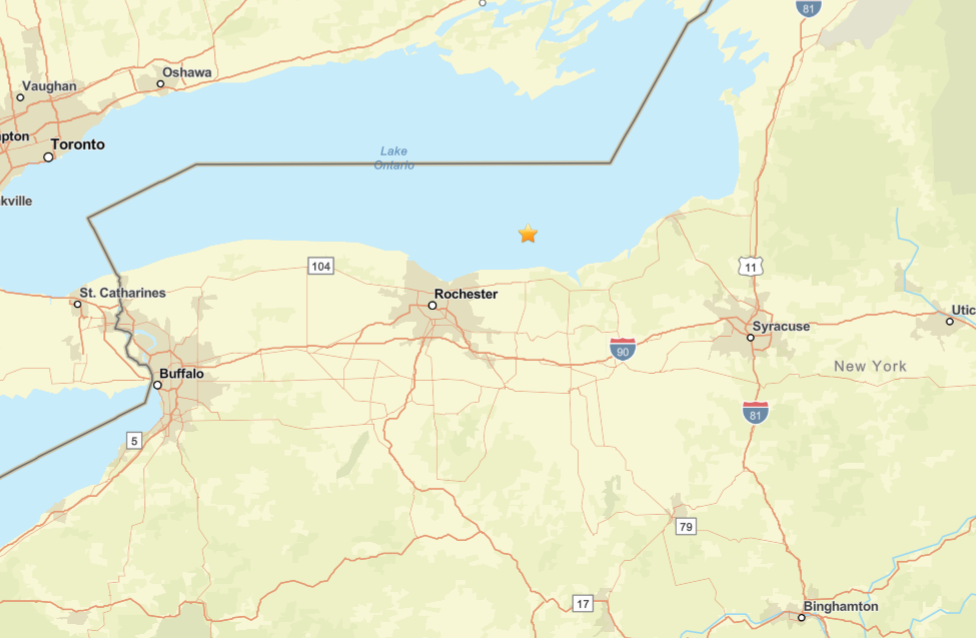
While the probability of earthquakes in the Rochester area is low compared to regions with known active faults, such as parts of southern New York and coastal areas, it is not zero. There are also some faults located north of Rochester in Canada, which could potentially affect the region. Additionally, the composition of the Earth's crust in the East Coast plays a role in how far seismic waves travel. Because the crust is older and more intact, earthquakes that occur further away can be felt more strongly in the Rochester area.
Understanding the science behind earthquakes in western New York helps residents and scientists alike prepare for potential risks. While major seismic events are rare, the region's geological history reminds us that the Earth is constantly shifting, even if we don't always feel it.
Post a Comment