
A Major Discovery in the Loarre Mountains
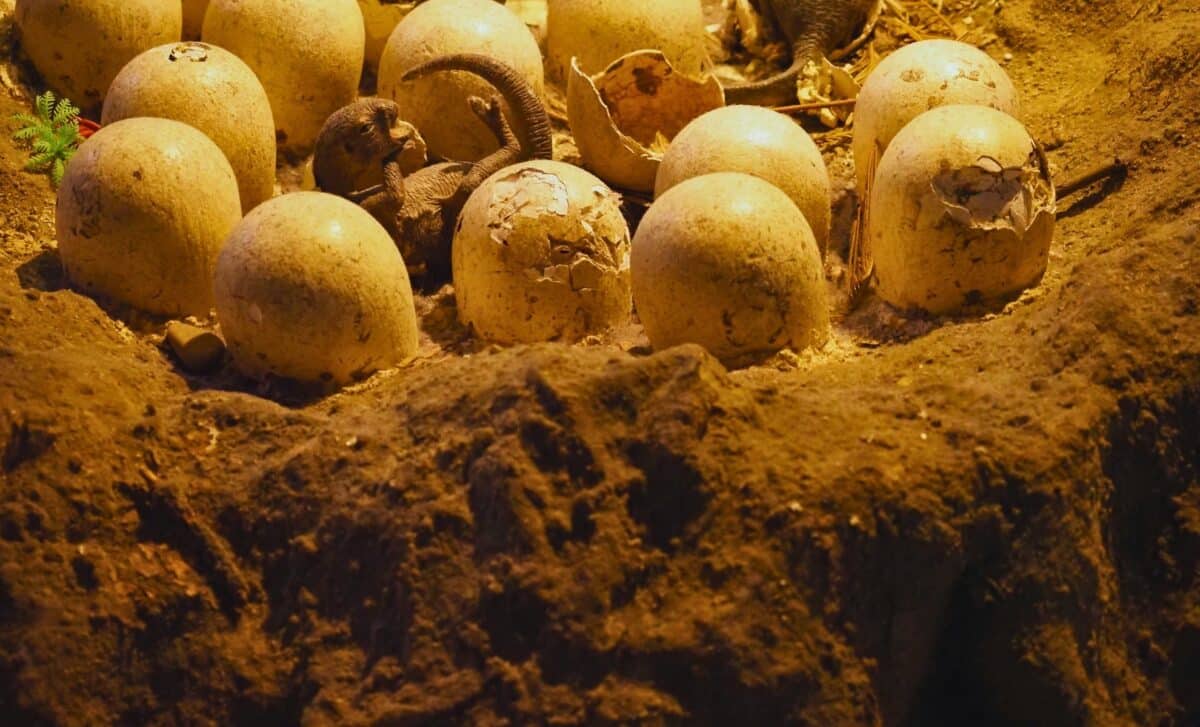
A team of paleontologists working near the village of Loarre, nestled in the province of Huesca, have unearthed at least 30 fossilized dinosaur eggs encased in a two-ton block of rock. They suspect that as many as 70 eggs could be hidden inside. This kind of discovery not only makes headlines but also rewrites what we thought we knew about how dinosaurs like the Titanosaur reproduced, nested, and possibly even protected their young.
The Titanosaur Nest: A Rare Find
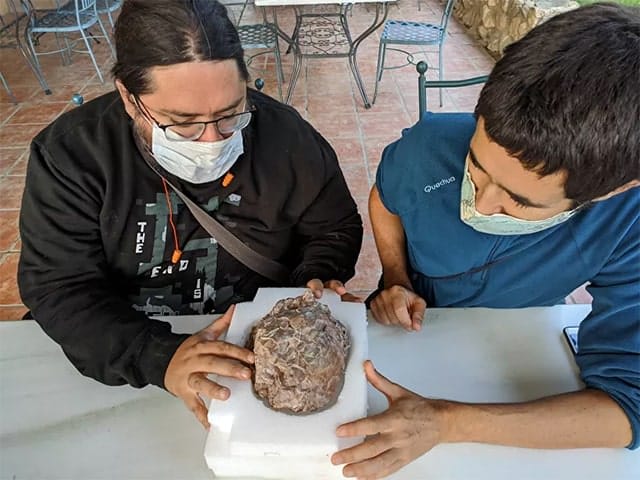
The discovery was first made in September when paleontologist José Manuel Gasca, from the University of Zaragoza, noticed a strange cluster of shell fragments at the site. Gasca, who specializes in crystallography and mineralogy, quickly alerted his colleague Dr. Miguel Moreno-Azanza, who currently works with a research team at the Universidade Nova de Lisboa in Portugal.
Within days, Moreno-Azanza had traveled to the site in the Loarre Mountains, and what they found was more than they expected. As they began digging, they uncovered an unusually high concentration of well-preserved eggshells, and then, whole eggs. These weren’t just small, fossilized blips in the rock. We’re talking about giant eggs laid by a Titanosaur, a massive four-legged herbivore with a neck like a crane and a tail that could clear a forest. These creatures lived right up until the mass extinction event 66 million years ago, and while their bones have been found all over the world, nests like this are extremely rare.
Hauling a Two-Ton Nest Out of the Earth
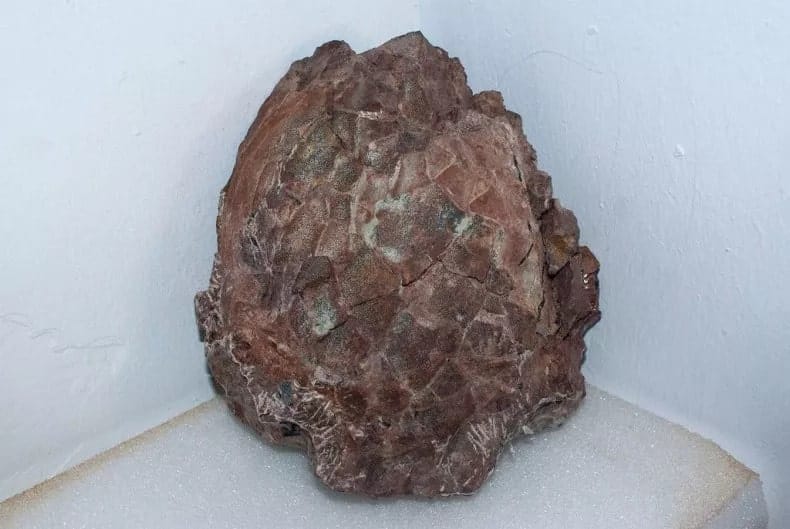
Getting the fossilized nest out of the ground was no easy task. Moreno-Azanza explained that their main objective during the 2021 excavation campaign was to extract one especially large nest, the one with at least 12 visible eggs, which was locked inside a block of rock weighing over two tons. That’s about the weight of a small car, for perspective.
The team, just five people, mind you, spent eight hours a day for 50 days working to free the nest. Eventually, with a bulldozer lending a hand (or blade, rather), they managed to remove it. In addition to the big one, they also recovered ten smaller rock samples from the site, each containing additional fossils.
Interestingly, Moreno-Azanza noted that removing such a large block intact is not standard practice. Fossils are usually extracted in smaller segments to prevent damage. But in this case, preserving the nest as a whole made sense, given how complete and scientifically valuable it appears to be.
A Future Home for the Fossil Nest
So, where do you put a two-ton dinosaur nursery once you’ve dug it up? Right now, the block, and its ten smaller companions, are being stored in a warehouse in Loarre. But the plan is to eventually put them on display.
Moreno-Azanza says the fossil nest will become the centerpiece of a new satellite room of the Museum of Natural Sciences at the University of Zaragoza. The exhibit will also include replicas of dinosaur eggs from other parts of the world, turning the room into a sort of global tour of prehistoric parenthood.
In terms of funding, the project is supported by the Portuguese Foundation for Science and Technology and the Spanish Ministry of Science, an encouraging sign that governments still see the value in deep-time science.
Post a Comment