
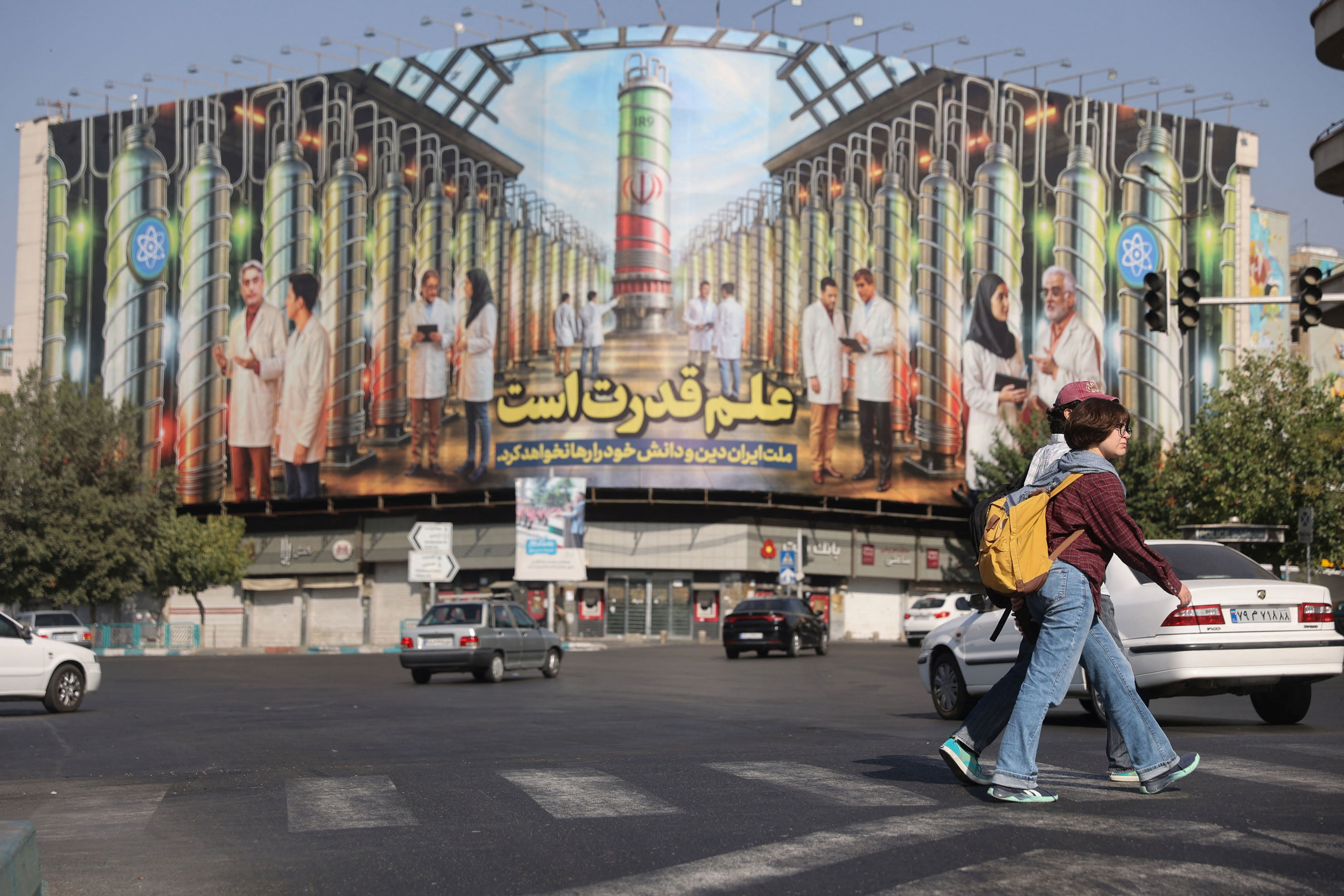
The Taleghan 2 Nuclear Facility: A Closer Look
Since the Israeli Air Force (IAF) targeted Iran’s nuclear facility at Taleghan 2 last October, there have been at least four notable developments in construction at the site. A detailed analysis of satellite imagery by the Institute for Science and International Security (ISIS) has shed light on these changes, offering insights into Iran's ongoing efforts to rebuild its nuclear program.
The report, authored by ISIS president David Albright and other institute members, highlights the evolution of activities at this specific location. While Taleghan 2 is just one of many sites of interest to Israel and the West, it serves as a critical case study that reveals broader trends in Tehran's nuclear ambitions.
The Larger Picture
Looking at the bigger picture, it's essential to recall that the IAF conducted strikes on approximately 20 targets in Iran in October, more than seven months before its more dramatic attack in June, which reportedly targeted at least 1,000 facilities. The primary objective of the October operation was to eliminate advanced Russian-made S-300 anti-aircraft missile systems. This action paved the way for the more ambitious June strike, which is believed to have set back Iran's nuclear program by about two years.
Although the focus of the October 2024 airstrikes was primarily on the S-300 systems, Israel also targeted several Iranian nuclear and ballistic-missile facilities. By mid-May of this year, the report notes that Iran had erected a temporary black cover over the previously struck site and initiated some rebuilding efforts.
By June 12, just before the most recent Israeli attack, imagery showed that Iran was laying the foundations in front of the black cover. These were the first two steps in Iran's reconstruction efforts before the June airstrikes.
Construction Developments
By August 30, a new large arch-roofed structure was under construction, along with two smaller arch-roofed structures built above the foundation previously laid on either side and in front of the larger structure. Furthermore, by September 27, satellite photos revealed that a third arched structure had been added, with other arched structures making modest progress.
Notably, the layout of the previously observed smaller side buildings appeared to be designed in a way that if they were bunkered over with earth, they could each include a blast mitigation feature known as a "blast trap." Albright's report also mentions a new support facility located about 200 meters away from the main rebuilding project.
While the report does not conclusively determine what Tehran is constructing in the area, it raises concerns about the potential connection to the nuclear program. Albright warns that the West, Israel, or the International Atomic Energy Agency (IAEA) should investigate whether these new structures are part of efforts to reconstitute nuclear weapons-related facilities or manufacturing capabilities.
Strategic Implications
If the new facilities are covered up with earth to bunker them, they may become much harder to destroy through Israeli airstrikes. Although nothing in the report is definitive, the worst-case scenario suggests that Tehran has learned from the October 2024 Israeli attacks about the IAF's capabilities and limitations.
This knowledge likely influenced Iran's strategy to insulate its newly rebuilt nuclear site from future Israeli strikes. The continued and even expanded construction at the site after both the October and June strikes indicates that Iran believes it has found a new formula to protect its facilities from future attacks.
Many of the descriptions in the report suggest that Iran is adopting a strategy of moving more of its nuclear facilities underground, combined with various measures to limit the effectiveness of future IAF airstrikes.
Global Sanctions and Diplomatic Stalemate
Despite the activation of global sanctions by the UK, France, and Germany (the E3), there is no indication that Iran is closer to returning to negotiations. Iranian Supreme Leader Ayatollah Ali Khamenei has shown deep denial about the impact of the June airstrikes, dismissing claims that the program was significantly damaged.
However, the delay in Iran's nuclear program—by at least two years—suggests that the strikes did have a meaningful effect. Concerns about a reconstituted Iranian nuclear program are long-term issues, as Iran may continue to move its facilities deeper underground and develop new defenses.
If Iran reaches a critical point in its nuclear program during a period when U.S. military power is less available, such as during a Trump administration or with a new U.S. president, the situation could become more precarious.
The Role of Intelligence and Surveillance
Iran's secret AMAD nuclear-weapons program was uncovered by the Mossad, and the full map of Iran’s nuclear sites used for airstrikes was discovered by the Israeli spy agency during a raid of Tehran’s nuclear archives in 2018. As Iran continues to block IAEA inspections and reject diplomacy, the importance of Mossad's surveillance and potential actions against Tehran’s nuclear facilities will only grow.
Post a Comment