
Community Gathering in Sunset Beach Addresses Proposed Parkway Extension
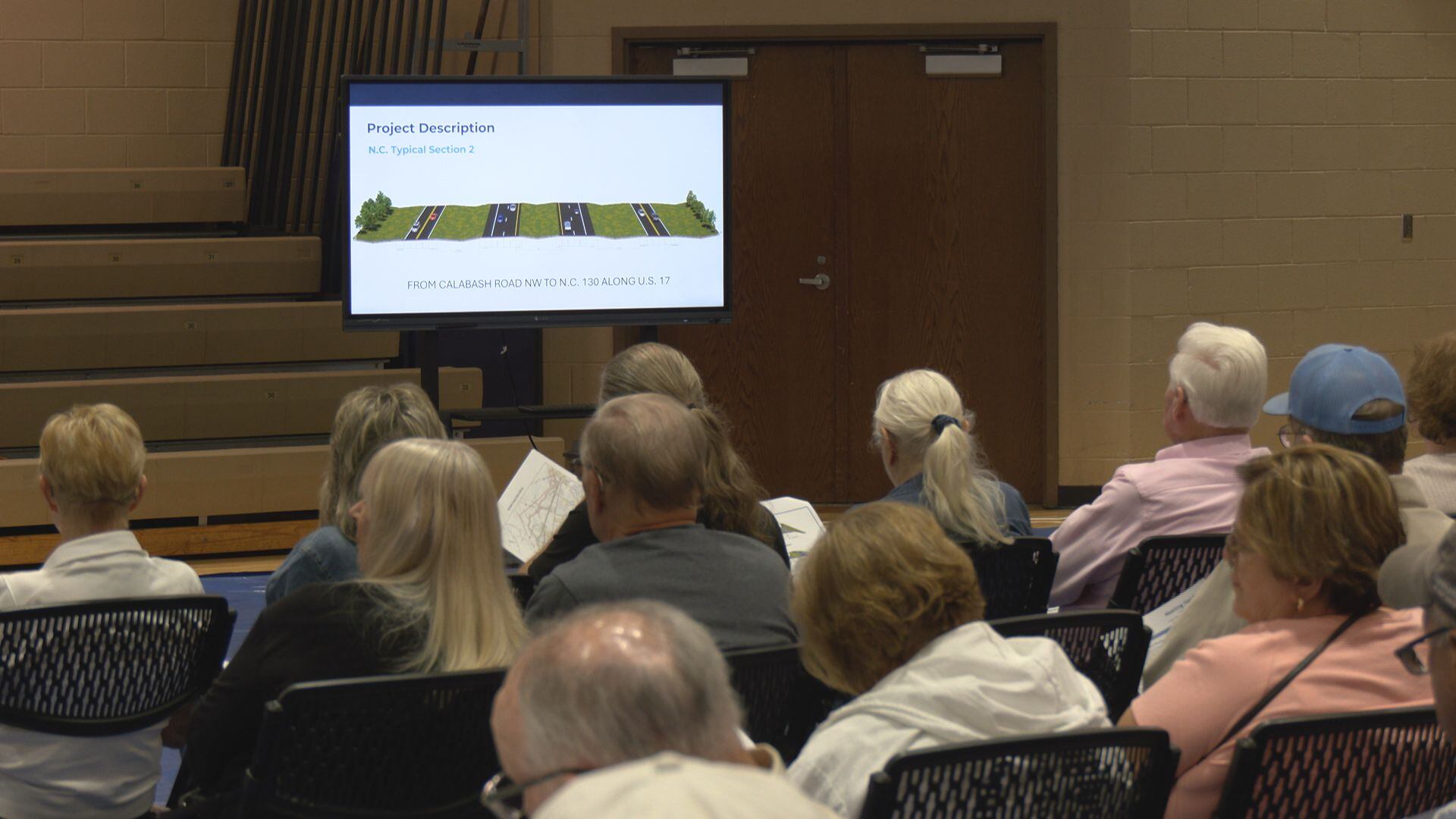
SUNSET BEACH, N.C. (WECT) - A large number of residents gathered at the Sea Trail Convention Center on Thursday night to discuss a proposed route that aims to reduce travel times between Myrtle Beach and Wilmington. Homeowners, business owners, and local residents attended the event to learn more about the Carolina Bays Parkway extension project.
The project is designed to ease congestion along an existing route between the two cities, but many residents are concerned about the potential impacts of the new development. Public concerns include fears that the construction could displace people and businesses from their properties to make way for the new highway. Additionally, discussions at the meeting highlighted worries about traffic congestion, cost, noise, and environmental effects.
The proposed extension would be a nearly 20-mile road stretching from SC-9 in Horry County to US-17 in Brunswick County, near Shallotte. Trevor Carroll, an engineer with the North Carolina Department of Transportation (NCDOT), explained the goal of the project: “Our goal is to make sure we have a highly functioning, well-connected path from North Carolina into South Carolina.”
Most attendees at the public hearing agreed that a new route is necessary to alleviate congestion. Tom Carmelengo, a resident of Ocean Isle Beach, shared his frustration: “Sometimes when I come out on 17, I think I’m back in New Jersey.” However, the controversy lies in where the route should be placed. There are seven alternative paths being considered, with one currently standing out as the preferred option.
Alternate 4 would divert traffic around Highway 17 and rejoin it at Seaside Road. Carmelengo expressed concern about this plan: “If 17 is going to have limited access, why have a business?” he asked. “That’s going to wipe those businesses out.”
Carroll emphasized that while Alternate 4 is the current preference, it is not finalized. He stated, “We’re here tonight to seek public input on trying to determine the least environmentally damaging practical alternative.”
Richard Capobianco, whose home is situated between two of the proposed routes, feels caught in the middle. “One’s going to be right in front of me [and] my property and the one’s going to be behind my property,” he said. “So, I’m kind of wedged in the middle. And I’m not happy about it.”
Capobianco understands the need for relief from congestion but believes overdevelopment will eventually create the same problems on the new route. He compared the situation to Cape Cod, where he once lived. “When I was on Cape Cod, I saw Cape Cod grow in leaps and bounds,” he said. “Now, year round, Cape Cod is bumper-to-bumper traffic. I came down here to get away from that 24 years ago, and I’m seeing the same thing happening here that happened on Cape Cod. I think they need to stop all the damn building that’s going on. We’re over-building and we don’t have the infrastructure for it.”
The crowd at the convention center displayed a mix of uncertainty and frustration regarding the future of the project. Capobianco voiced his sentiment: “You can’t mess with the people this much. Just so many things are changing down here. It’s very frustrating.”
The estimated cost of the project is nearly $800 million, with North Carolina responsible for more than 600 million of the total. Construction is set to begin in South Carolina in 2029, while the start date for North Carolina remains to be determined.
Post a Comment