
The Controversy Surrounding the Leak of a Classified Video
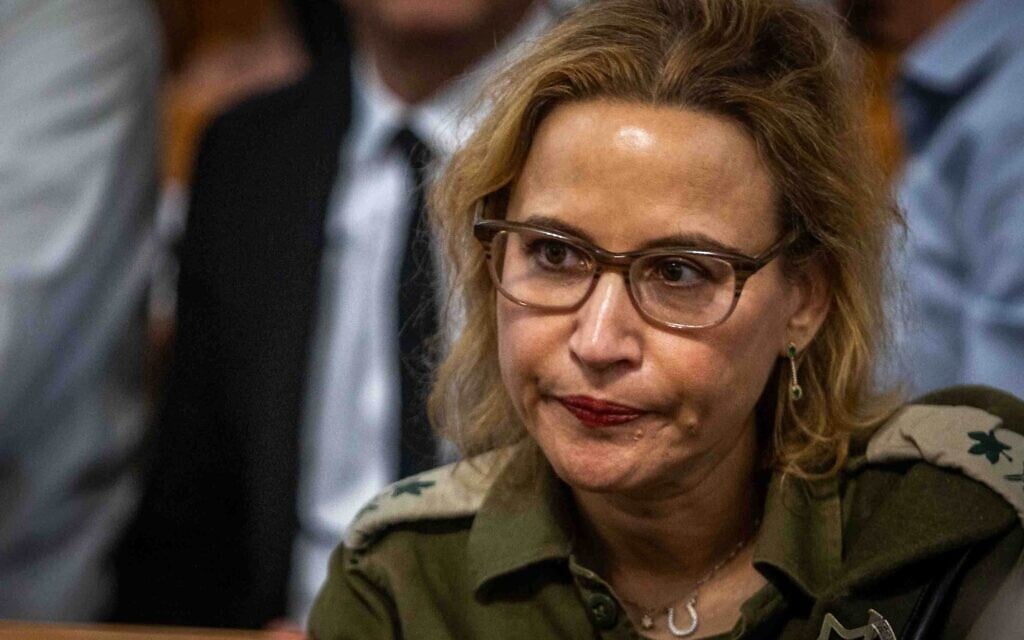
A day after former military advocate-general Yifat Tomer-Yerushalmi went missing for hours and was later arrested, more details have emerged about how she allegedly leaked a classified video and her response during initial questioning. According to a transcript of the interrogation published by Channel 12 news, Tomer-Yerushalmi claimed not to remember key parts of the time she was unaccounted for on Sunday, when there were fears for her life, or what happened to her cellphone, which police suspect she intentionally tossed.
Additionally, a transcript of a previous conversation via text message last year allegedly showed her giving the go-ahead for the leak. The investigation has expanded beyond Tomer-Yerushalmi and former IDF chief prosecutor Col. Matan Solomosh, with two more suspects in the IDF’s MAG office reportedly under investigation by police.
Disappearance and Arrest
Last week, Tomer-Yerushalmi resigned as military advocate general and admitted to leaking a video that showed the severe abuse of a detainee at the IDF’s Sde Teiman military detention facility. Then, on Sunday, she disappeared for hours, abandoned her car, and appeared to leave what looked like a suicide note, prompting a massive search along the beach near Tel Aviv. She was found alive, but her phone was not located. On Monday, a court ordered her and Solomosh to remain in detention until Wednesday.
According to the transcript cited by Channel 12, police asked Tomer-Yerushalmi where she went during the time she was missing, what happened to her phone, and whose phone she had used to call her husband, leading police to track her down. She responded that she could not remember or was confused and unaware of what was happening.
“I have no idea, I might have dropped it into the sea,” she reportedly said when asked where her phone was. “I really don’t remember.” When asked whether she threw it into the water, in what police suspect may have been an attempt to destroy incriminating evidence, she was said to answer, “I don’t remember.”
In requesting an extension to Tomer-Yerushalmi’s and Solomosh’s detention, police argued that the pair could attempt to obstruct the investigation.
The Origin of the Leak
The investigation that led to Tomer-Yerushalmi’s confession of the leak was prompted by a routine lie detector test administered by the Shin Bet to an officer in the Military Advocate General’s office, reportedly the unit’s spokesperson. In that investigation, the spokesperson revealed the contents of a WhatsApp group chat in which Tomer-Yerushalmi gave her approval for the leak, according to Kan public broadcaster.
The leak occurred after right-wing politicians, including Prime Minister Benjamin Netanyahu, strongly criticized Tomer-Yerushalmi over the arrest of the soldiers allegedly involved in the abuse. In the group chat, seven officers from the Military Advocate General’s Office reportedly weighed different responses to the criticism, with one hoping the “storm will pass.”
Kan reported that in the chat, two options were suggested: a “silent briefing” aiming to explain the MAG’s side of the story to reporters, or a “targeted leak.” Tomer-Yerushalmi reportedly opted for the latter approach, saying that a briefing would not have “the same influence.” In the case of a leak, Kan quoted her as writing, “Now we’re taking this into our own hands.”
Political Backlash and Institutional Fallout
Harsh criticism from the right has continued in recent days. On Monday night, fans of the Beitar Jerusalem soccer club, many of whose supporters are staunchly right-wing, were photographed draping a banner in their home stadium showing Tomer-Yerushalmi in a Hamas uniform and calling for the arrest of the reporter who received the leaked footage, according to Channel 12’s Guy Peleg.
The scandal has also ensnared Attorney General Gali Baharav-Miara, a prime target of members of Netanyahu’s right-wing coalition. In September, her office said in a court filing regarding the leak that “the investigation was exhausted” and that “no further investigative actions” were needed.
Justice Minister Yariv Levin has already tried to bar Baharav-Miara from involvement in the Tomer-Yerushalmi investigation. An assessment that she should not play a role in the current probe, according to Channel 12, is now extending into the state prosecutors’ office, where there are worries that the attorney general could encounter a conflict of interest.
If the investigation begins probing why Baharav-Miara’s office said the investigation was exhausted, for example, she could be put in the paradoxical position of calling herself as a witness, the TV report cited some in the state prosecutors’ office as saying.
Efforts to Preserve Reputation
The MAG office, amid the scandal, is seeking to preserve its reputation. Brig. Gen. Roni Katzir, the department’s most senior member, said most of the office’s leadership was not implicated in the affair, and that it is “very dangerous to take this one bad event… and taint the entire unit.”
But Kan reported that sources in the department say its entire leadership is likely to be replaced, and the Haaretz newspaper reported that at least two more MAG officials were being investigated — the officer who submitted the indictment against the Sde Teiman soldiers, who is suspected of being involved in the leak, and an additional female officer suspected of falsely saying that the MAG office sufficiently investigated it.
Post a Comment