
The Origin of the "London Underground Mosquito" Revealed
A recent genetic study has challenged the long-held belief that a specific type of mosquito, commonly known as the northern house mosquito, evolved in the London Underground. Instead, the research suggests that this mosquito has a much older origin in the Mediterranean region.
The myth surrounding the “London Underground mosquito” began during World War II when Londoners took shelter in subway stations and were plagued by bites from mosquitoes. This led to speculation among biologists that these pests had adapted to thrive in the city’s subterranean tunnels.
The mosquito in question exists in two forms: Culex pipiens form pipiens, which primarily bites birds and lives in open environments, and Culex pipiens form molestus, which bites humans and thrives underground. Some scientists believed that the latter variant could have evolved in the London Tube.
Yuki Haba, a postdoctoral researcher at Columbia University and the lead author of the new study published in the journal Science, explained that the 1999 study suggested the “London Underground mosquito” had evolved on-site. However, the new research analyzed DNA sequences from hundreds of mosquitoes worldwide, including historical samples from the 1900s, and concluded that the molestus variant did not rapidly evolve underground but has a much longer history.

Haba noted that the split between the aboveground pipiens and belowground molestus could have occurred as early as 10,000 years ago or as late as 1,000 years ago, but most likely between 3,000 and 2,000 years ago. He added that the ancestral molestus populations were originally aboveground and gradually dispersed to other parts of the world, including the London Underground.
Migrating North
The team's investigation into the “London Underground mosquito” hypothesis started in 2018. Haba described how they reached out to authors of previous studies to obtain samples for analysis. Over time, the researchers collected dead mosquitoes preserved in ethanol from over 200 sources across 50 countries.
They were unable to collect live mosquitoes directly from the London Underground due to restrictions, so they used historical samples from the Natural History Museum in London and the Wellcome Sanger Institute. In total, the researchers analyzed 357 contemporary mosquitoes and 22 historical specimens, with additional samples bringing the total to around 800.
Lindy McBride, senior author of the study and an associate professor at Princeton University, stated that the data shows molestus is directly descended from pipiens populations found in the Mediterranean region. She suggested that the mosquito likely evolved in the Middle East, where the bird-biting variant cannot survive due to arid conditions.

McBride pointed out that the first description of molestus as a species was in 1775 in Egypt. She said it had probably been present there for at least 1,000 years before that. The mosquito was later documented in southern Europe in the 1800s and then recorded in underground sites in Northern Europe around 1920.
This pattern of detection suggests that molestus traveled north and found refuge underground when the climate became too cold for survival in open areas. McBride explained that these mosquitoes could not survive cold winters and were confined to southern regions until they found underground structures to occupy.
Mosquito Opportunities
Richard Nichols, a professor of genetics at Queen Mary University of London, who was not involved in the study but co-authored the 1999 paper on the “London Underground mosquito,” praised the new research. He acknowledged that while the findings differ from his earlier work, science progresses through such discoveries.
Nichols noted that the 1999 study showed that underground mosquitoes in London were genetically distinct from aboveground populations. They exhibited traits that helped them live underground, such as the ability to complete their life cycle without a blood meal and to mate in confined spaces.
Cameron Webb, an associate professor of medical entomology at the University of Sydney, called the study fascinating and comprehensive. He emphasized that while the mosquito is often associated with the London Underground, it is also found in subterranean habitats globally. Webb highlighted the importance of understanding the biology of less-studied mosquitoes to address potential public health concerns.
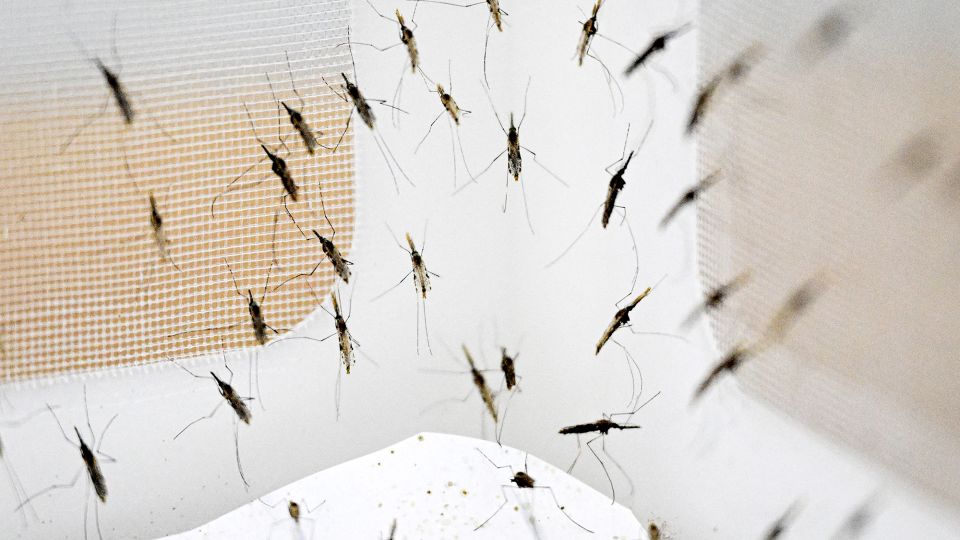
Webb concluded that as cities adapt to changing climates, it is crucial to avoid creating more opportunities for mosquitoes to thrive. Understanding their behavior can help mitigate the risks they pose to urban populations.
Sign up for BrowBrow’s Wonder Theory science newsletter. Explore the universe with news on fascinating discoveries, scientific advancements and more.
For more BrowBrownews and newsletters create an account at BrowBrow.
Post a Comment