
Understanding the Origin of Fingers in Evolution
The evolution of fingers has long been a topic of scientific debate. While it is known that fingers originate from genetic programs present in fish, the exact process of their development remained unclear. A groundbreaking study by an international team of researchers, led by the University of Geneva (UNIGE) and including collaborations with EPFL, the Collège de France, and universities in Harvard and Chicago, offers a new perspective on this mystery. Their findings suggest that fingers likely evolved from the reuse of an ancient region of the genome originally involved in the formation of the fish cloaca rather than their fins.
This discovery, published in Nature, highlights a major evolutionary strategy: the repurposing of existing genetic elements instead of creating entirely new ones. This insight sheds light on how complex structures like hands and feet could emerge through evolutionary changes.

The Journey from Fish to Land
Around 380 million years ago, fish ancestors began to move onto land, evolving into various vertebrate species. These early creatures developed efficient lungs for oxygen filtration, as well as limbs—structures that would eventually become our hands and feet. The question of how these limbs appeared remains one of the oldest and most debated topics in science. Did they evolve from fins, which are homologous to our arms and legs, or were they entirely new structures?
The answer lies in a shift in perspective. Instead of focusing solely on the genes responsible for finger development, the research team examined the non-coding regions of the genome. These regions, often referred to as "regulatory landscapes," play a crucial role in controlling gene expression and activation. They are significantly larger than the coding regions, which make up only about 2% of the genome.
The Role of Regulatory Landscapes
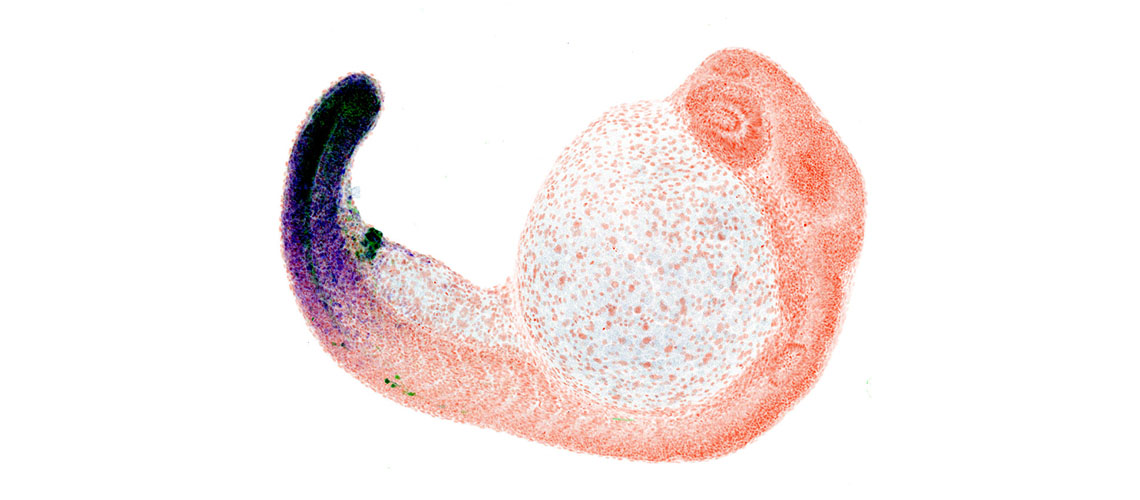
By comparing the genomes of mice and fish, scientists identified a conserved regulatory landscape involved in limb development in mice. Using CRISPR/Cas9 technology, they deleted this large DNA region in fish and observed a loss of gene expression in the cloaca, but not in the fins. This result suggests that the cloaca, an organ where the digestive, excretory, and reproductive systems meet, was repurposed in land vertebrates to develop fingers.
Aurélie Hintermann, a former PhD student at UNIGE and co-author of the study, explains, "The common point between the cloaca and fingers is that they represent terminal parts. Sometimes the end of tubes in the digestive system, sometimes the end of feet and hands, in other words, the fingers. Both thus mark the end of something."
The Power of Hox Genes
The regulatory landscapes in question control the activation of Hox genes, often called "architect genes." These genes determine the body plan by establishing the position and identity of segments or organs. They act as master regulators in a complex network of operational genes by controlling their expression. Mutations in these genes can lead to significant anatomical changes, which may explain their critical role in evolution.
Denis Duboule, professor at UNIGE and the Collège de France, emphasizes, "The fact that these genes are involved is a striking example of how evolution innovates, by recycling old elements to make new ones. Rather than building a new regulatory system for fingers, nature repurposed an existing one, initially active in the cloaca."
A New Piece in the Evolutionary Puzzle
This research shows that it's not just the operational or coding genes that evolve, but also the architecture of their regulation. In some cases, entire regions of the genome can be repurposed in different morphological contexts, such as from the cloaca to the fingers. The next step is to understand not just where these modifications occur in the genome, but how they happen, in order to continue describing the mechanisms of evolution and explaining the transition from aquatic ancestors to modern-day fish and humans.
Post a Comment