
Legal Battle Over the Use of an Actress’s Likeness in Avatar
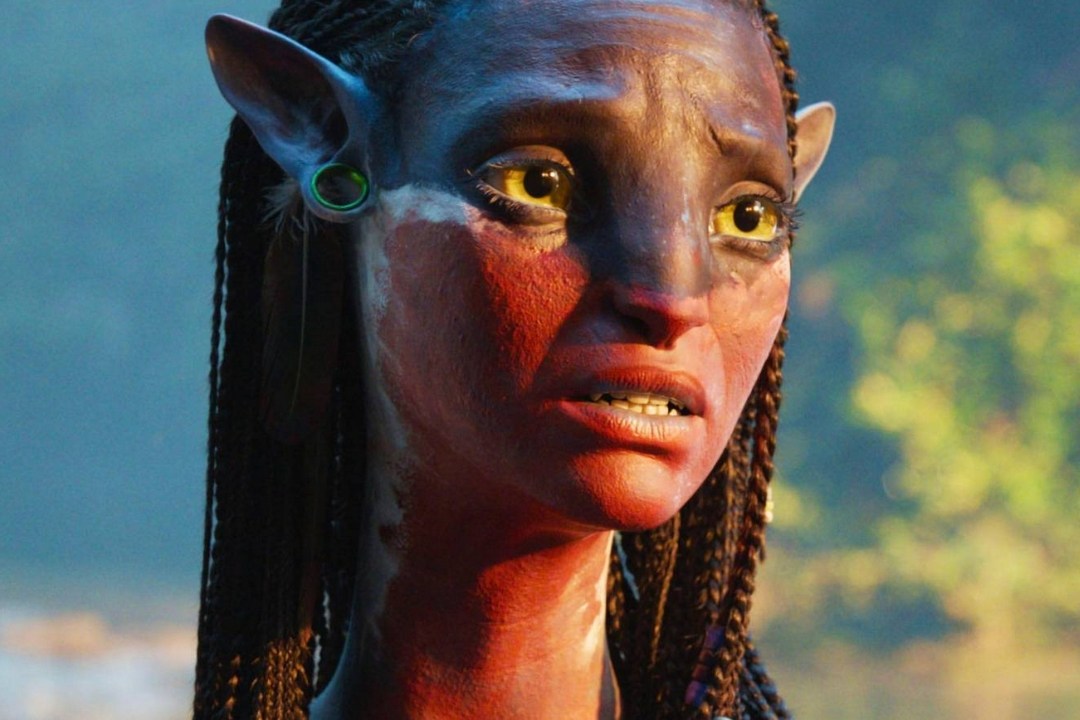
An actress is currently embroiled in a legal dispute with two major entertainment entities, James Cameron and The Walt Disney Company. Q’orianka Kilcher, who gained recognition for her role as Pocahontas in the 2005 film The New World, is alleging that her likeness was used without her consent or knowledge to create the character of Neytiri in the blockbuster movie Avatar.
According to a complaint obtained by Variety, Kilcher claims that when she was just 14 years old, James Cameron extracted her facial features from a photograph and instructed his design team to use them as the foundation for the character of Neytiri. This character, portrayed on-screen by Zoe Saldaña, was created using full-body and facial motion-capture technology.
Kilcher’s legal team argues that she never gave her permission for the use of her likeness, either in Avatar itself or in any related products or promotions. The complaint states that her facial features were replicated through sketches, 3D sculptures, and high-resolution digital models to form the appearance of Neytiri. Specifically, it notes that the lips, chin, jawline, and overall mouth shape of the character are identical to those of Kilcher.
Her attorney, Arnold P. Peter of the Peter Law Group, has described the actions of Cameron as more than mere inspiration. He stated, “What Cameron did was not inspiration, it was extraction. He took the unique biometric facial features of a 14-year-old Indigenous girl, ran them through an industrial production process, and generated billions of dollars in profit without ever once asking her permission. That is not filmmaking. That is theft.”
Kilcher herself expressed deep distress over the revelation that her face was used without her knowledge or consent. She said, “It is deeply disturbing to learn that my face, as a 14-year-old girl, was taken and used without my knowledge or consent to help create a commercial asset that has generated enormous value for Disney and Cameron.”
The complaint also reveals that months after the release of Avatar in 2009, a member of Cameron’s staff presented Kilcher with a print of a sketch made by Cameron himself. Alongside the sketch was a handwritten note that read, “Your beauty was my early inspiration for Neytiri. Too bad you were shooting another movie. Next time.” At the time, Kilcher believed this gesture was a personal acknowledgment rather than an indication of a more significant use of her likeness.
She further explained, “When I received Cameron’s sketch, I believed it was a personal gesture, at most a loose inspiration tied to casting and my activism. Millions of people opened their hearts to Avatar because they believed in its message and I was one of them. I never imagined that someone I trusted would systematically use my face as part of an elaborate design process and integrate it into a production pipeline without my knowledge or consent. That crosses a major line. This act is deeply wrong.”
In 2024, Cameron reportedly publicly identified Kilcher as the inspiration behind a sketch of Neytiri during an interview with French media. This revelation has added fuel to the ongoing legal battle.
Kilcher is seeking compensatory and punitive damages, although the exact amount remains undisclosed. In addition, she is requesting “corrective public disclosure” to address the alleged unauthorized use of her likeness. This case raises important questions about the ethical and legal boundaries of using an individual's physical features in the creation of fictional characters, especially when such use occurs without consent.
Post a Comment