
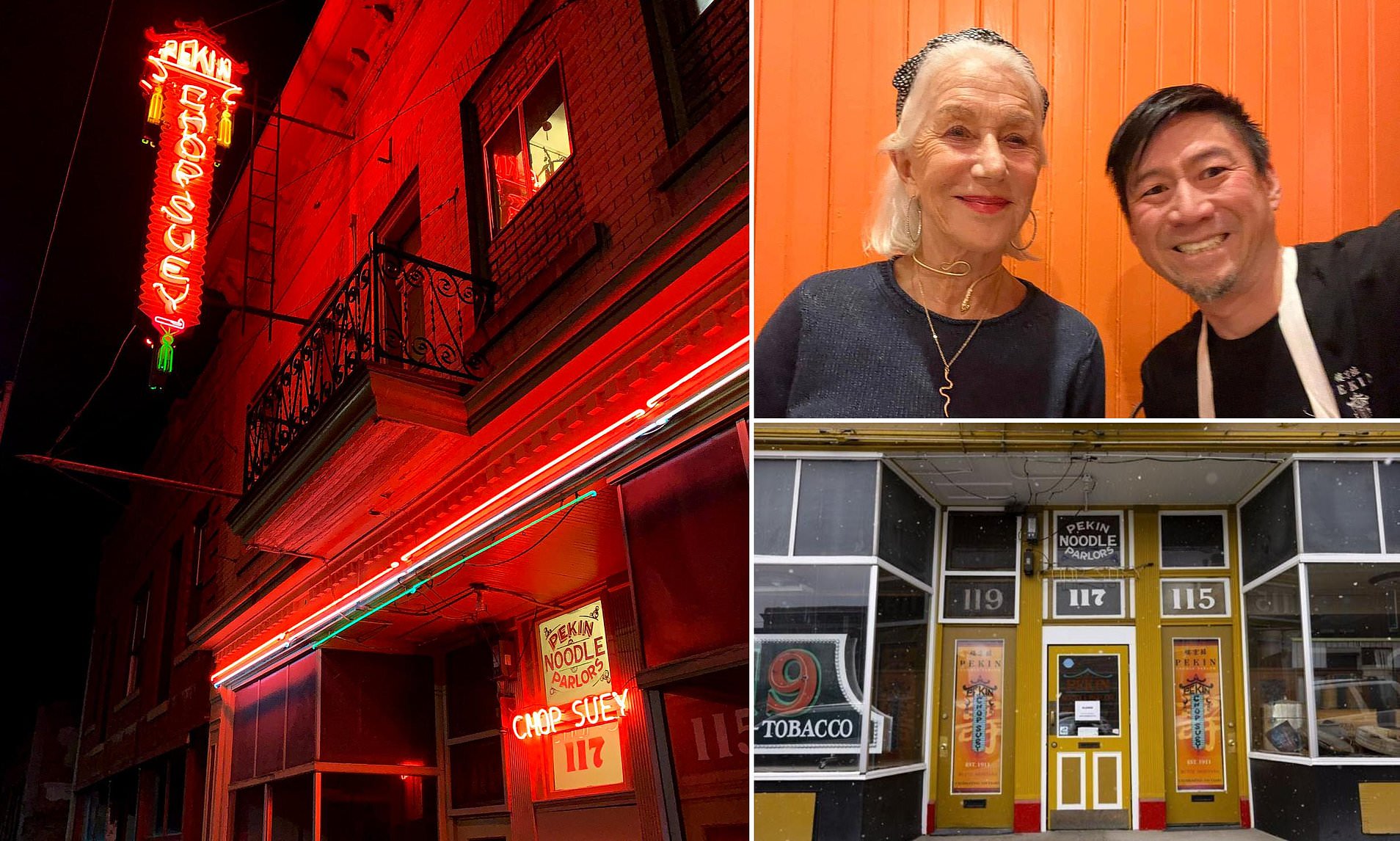
A Legacy of Noodles and Memories
For over a century, the Pekin Noodle Parlor was more than just a restaurant—it was a cultural landmark that served steaming bowls of noodles alongside cherished memories. Located in Butte, Montana, the establishment first opened its doors in 1911 and stood as the oldest Chinese restaurant in America. However, after 115 years of operation, the iconic spot has closed its doors for good.
The decision to shut down came with a simple "closed" sign posted on the door, marking the end of an era. The Pekin Noodle Parlor had long been a beloved fixture in the community, drawing in locals and visitors alike with its warm atmosphere and traditional dishes. Among its fans was actress Helen Mirren, who once enjoyed a meal at the restaurant.
Owner Jerry Tam, whose great-great-grandfather founded the business, shared his thoughts on the closure. He attributed the decision to changing dining habits, noting that Americans increasingly prefer takeout over sit-down meals. “While this is a sad day for us, we take comfort in the memories shared within these walls and the legacy that will always remain in this community,” he said.
Tam explained that while takeout had always been part of the business model, shifting attitudes toward dining out made it difficult to sustain operations. He expressed regret over the closure but recognized that customers no longer sought the experience of dining out and enjoying each other's company over hot tea and a warm bowl of noodles.
This news comes amid a broader trend of restaurant closures across the United States. Many chains are announcing plans to shut hundreds of locations due to rising labor costs, higher inflation, and evolving consumer habits.
Fans of the Pekin have taken to social media to express their sadness over the loss. Gail Hyer shared a heartfelt tribute on Facebook, recalling how she and her family would visit the restaurant for special occasions during the 1950s and 1960s. “You'll stay in many of our memories,” she wrote.
Ryan Enyaw shared a touching memory of his mother’s last meal at the Pekin in 2021. “One of the last great moments of my mom's life was watching her enjoy a meal at Pekin. In the few times we've been back since her passing, I could almost see her in one of the empty chairs enjoying it all over again—this was a reminder of when she was healthier and a whole lot happier,” he wrote.
Joy Storrud also shared a poignant memory, recalling how her husband took her to the Pekin on their first date in 1972. “Being from Hamilton, I couldn't believe the atmosphere and wonderful food. I have been married since 1973 and will so miss this restaurant,” she wrote.
Over the years, the Pekin Noodle Parlor gained national recognition. In 2011, former Senator Max Baucus read the restaurant into the Congressional Record, highlighting its significance as a centerpiece of Butte's Chinatown and the broader community.
Throughout its history, the restaurant attracted miners, families, and curious visitors. Dishes like chop suey and Yatcamein noodles became staples, reflecting the rich culinary heritage of the Chinese immigrant community that arrived in the American West in the 1800s.
The Pekin remained in the hands of the Tam family for generations, with Jerry Tam's father, Danny Wong, running the business for over 60 years before passing away in 2020. In 2023, the parlor received an America's Classics award from the James Beard Foundation, a fitting tribute to a restaurant that had already secured its place in history.
The foundation notes that the award is given to locally owned restaurants with timeless appeal, beloved regionally for quality food that reflects the character of its community.
Despite its legacy, the reality of running a restaurant in today’s economy proved too challenging. Tam revealed that his father understood the demands of the business and ultimately left the difficult decision to close in his son's hands.
After 115 years, the Pekin Noodle Parlor has gone quiet, symbolizing the rapid changes in the restaurant landscape. Its closure serves as a reminder of the enduring impact of small businesses and the memories they create.
Post a Comment