
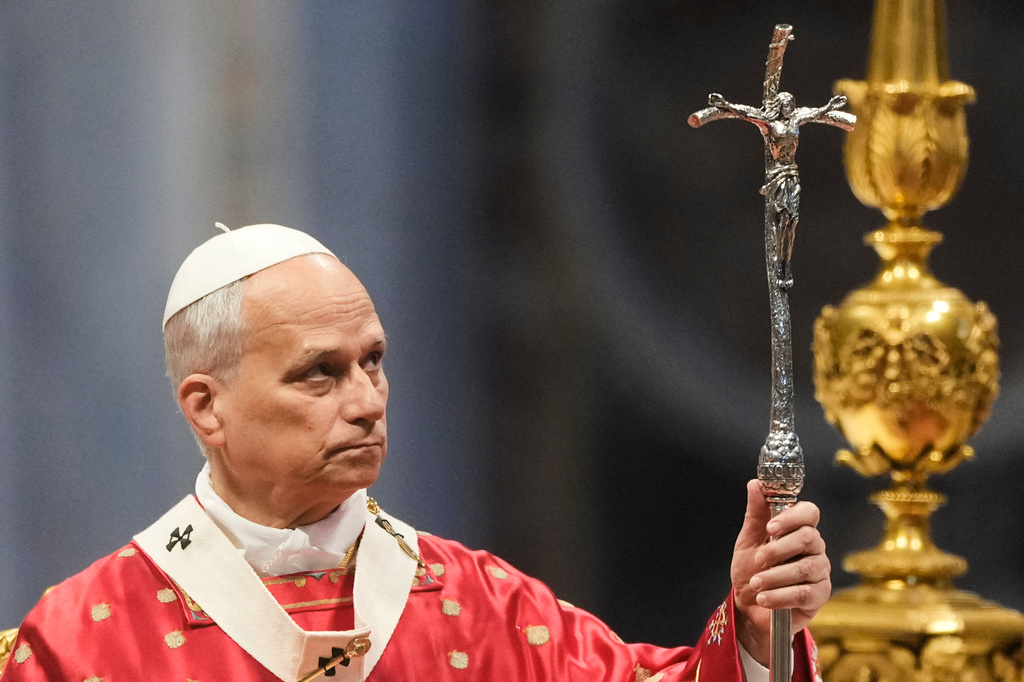
A Historic Apology from the Vatican
Pope Leo XIV made a historic apology for the role the Holy See played in legitimizing slavery and for failing to condemn it for centuries. He described the Vatican’s record as a “wound in Christian memory.” While past popes have apologized for Christians’ involvement in the trans-Atlantic slave trade, no pope has ever publicly acknowledged or apologized for the role that past popes themselves played in giving European sovereigns authority to subjugate and enslave “infidels.”
As the first U.S.-born pope, whose family history includes both enslaved people and slave owners, Leo delivered this apology in his first encyclical, “Magnifica Humanitas,” which was released on Monday. The document addresses safeguarding humanity in an era of increasing reliance on artificial intelligence. Leo connected the trans-Atlantic slave trade to new forms of slavery and colonialism fueled by the digital revolution, such as unregulated labor required to procure rare minerals needed for AI chips.
This apology responds to decades of calls by Black American Catholics, activists, and scholars for the Holy See to atone for its role in the colonial-era trade in human beings. In his encyclical, Leo wrote: “It is impossible not to feel deep sorrow when contemplating the immense suffering and humiliation endured by so many in stark contrast to their immeasurable dignity as persons infinitely loved by the Lord. For this, in the name of the Church, I sincerely ask for pardon.”
Centuries of Legitimizing Slavery for European Colonizers
The Vatican has long maintained that it upheld the dignity of all human beings as children of God. However, a series of 15th-century directives from the Vatican authorized Portuguese sovereigns to conquer Africa and the Americas and enslave non-Christians. In 1452, Pope Nicholas V issued the papal bull Dum Diversas, granting the Portuguese king the right to invade, conquer, fight, and subjugate non-Christians and take their possessions, including land. The bull also allowed for the enslavement of these individuals.
Another bull, Romanus Pontifex, issued three years later, formed the basis of the Doctrine of Discovery, a theory that legitimized the colonial-era seizure of land in Africa and the Americas. These permissions were confirmed or renewed by subsequent popes, including Pope Callixtus III in 1456, Pope Sixtus IV in 1481, and Pope Leo X in 1514.
Spanish kings received similar rights for the Americas. In 2023, the Vatican formally repudiated the Doctrine of Discovery, but it never formally rescinded the bulls themselves. The Vatican insists that a later bull, Sublimis Deus in 1537, reaffirmed that Indigenous peoples shouldn’t be deprived of their liberty or property and weren’t to be enslaved.
The Holy See Late to Condemn Slavery
In his encyclical, Leo recalled that Pope Leo XIII was the first pope to explicitly condemn slavery in 1888, though this came long after many countries had already abolished it. Before that, even church institutions had slaves during antiquity and the Middle Ages.
Leo acknowledged the Holy See’s own role and the 15th-century papal bulls, writing: “Already in the early modern period, the Apostolic See of Rome, responding to the requests of sovereigns, intervened several times in order to regulate and legitimize forms of subjugation, and, in certain cases, including the enslavement of ‘infidels.’” He noted that it wasn’t possible to judge the morality of those decisions with today’s standards, but he emphasized the delay with which both society and the church came to denounce slavery.
“This constitutes a wound in Christian memory, one from which we cannot consider ourselves detached,” he said. Leo urged the church to firmly condemn all forms of trafficking related to the digital technological revolution to avoid future apologies for failing to respect human dignity.
Leo’s Own Family History and Past Apologies
During a 1985 visit to Cameroon, St. John Paul II asked forgiveness of Africans for the slave trade on behalf of Christians who participated in it, but not for the popes’ own role in it. In 1992, he denounced the injustice of slavery and called it a “tragedy of a civilization that called itself Christian.”
According to genealogical research published by Henry Louis Gates Jr., 17 of Leo’s American ancestors were Black, listed in census records as mulatto, Black, Creole, or free persons of color. His family tree includes both slaveholders and enslaved people.
During a recent visit to Angola, Leo prayed at a Catholic shrine located at the site of an important hub of the African slave trade during Portugal’s colonial rule. While at the Sanctuary of Mama Muxima, he recalled the “sorrow and great suffering” Angolans endured for centuries, but he did not specifically address slavery.
Post a Comment