
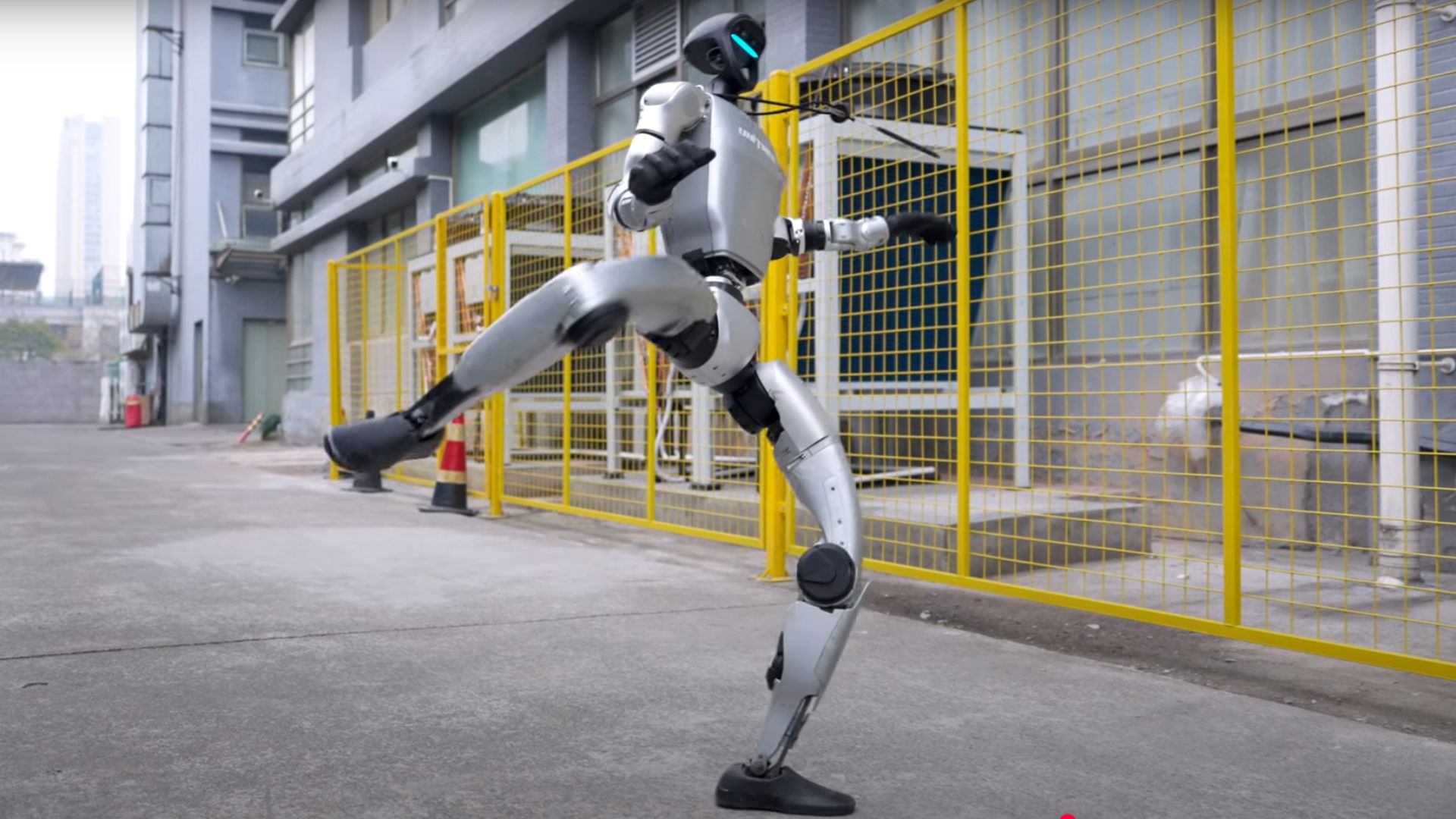
Unitree Unveils H2: A New Era in Humanoid Robotics
Unitree, a leading robotics company based in China, has introduced a groundbreaking new model of its humanoid robot. The H2, standing at 180 centimeters tall, represents a significant leap forward in terms of versatility and dexterity compared to its predecessor, the H1. This new version is equipped with enhanced manipulation capabilities and increased strength, making it more adaptable for a wide range of tasks.
In a recent video, Unitree showcased the H2 performing a series of elegant dance moves that could easily fit into a Broadway musical. This presentation marks a departure from previous videos featuring another of Unitree’s robots engaged in combat scenarios. However, the H2 isn’t entirely free from action — the video also highlights some impressive kung-fu moves, showcasing its dynamic range of motion.
While the H1 was designed with speed and general agility in mind, earning several medals at the recent “robot Olympics” held in Beijing, the H2 takes a different approach. It sacrifices some of that speed in favor of significantly improved dexterity, articulation, and strength. The H2 features more joints in its limbs and an upgraded hip mechanism, allowing for more realistic human-like movement.
One of the most notable improvements in the H2 is its more humanoid appearance. The design team has added a more realistic face and even included some garments, as seen in the video. These enhancements make the robot look more like a human, which could be beneficial for roles that require interaction with people.
The H2 is primarily designed for various tasks in daily life, such as customer-facing roles, hospitality jobs, and caregiving. This represents a shift from the H1's focus on speed and agility. The goal is to create a robot that can seamlessly integrate into everyday environments, whether in a workplace or a home setting.
Unitree is not alone in this pursuit. The company is competing with a growing number of robotics firms around the world to develop a humanoid robot that can be mass-produced and make a real impact in both professional and personal settings.
American competitor Figure has also made headlines with its latest model, the Figure 03. This AI-powered robot is designed to perform tasks in the home, such as tidying up, watering plants, folding laundry, and serving drinks. A video released by Figure demonstrated these capabilities, highlighting the potential of humanoid robots in domestic environments.
Figure is also working on a version of the robot that can operate in industrial settings. The company has already partnered with BMW to test the robot in its factories. This collaboration underscores the growing interest in using humanoid robots to enhance productivity and efficiency in manufacturing processes.
As the field of robotics continues to evolve, companies like Unitree and Figure are pushing the boundaries of what humanoid robots can achieve. With advancements in dexterity, strength, and realism, these robots are becoming more capable of performing complex tasks that were once thought to be the exclusive domain of humans.
The future of humanoid robotics looks promising, with the potential to transform industries and improve daily life. As technology progresses, we can expect to see more innovations that bring us closer to a world where robots are not just tools but valuable companions in our homes and workplaces.
Post a Comment