
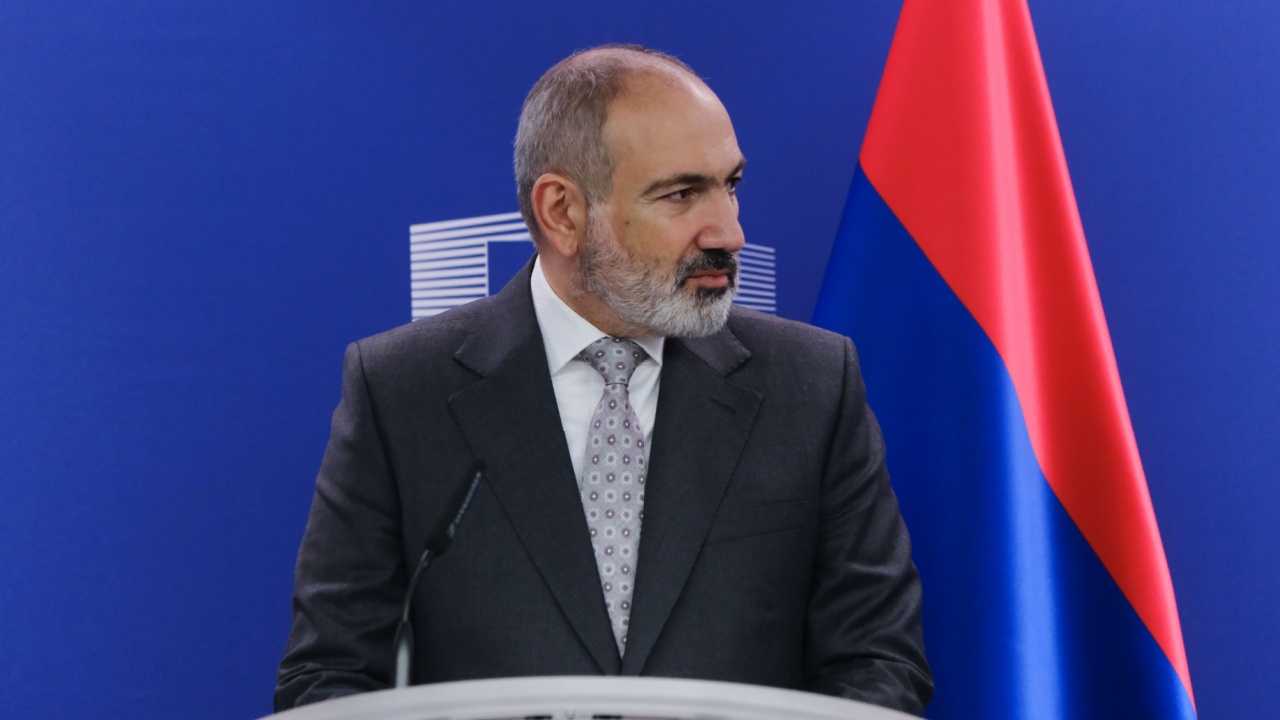
The Struggle for Peace in the South Caucasus
Armenia’s prime minister, Nikol Pashinyan, has faced immense challenges while working toward peace and integration in the South Caucasus. His leadership has been tested by domestic criticism, geopolitical tensions, and the aftermath of a devastating war. Despite these obstacles, Pashinyan remains a pivotal figure in shaping the region's future.
Since coming to power during Armenia’s 2018 Velvet Revolution, Pashinyan has endured significant political and social pressures. The fallout from the 2020 Karabakh war, open hostility from the Armenian Apostolic Church, and allegations of coup attempts have all threatened his tenure. His efforts to establish peace with Azerbaijan and strengthen ties with the West have made him a target for powerful adversaries, including the Russian government, diaspora organizations, and former Armenian leaders.
With a potential peace deal on the horizon and parliamentary elections approaching, the stakes are higher than ever. If Pashinyan can maintain his position, he may lead Armenia into a new era of stability. However, if he falls, the country risks returning to Moscow’s influence, similar to what has happened in Georgia, and could face renewed conflict in the South Caucasus.
At the August 8 Washington Peace Summit, US President Donald Trump commended Pashinyan for his courage. After decades of conflict over Karabakh, pursuing peace with Azerbaijan—especially after Baku’s military victory—was a politically challenging move. For Washington to secure this peace, it must also support Pashinyan’s political survival. Although he remains the most popular politician in Armenia, his approval ratings have dropped to just 17 percent, reflecting widespread disillusionment and apathy.
Strategic Investments and Regional Opportunities
The United States can play a crucial role in helping Pashinyan demonstrate that his policies bring real benefits. Strategic investments in Armenia’s “Crossroads for Peace” initiative and its emerging AI sector could boost the economy, create jobs, and solidify Armenia’s position as a key transit hub. Washington should also resist pressure from well-funded diaspora groups like the Armenian National Committee of America (ANCA), which oppose peace despite not facing the consequences of renewed conflict.
Armenia is beginning to see the early results of its peace efforts. Recently, Azerbaijan announced it would allow the transit of goods to Armenia, and the first shipment of Kazakh wheat is expected to cross through Azerbaijani territory soon. This modest but symbolic step marks a shift toward regional economic integration.
Armenia’s role as a transit hub is of direct importance to US interests. The Middle Corridor—a critical overland trade route from East Asia to Europe that bypasses Russia and Iran—currently runs through Azerbaijan, Georgia, and Turkey. However, Georgia’s alignment with Moscow under the Georgian Dream party raises concerns about its reliability. Armenia could serve as a vital alternative.
Pashinyan anticipated this opportunity when he launched the Crossroads for Peace initiative in October 2023. He envisions Armenia as a regional connector by revitalizing railways, highways, pipelines, and power lines. For years, Armenia’s isolation was due to closed borders with Turkey and Azerbaijan because of the Karabakh conflict. Now, with a potential peace deal that may reopen those frontiers, Armenia has a unique chance to become a key East-West transit hub, especially as routes through Russia, Iran, and the Red Sea become less stable due to global conflicts.
Geopolitical Tensions and Domestic Challenges
Despite these opportunities, Russia is unlikely to remain passive. Russian Ambassador Sergei Kopyrkin bluntly stated that “Russia is not only not leaving the South Caucasus, but is not weakening its attention to either the situation in the region or its relations with the Republic of Armenia.” He also emphasized that Russia’s 102nd military base in Gyumri is “the most important supporting structure of Armenia’s security.”
For Russia, Armenia has long been part of its sphere of influence, and the Kremlin will not easily relinquish control. Already, Russian-Armenian oligarch Samuel Karapetyan has been arrested on coup-plotting charges, while senior members of the Armenian Apostolic Church openly campaign for the overthrow of Pashinyan’s government. Former President Robert Kocharyan, an advocate for Armenia’s integration with Russia, has emerged as one of Pashinyan’s fiercest critics, aligning himself with the church and Karapetyan.
Kremlin propagandists like Margarita Simonyan and Vladimir Solovyev openly call for Pashinyan’s removal and urge Russia to protect Karapetyan. These actions highlight the deepening tension between Armenia and its traditional ally.
A Weakened Political Base
Pashinyan’s political base has weakened significantly. His Civil Contract party once enjoyed 82 percent support in 2018, but its approval has since collapsed. The Second Karabakh War in 2020 was a turning point: Azerbaijan’s reconquest of most of Karabakh sparked mass protests, with demonstrators labeling Pashinyan a traitor. In 2023, Azerbaijan’s takeover of remaining Armenian enclaves led to a mass exodus of Karabakh Armenians, further damaging Pashinyan’s standing. Last year, the church mobilized against him, fueling large demonstrations in Yerevan.
Yet Pashinyan is not the only one facing challenges. Russia, once seen as an indispensable ally, has suffered a dramatic loss of public trust. In 2019, 93 percent of Armenians rated Yerevan-Moscow relations as “good.” By September 2024, that number had dropped to just 35 percent, with many viewing Russia as having betrayed Armenia during the Karabakh conflict. Pro-Russian figures like Kocharyan now have polling numbers as low as 2 percent.
The Broader Implications
While Russia may be weakened, it is not out of the game. If Moscow succeeds in removing Pashinyan, it could exploit Armenian discontent and nationalism to reignite conflict with Azerbaijan. This would allow Russia to play both sides against each other and keep them dependent on its influence, as it did in Karabakh.
For Washington, supporting Pashinyan is more than about one leader’s survival—it is about proving that peace and sovereignty can coexist in the post-Soviet space. Armenia’s future, and perhaps the stability of the South Caucasus, depends on it.
Post a Comment