
1907 marked the year when the Korean Empire’s downfall began in earnest. Emperor Gojong was forcibly abdicated, and the military was disbanded. However, not many people can readily recall what happened the following year, 1908.
A recently published study argues that this year, barely remembered even in memory, is the very “origin year of the Republic of Korea.” The book, *1908: The Origin of the Republic of Korea* (Jisiksan-eopsa), is authored by Lee Sun-min, a visiting researcher at Seoul National University’s Kyujanggak Institute for Korean Studies and a modern Korean history scholar. Revised and expanded from his 2023 doctoral dissertation, it explores the movements for national construction and ethnic resistance during the late Korean Empire from a macrohistorical perspective.

Why 1908? Three reasons: ① The New People’s Association, led by Ahn Chang-ho, began full-scale activities, holding decisive importance in Korea’s transition to modernity. ② Shin Chae-ho’s *New Treatise on the Reading of History* (讀史新論), which laid the foundation for historical nationalism, was serialized in the *Daehan Maeil Sinbo*. ③ Ju Si-gyeong, a pioneer of linguistic nationalism, established the Korean Language Research Society—the precursor to the Korean Language Society—with his students.
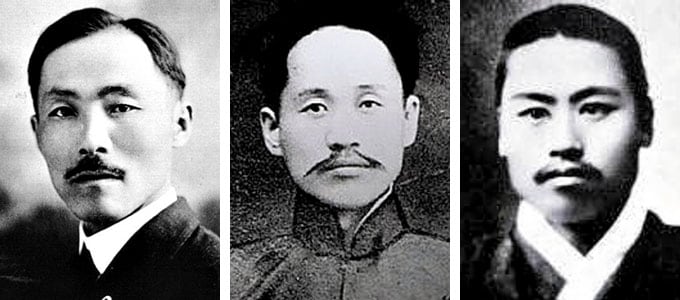
Lee emphasized, “Amid the ruins of the Korean Empire, where state functions had ceased, nationalists sowed the ideological and human seeds of a modern state. These sprouted through the March 1st Movement of 1919 and formed the trunk of the modern state established in 1948.”
- 월 5900원 멤버십, 신문 독자에게는 2900원, 조선멤버십
- 55000원 상당의 신문-잡지 8종 마음껏 보기, 조선멤버십
- 현금처럼 쓸 7000포인트 받아 알뜰한 쇼핑, 조선멤버십
Post a Comment