
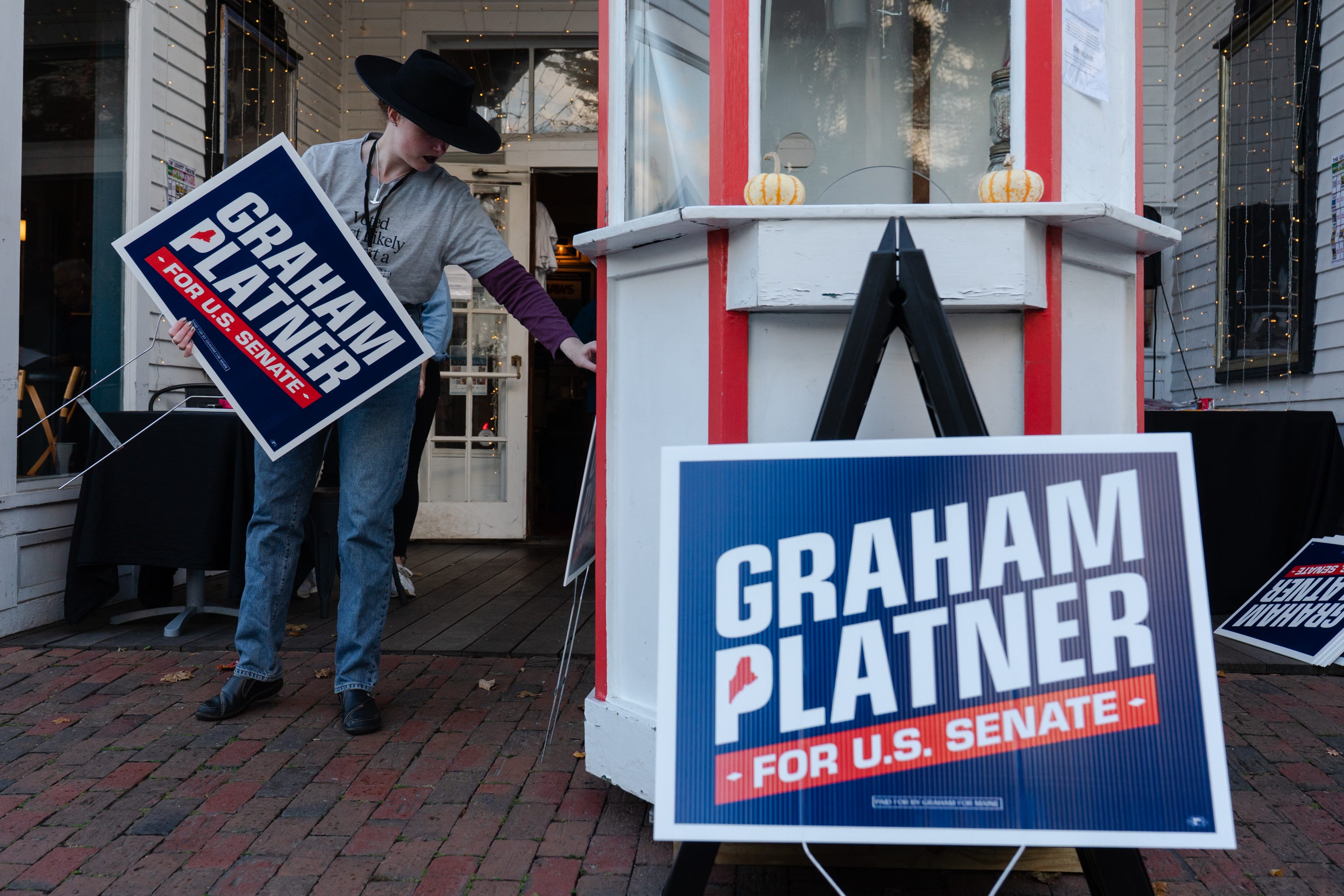
Who is Graham Platner?
Graham Platner, a veteran and oyster farmer from Maine, has become a prominent figure in the national political landscape. As the Democratic candidate for the U.S. Senate, he is currently under scrutiny due to past online activity and a controversial tattoo that bears resemblance to Nazi symbolism.
Platner, who is 41 years old, was born and raised in Maine near Acadia National Park. According to reports, he enlisted in the U.S. Marine Corps after high school and served four tours of duty in Iraq and Afghanistan. After his military service, he attended George Washington University on the G.I. Bill before enrolling in the Army National Guard and serving in Afghanistan once again.
Following his time in the military, Platner returned to Maine to work on an oyster farm, which he now runs. In an interview with NBC News, he discussed how his experiences in the armed forces shaped his political views, which have since influenced his campaign for the U.S. Senate.
"If we focus primarily on fighting for working-class values, fighting for policies that help working-class people, clawing back a lot of the power that has been consolidated in the kind of higher establishment-class politics, I think if you stick to that stuff, you can win," Platner said.
Controversies and Apologies
In recent weeks, Platner has faced criticism over Reddit posts from 2018 and a tattoo featuring a skull-and-crossbones, which some have linked to Nazi symbolism. In an interview on Pod Save America earlier this week, he acknowledged these issues and apologized for his prior social media posts, stating that they were written during a difficult period in his life following his final tour in Afghanistan.
To address the controversy surrounding his tattoo, Platner revealed a new one on Instagram, saying he was "appalled to learn it closely resembled a Nazi symbol." He expressed regret for the incident and emphasized his commitment to moving forward with a clear conscience.
Support from Prominent Figures
Despite the controversies, Platner has received support from notable figures in the Democratic Party. Senator Bernie Sanders (I-Vt) reaffirmed his backing for Platner, highlighting his military service and personal struggles. Sanders noted that Platner served four tours of duty and saw friends die in combat. He also mentioned that Platner dealt with PTSD and received treatment at the VA, which helped him regain control of his life.
Campaign Performance
Since launching his campaign in August, Platner has made a significant impact. He raised $3.25 million in the first six weeks of his campaign, according to Reuters, and secured the support of Sen. Bernie Sanders. His campaign has focused on advocating for working-class values and challenging the influence of billionaires and corrupt politicians.
As Election Day approaches, the public is closely watching how Platner will navigate the challenges ahead. His journey from a veteran and oyster farmer to a U.S. Senate candidate has captured the attention of many, and his ability to address the controversies while maintaining his political platform will be crucial in the coming days.
Key Points to Know
- Background: Graham Platner is a veteran and oyster farmer from Maine who is running as the Democratic candidate for the U.S. Senate.
- Controversies: Past Reddit posts and a tattoo associated with Nazi symbolism have drawn attention to his campaign.
- Apology: Platner has publicly apologized for his past social media activity and revealed a new tattoo to address the issue.
- Support: Despite the controversies, he has received support from prominent figures like Sen. Bernie Sanders.
- Campaign Success: Platner has raised significant funds and gained support from key political figures in the Democratic Party.
With less than two weeks until Election Day, the focus remains on how Platner will handle the ongoing scrutiny and continue to build his campaign. His story reflects the complexities of modern politics, where personal history and public perception play a critical role in shaping a candidate's trajectory.
Post a Comment