
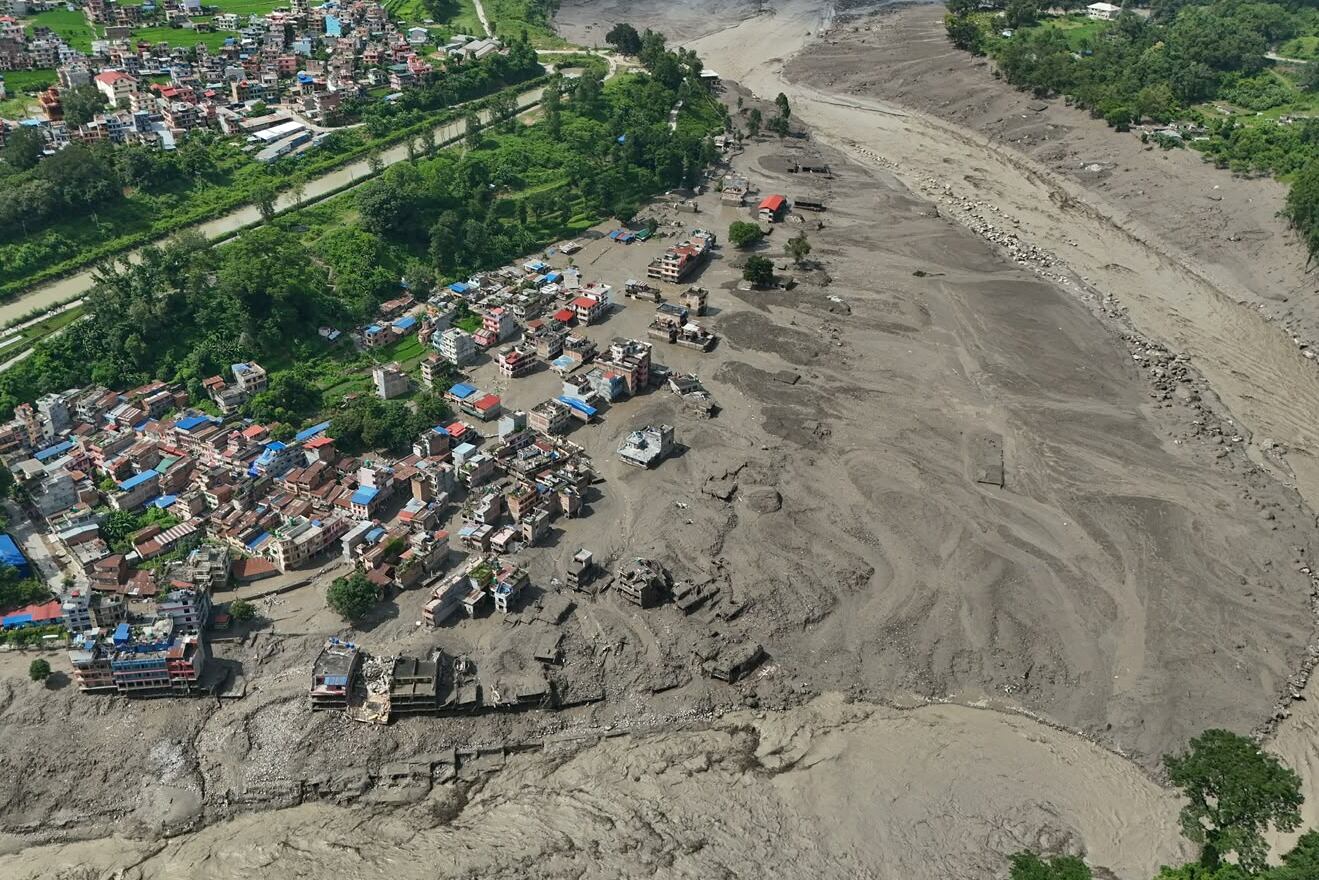
A large-scale flood in Nepal has caused nine Koreans working on a local hydropower plant construction site to lose contact, with nine people losing contact and ten people stranded. According to the Nepal Tourism Board and other sources, as of August 26 (local time), at least 72 people have died, and 384 tourists, including 291 foreigners, remain missing.
The sudden flood in Nepal’s Rasuwa region on the same day cut off contact with nine Koreans, including six employees from Doosan Enerbility and three from Korea South-East Power, who were constructing a hydropower plant in the area. Another ten Koreans from Doosan Enerbility are stranded and awaiting rescue.
The Ministry of Foreign Affairs notified the Nepalese government through the South Korean Embassy in Nepal about the missing and stranded Koreans, requesting swift search and rescue operations. The Nepalese government has dispatched a rescue team comprising army and police personnel to conduct search and rescue activities. Foreign Minister Cho Hyun stated that night, “The ten stranded individuals are awaiting rescue but have been confirmed to be in a safe situation.”

President Lee Jae Myung urgently instructed, upon receiving the report of the missing persons, “Prioritize the lives and safety of our citizens and mobilize all available means to focus all efforts on the search and rescue of the missing persons,” as relayed by Cheong Wa Dae Senior Spokesperson Kang Yu-jung.
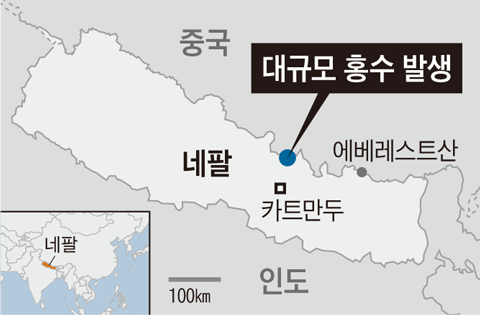
The hydropower plant construction site, where the accident occurred, is located on the Trishuli River, 70 kilometers north of Nepal’s capital, Kathmandu. This region, bordering the Tibet Autonomous Region of the People’s Republic of China, features steep Himalayan mountain ranges with significant elevation differences and abundant water flow year-round due to glacial meltwater, making it a hub for multiple hydropower projects.
◇Villages Buried by Sudden Landslides... Missing Persons Likely to Increase
The Rasuwa region in Nepal, where 19 Koreans are missing or stranded, is a border area with China characterized by near-vertical cliffs and V-shaped gorges stretching tens of kilometers along the river. Employees from Doosan Enerbility and Korea South-East Power had been working on the ‘Upper Trishuli-1 Hydropower Plant,’ a 216-megawatt (MW) project on the Trishuli River.
While the area is a key hydropower hub, floods have become frequent in recent years. In particular, glacial lakes at altitudes above 4,000 meters, formed by melting glaciers due to global warming, often collapse under pressure, releasing millions of tons of sediment and water downstream without warning. Last July, a glacial lake near the Phurung Glacier burst, triggering a massive landslide that swept through the Bhotekoshi River, killing at least nine people and leaving dozens missing. The damage is exacerbated when such events coincide with the summer flood season.
The government established a task force led by Foreign Minister Cho Hyun to address the Nepal flood crisis and held an emergency meeting that night. Minister Cho stated before the meeting, “We will strive to ensure their swift rescue.” The government decided to dispatch a joint rapid response team comprising the Ministry of Foreign Affairs, National Fire Agency, and National Police Agency to the site on August 27. The South Korean Embassy in Nepal also urgently dispatched consular officials to the scene.
President Lee Jae Myung reiterated the need for close cooperation with Nepalese authorities and emphasized ensuring the safety of all Koreans in the area, including support for the families of the missing, as stated by Cheong Wa Dae.
According to the Nepal Tourism Board and local media, 384 tourists remain missing due to the flood. Among the missing, 142 are Indian nationals, while the nationalities of 111 individuals remain unidentified. The figures provided by the Tourism Board are based on data from ten travel agencies, and the number of missing persons is expected to rise.
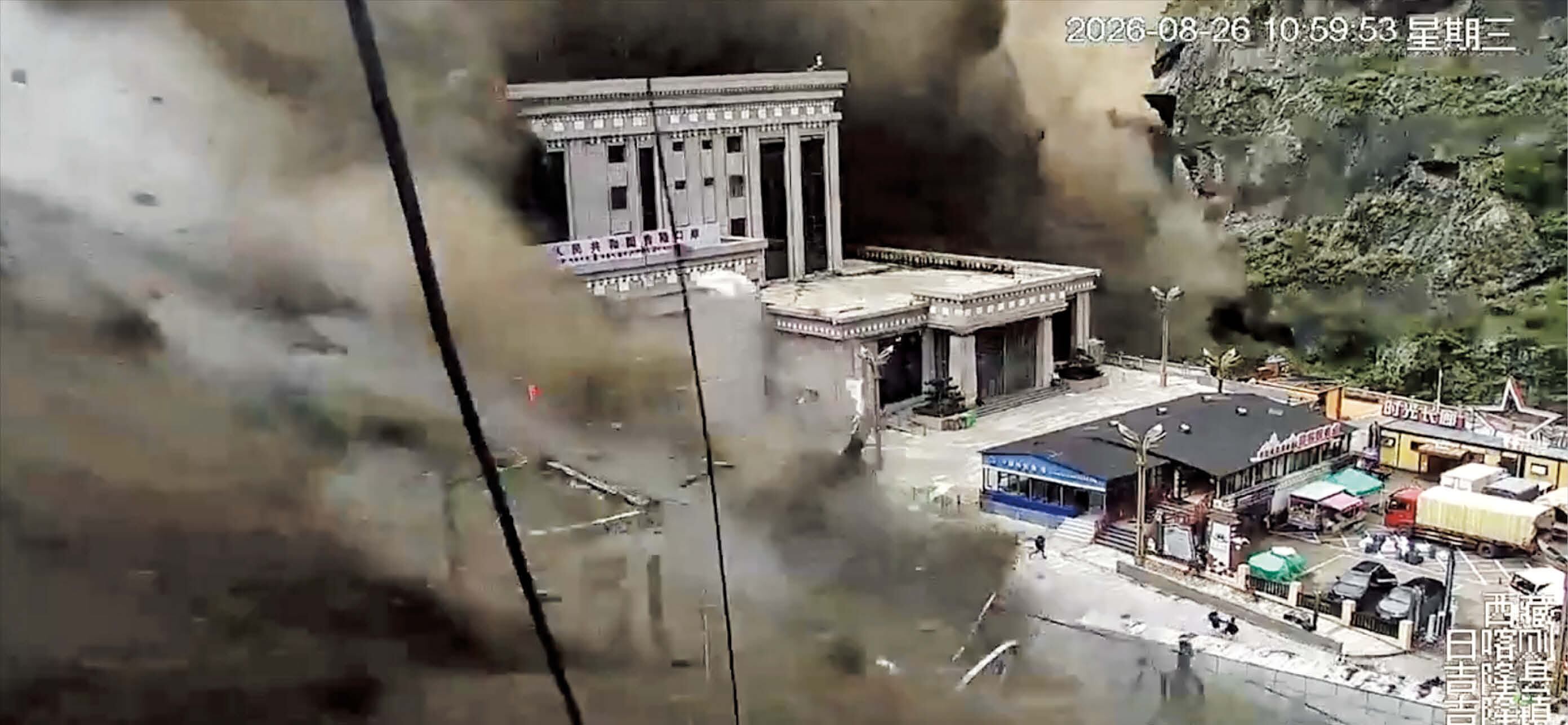
The flood destroyed over a dozen villages, including Timure and Shapru VDC, near the Upper Trishuli-1 Hydropower Plant construction site, sweeping away homes under mudslides and strong currents. Approximately 40 kilometers of roads and at least 19 bridges have been lost or damaged, cutting off land access. The Rasuwa Gadhi inland port and customs facilities, a key gateway between Nepal and Tibet, are also nonfunctional. At least eight operational hydropower plants and five under construction have halted, disrupting communications and power supply to local government offices and police stations, complicating damage assessments.
The Nepalese Cabinet declared the Rasuwa region a disaster zone immediately after the flood and instructed the Ministry of Home Affairs and Ministry of Defense to conduct search and rescue operations for the injured and missing. Authorities have deployed army and police personnel for search and rescue efforts. Helicopters are being used to transport injured individuals to Kathmandu. The World Health Organization (WHO) has pledged to provide essential medicines, medical equipment, and large tents for 1,000 people in the affected area.
- 월 5900원 멤버십, 신문 독자에게는 2900원, 조선멤버십
- 55000원 상당의 신문-잡지 8종 마음껏 보기, 조선멤버십
- 현금처럼 쓸 7000포인트 받아 알뜰한 쇼핑, 조선멤버십
Post a Comment